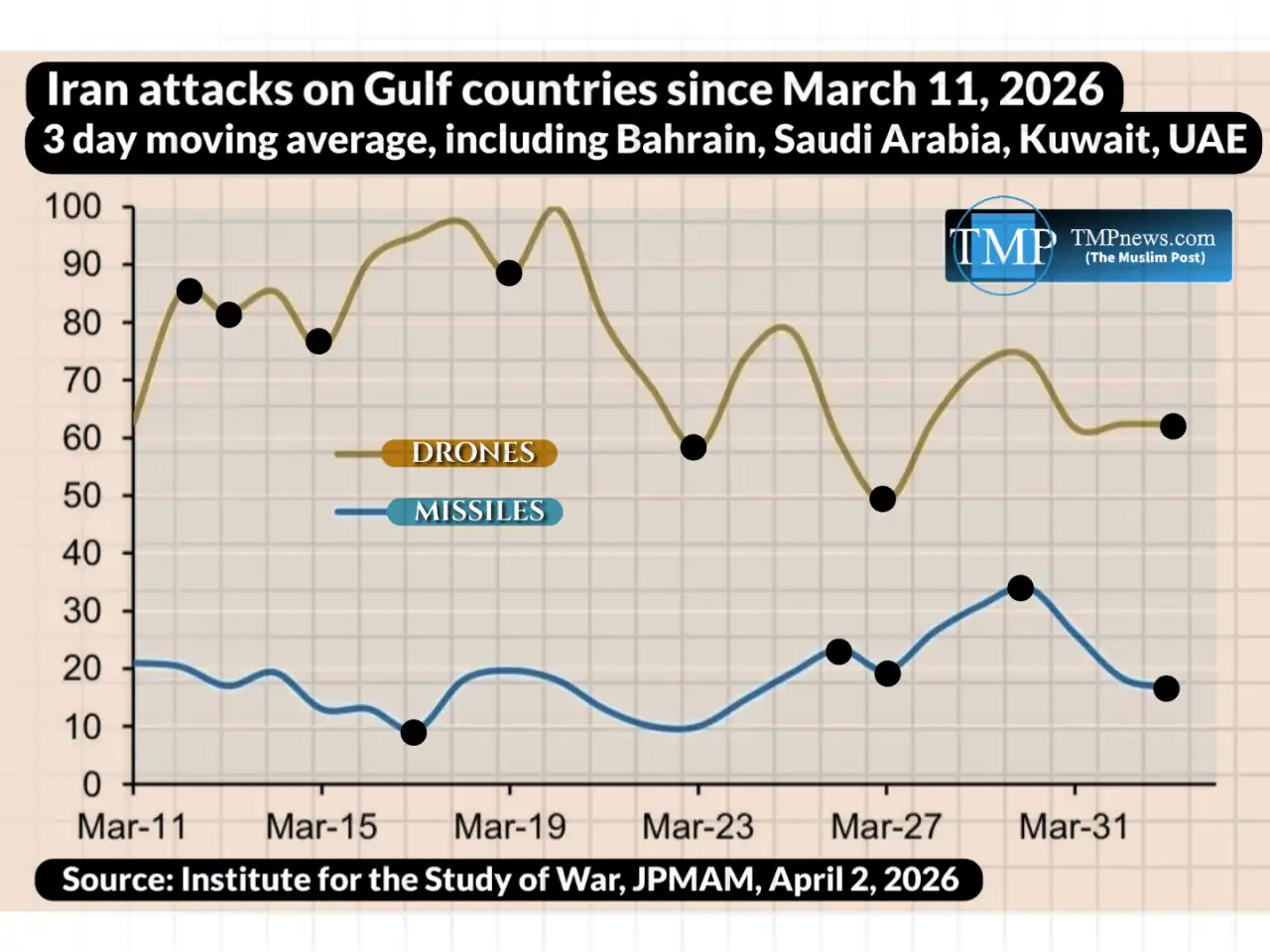
According to recent analyses, including reports referenced by the Institute for the Study of War (ISW) and JPMorgan Asset Management (JPMAM), the success rate of Iranian ballistic missiles targeting Israel has increased markedly during the ongoing war that began on February 28, 2026. In the first two weeks of intense exchanges, hit rates stood at around 3%, reflecting highly effective layered air defenses involving Israeli systems (such as Arrow and David’s Sling) supported by U.S. THAAD and Patriot batteries deployed across the region. Now, several weeks in, that figure has climbed to approximately 27%, with some Israeli sources and open-source assessments indicating even higher localized penetration rates, up to 80% in certain reports from outlets like Haaretz and Military Watch Magazine.
This shift occurs even as Iran’s overall missile launch volume has plummeted. U.S. and Israeli strikes have degraded Iranian capabilities, reducing daily firings by roughly 90% from initial peaks of dozens or even hundreds of missiles per day to an average of about 10 per day in later weeks. Iran has fired an estimated 470+ missiles in the first 25 days alone, but smaller salvos and selective targeting now predominate.
Why Hit Rates Are Rising Despite Fewer Launches
Several factors explain the trend:
Interceptor Depletion: Missile defense systems rely on expensive, limited stockpiles of interceptors (e.g., Arrow-2/3, THAAD, Patriot PAC-3, and SM-3). Each engagement often requires multiple interceptors per incoming threat for high-confidence kills. Early in the conflict, interception rates exceeded 90-97% in many cases, but sustained barrages, even smaller ones, have consumed significant munitions. Previous conflicts, including the 12-day Israel-Iran war in June 2025, already strained stocks, and replenishment rates lag far behind wartime expenditure. Reports indicate the U.S. and allies have fired hundreds of high-end interceptors, with some Gulf states reportedly using large portions of their Patriot inventories.
Iranian Tactical Adjustments: With launch infrastructure and stockpiles degraded by hundreds of U.S.-Israeli airstrikes on missile bases, production facilities (such as Khojir, Shahroud, and Parchin), and launchers, Iran has shifted strategy. It now fires fewer but more advanced missiles or those equipped with cluster munitions, which can complicate interception by creating multiple submunitions or decoys. Smaller salvos may also overwhelm fewer active defense batteries or exploit gaps in radar coverage, especially if forward sensors have been affected. Iran appears more selective, focusing on high-value or symbolic targets while conserving remaining assets.
Attrition on Defenses: Layered systems (Iron Dome for shorter threats, Arrow for ballistic missiles, and allied contributions) face cumulative fatigue. Destruction or degradation of supporting radars, command nodes, or even individual batteries reduces overall effectiveness. Morale and operational tempo issues on the Iranian side (including reported desertions among missile crews) coexist with similar strains on the defensive side from prolonged high-alert status.
Analysts at JPMorgan have highlighted the asymmetry: Iranian missiles and drones are relatively cheap to produce and expend, while Western interceptors cost millions each. This favors the attacker in a war of attrition, where the defender must decide whether and how long, to sustain the high financial and logistical cost.
Implications if the War Continues
If hostilities persist without a decisive reduction in Iranian capabilities or a ceasefire, interception rates could decline more rapidly. Key reasons include:
Finite “magazine depth”, the number of remaining interceptors. Production lines for advanced systems like THAAD or Arrow cannot quickly replace wartime losses. U.S. officials and think tanks have warned that stocks were not fully replenished after prior rounds, raising risks of rationing or gaps in coverage.
Increased penetration would likely cause more damage to Strategic infrastructure, military sites, or energy assets in Israel and the broader region, potentially escalating political pressure for de-escalation or conversely counter-strikes.
Broader regional effects, including strain on U.S. and allied forces defending Gulf states, where similar depletion dynamics apply.
ISW assessments note that while combined U.S.-Israeli Attacks have rendered many Iranian launchers and missiles combat-ineffective (even if physically intact but buried, inaccessible, or unsupported), Iran retains some capacity for sporadic attacks. However, the defender’s challenge grows as stocks dwindle.
This dynamic underscores a classic attrition scenario: the side with deeper, cheaper magazines gains an edge over time unless the opponent achieves rapid degradation of the launch threat or finds a political off-ramp. Both sides face difficult calculations, Israel and the U.S. balancing defense sustainability against offensive progress, and Iran weighing remaining deterrent value against further losses.
The situation remains fluid, with open-source data, satellite imagery, and official statements providing partial visibility. Outcomes will depend on resupply speeds, production ramps, targeting effectiveness, and diplomatic efforts. As JPMorgan and other observers note, prolonged conflict carries risks not only militarily but also economically, through higher energy prices and inflation pressures.
This development highlights the high-stakes nature of modern missile warfare, where technological superiority in defense can erode under sustained, asymmetric pressure.