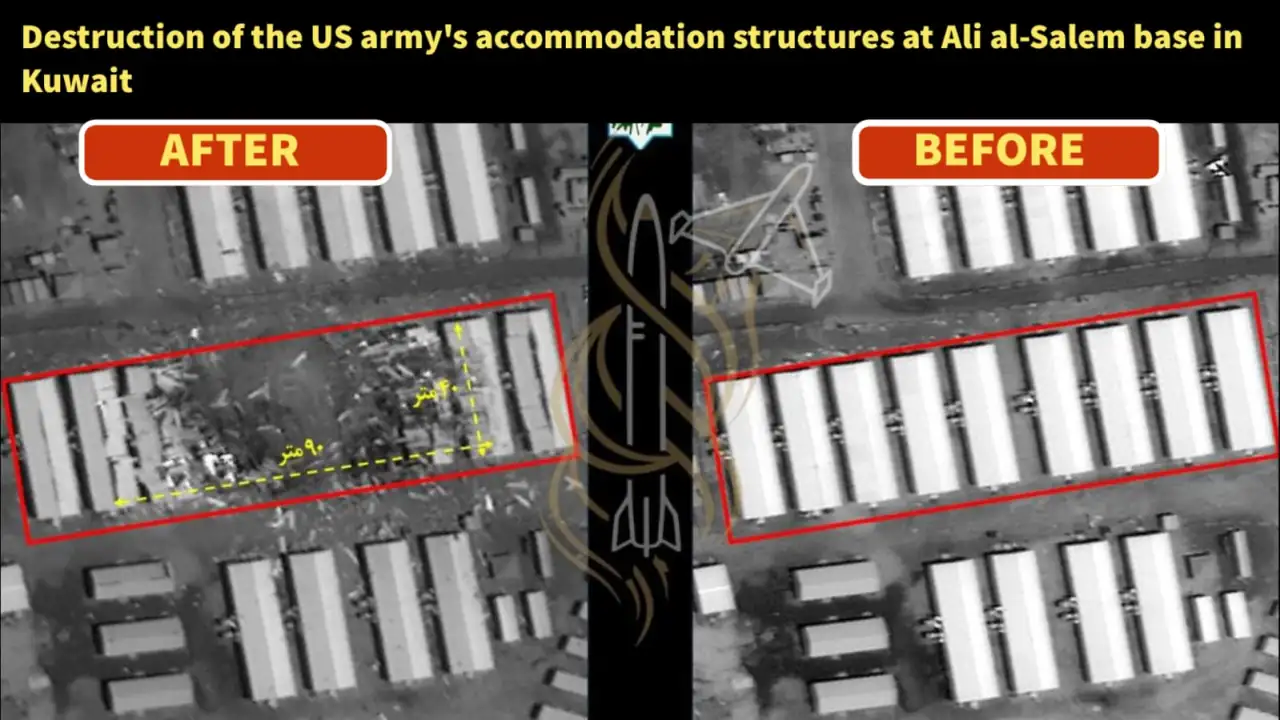
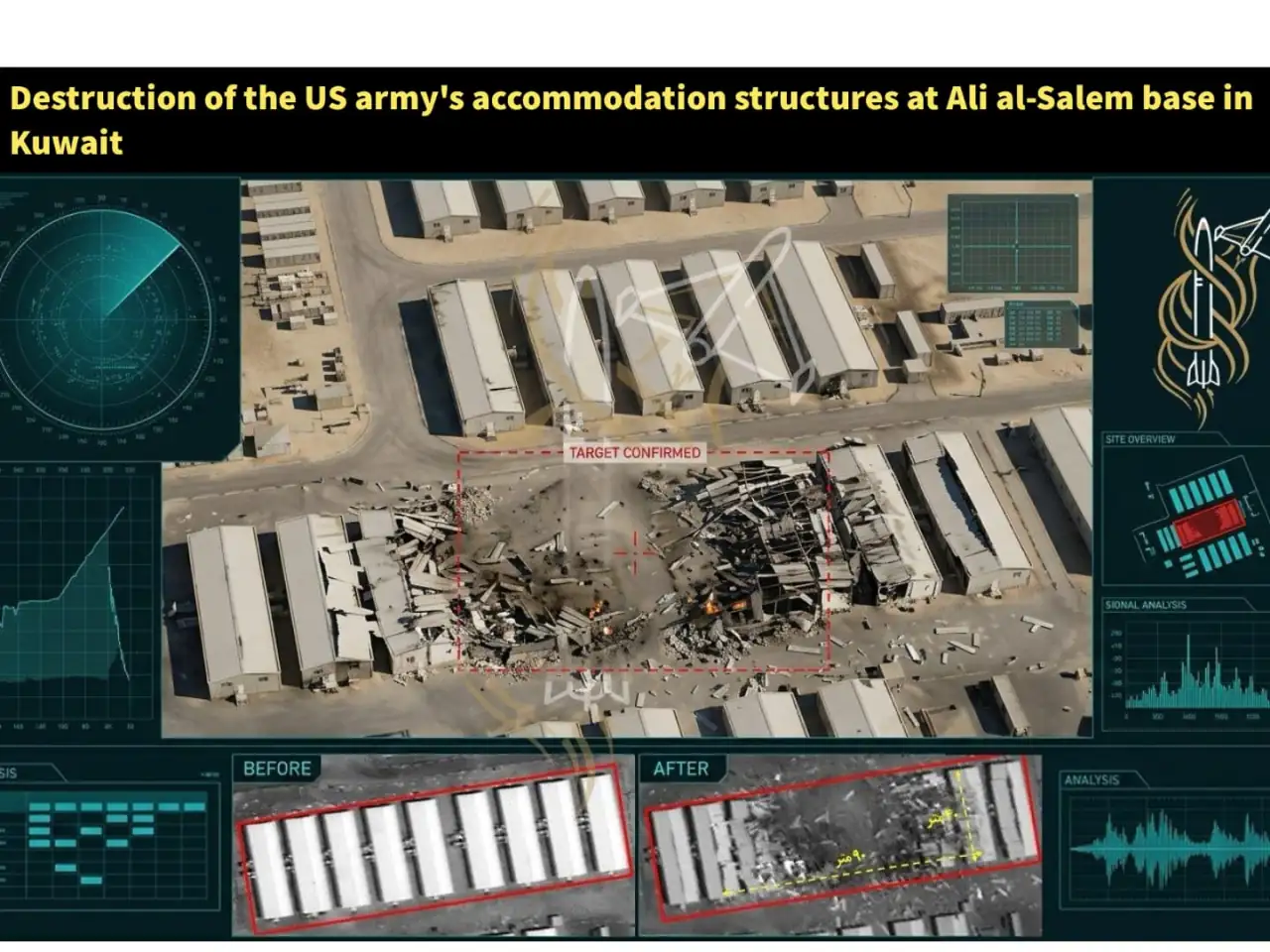
Ali al-Salem Air Base (also known as Ali Al Salem), a key Kuwaiti facility approximately 37 km from the Iraqi border and home to US, Kuwaiti, and coalition forces, has reportedly sustained damage to military housing and other structures from recent Iranian missile and drone strikes. Open-source intelligence (OSINT) analysts, including accounts like @EGYOSINT, shared fresh Sentinel-2 and other satellite imagery on July 23, 2026, appearing to show destroyed or heavily damaged troop billets/accommodation buildings, with smoke plumes visible. Iranian state-affiliated media has highlighted strikes on housing, radar systems (such as AN/FPS-117), and other assets at the base.
The base serves as a major tactical airlift and logistics hub for US and coalition operations in the Middle East, hosting elements of the US Air Force’s 386th Air Expeditionary Wing and supporting aircraft including drones like the MQ-9 Reaper. This incident fits into a broader pattern of tit-for-tat escalations in 2026 under operations involving Iranian retaliation, sometimes referenced in contexts like “Operation Epic Fury”.
Tensions between Iran and the US/Israel have led to multiple reported strikes on US-linked bases in Kuwait, Bahrain, and elsewhere since early 2026. Previous incidents at Ali al-Salem included damage to hangars, fuel bladders, shelters (including drone hangars), warehouses, and runways, with confirmed or reported losses of high-value assets like MQ-9 drones (valued at ~$30–35 million each). Satellite imagery from providers like Planet Labs, Soar Atlas, and Copernicus has repeatedly been used to assess or dispute damage claims.
The latest July 2026 strikes on accommodation structures highlight vulnerabilities in personnel housing and support infrastructure, even as air defenses (Kuwaiti and US) claim high interception rates.
Statements from Both Sides
US/Centcom and Coalition Side:
US Central Command (CENTCOM) has consistently stated that Iranian missiles and drones targeting bases in Kuwait and elsewhere were largely intercepted or failed to hit intended targets, with debris sometimes causing limited damage. Officials emphasize no significant impact on operations, minimal or no US casualties in many incidents (though some reports note minor injuries), and successful defense of assets. Damage is often downplayed as negligible or unrelated to direct hits, with focus on the effectiveness of air defenses. Kuwaiti authorities have reported civilian impacts from related strikes (e.g at airports).
Iranian Side (IRGC and affiliated media):
Iran claims precise, successful strikes on US military targets in Kuwait as retaliation for alleged US/Israeli aggressions, including strikes on Iranian assets. They assert destruction of command buildings, troop housing (billets), helicopter maintenance centers, fuel tanks, radar systems (e.g AN/FPS-117 early warning radar), and other facilities at Ali al-Salem. Iranian releases often include annotated satellite imagery showing collapsed roofs, burn scars, and impact craters, framing these as proof of penetrating defenses and inflicting meaningful costs on US presence in the region.
Independent analysts and media like Middle East Eye, Washington Post investigations note that satellite imagery sometimes contradicts official “no damage” claims, revealing charred areas, craters, and destroyed shelters/hangars.
Estimated Cost of Destruction
Exact costs for the latest July 23, 2026, damage to accommodation structures are not publicly detailed and would depend on the number of buildings affected, extent of repairs vs. reconstruction, and classified military specs. However, broader context from 2026 assessments provides scale:
Single-incident examples: Destruction or severe damage to one MQ-9 Reaper drone costs ~$30–35 million. Hangar/shelter losses and fuel depot damage add millions more per event.
Base-level estimates: Repairs for Ali al-Salem-specific damage (hangars, runways, barracks, radomes, fuel systems, etc.) in earlier waves have been estimated in the $300–500 million range, including reconstruction, debris clearance, and specialized upgrades.
Regional total: Cumulative damage across ~15 US/coalition sites in the Gulf (including multiple Kuwait facilities like Camp Arifjan and Camp Buehring) reached estimates of ~$5 billion or more, covering hundreds of structures, aircraft, radars, and support infrastructure. This includes multipliers for downtime, logistics, and enhanced hardening.
Rebuilding troop accommodation (barracks/billets) involves concrete/ prefab modules, utilities, perimeter security, and force protection, costs escalate quickly under wartime conditions with supply chain disruptions.
This event underscores ongoing regional War. Further verification would come from official US/Kuwaiti releases or higher-resolution commercial imagery. The situation remains fluid, with risks of further escalation.