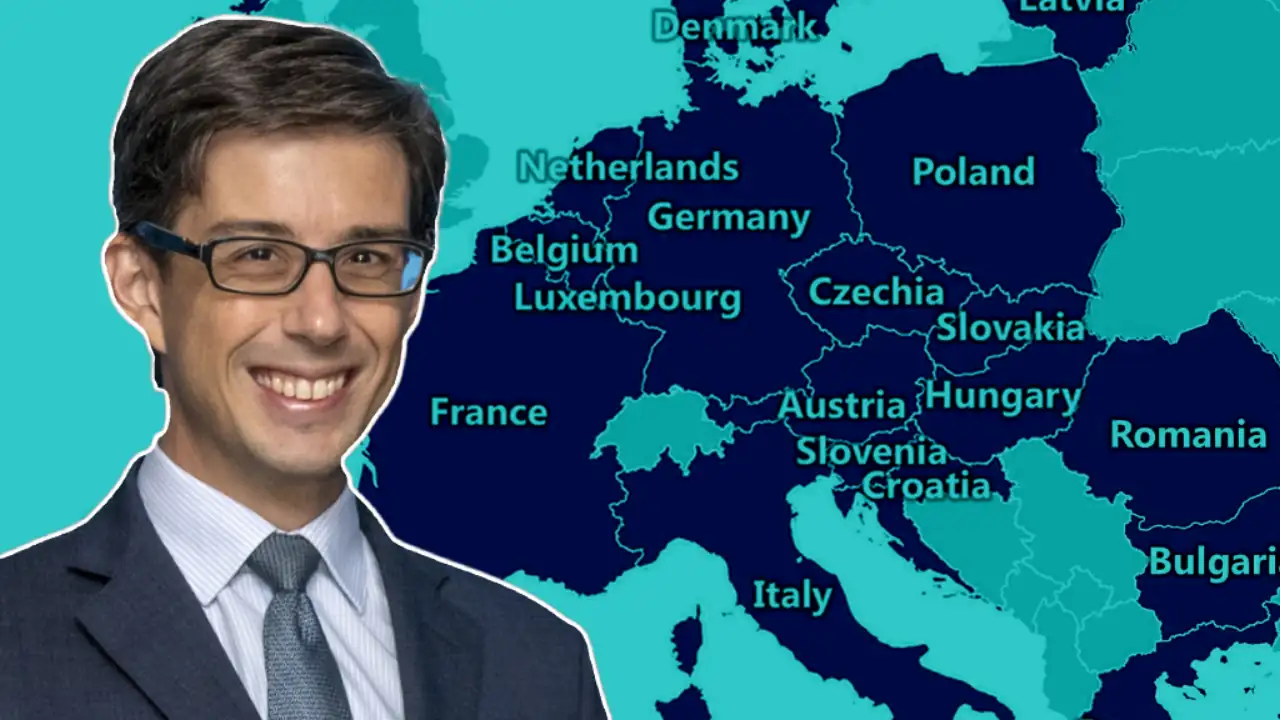
In a striking intervention that has sparked debate across European policy circles, Luis Vassy, President of the prestigious Paris Institute of Political Studies (Sciences Po), has drawn a bold historical parallel to illustrate the European Union’s diminishing global influence. Vassy warns that Europe is not just declining, it is doing so at an accelerated pace that echoes, and exceeds, one of history’s most dramatic geopolitical shifts.
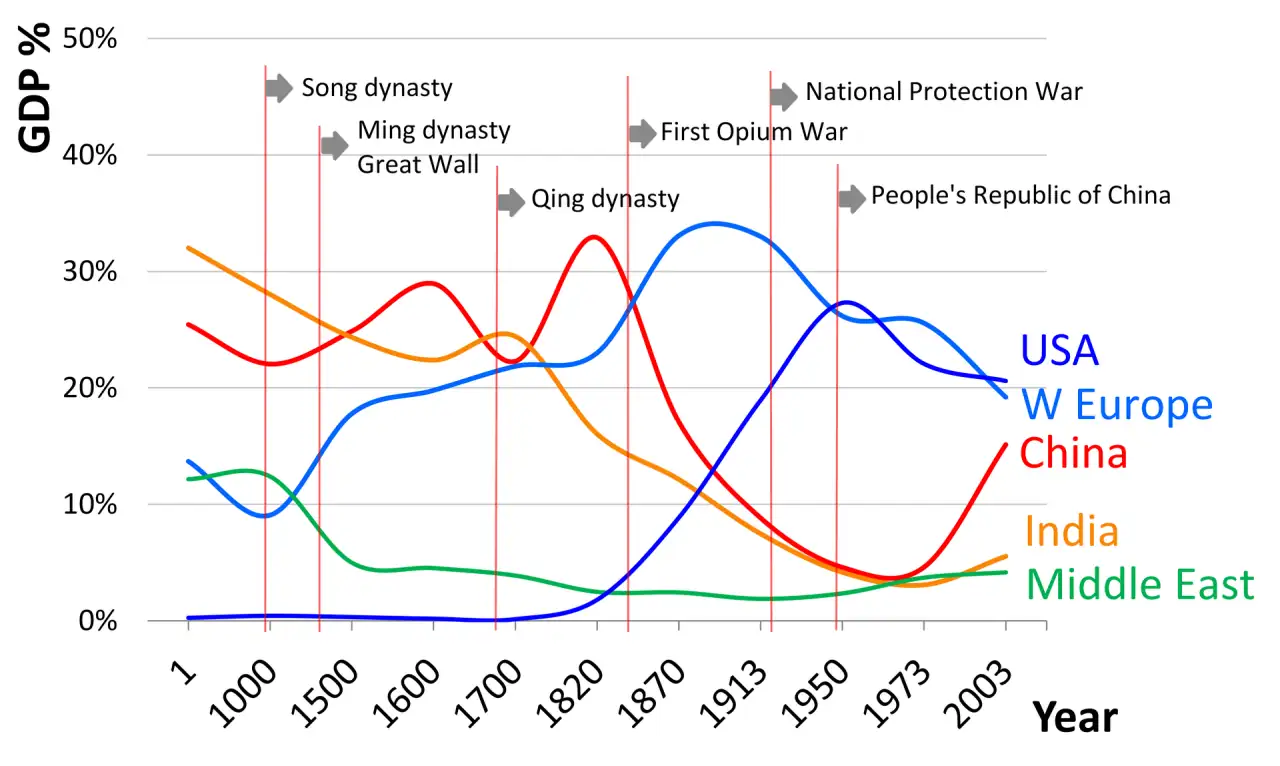
“The European Union has seen its weight in the global economy fall from 30% to 17% between 2008 and 2025, or 17 years. China made the same way between 1820 and 1870. In relative terms, we decline three times faster than the Qing Dynasty.”
Luis Vassy’s comparison references the onset of China’s “Century of Humiliation,” a period marked by internal stagnation, external pressures from Western powers, the Opium Wars, and a sharp loss of economic dominance. In 1820, China accounted for roughly one-third of global GDP. By 1870, that share had plummeted as Western industrialized nations surged ahead.
Vassy, a former French diplomat and cabinet director, argues that this economic contraction is symptomatic of a deeper transformation in global power dynamics. In an op-ed and public remarks, he highlights how the international environment has shifted dramatically.
“Being a French diplomat in 2024 simply has nothing to do with 2004. The weakening of multilateral frameworks, the multiplication of conflicts, the retreat of the law are the expressions of a heavy trend that leads to a revolution, in the true sense of the word: we have gone from a world where we projected ourselves with our ideas, our values, our assets, to a world that projects itself on us.”
This reversal from Europe as a shaper of global norms to one increasingly shaped by external forces, poses profound challenges for the continent’s future. Vassy points to the experiences of those currently in leadership positions in academia and diplomacy, many of whom were educated between 1990 and 2005.
“Those who occupy intellectual and academic responsibilities today were formed between 1990 and 2005, in a world where the sum of American and European GDP accounted for more than half of the world’s wealth, where the “end of history” might seem acquired, and where transatlantic cultural unity might seem obvious. The common bibliography of this generation has shaped a certain way of looking at the world, which is no longer the one our students will need to travel through their century.”
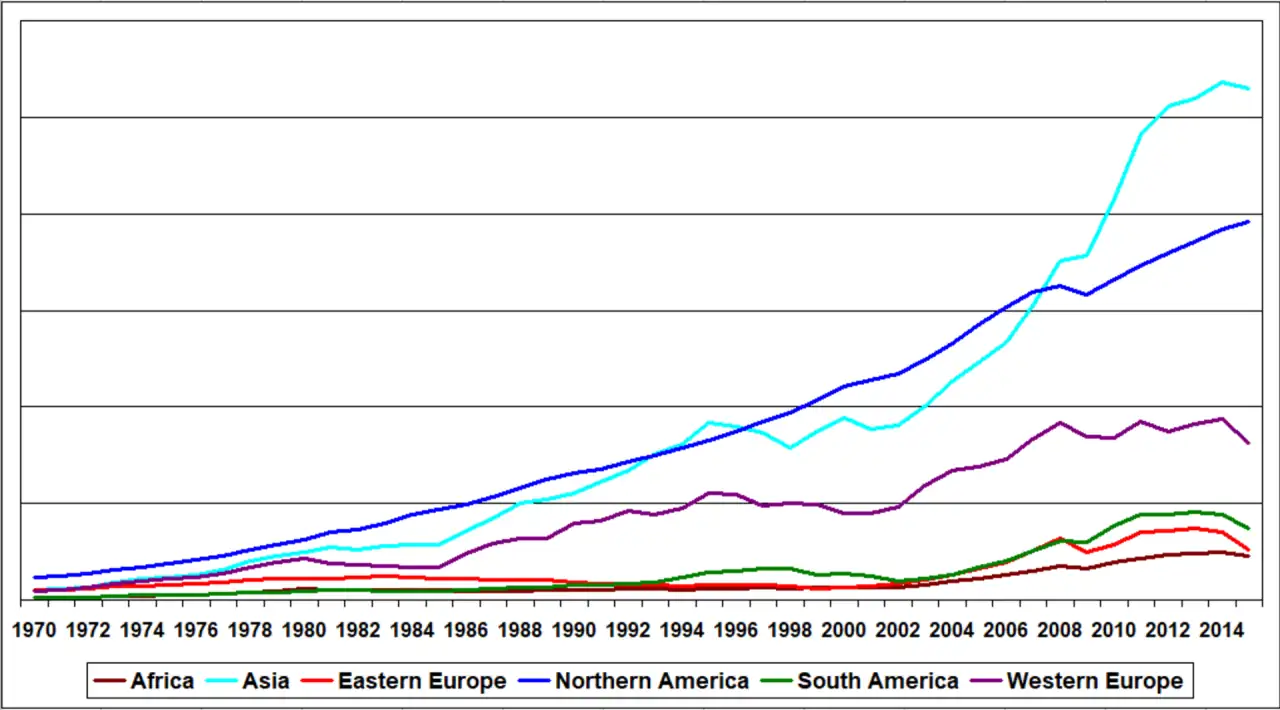
Economic data supports the broad trend Vassy describes, even if precise figures vary by measurement (nominal vs. PPP). The EU’s share of global GDP has indeed contracted significantly since the late 2000s, driven by slower growth relative to Asia, the United States, and emerging markets. Factors frequently cited include:
Aging populations and demographic decline. High energy costs, exacerbated by the Ukraine war and the shift away from Russian supplies.
Regulatory burdens and slower innovation compared to tech-driven economies. Successive crises- the 2008 financial meltdown, the Eurozone debt crisis, COVID-19, and geopolitical instability.
Meanwhile, China’s rise and the continued strength of the US have reshaped the global economic map. What took China roughly 50 years in the 19th century has unfolded in Europe over just 17 years in relative terms.
Vassy’s intervention is not merely diagnostic; it is a urgent appeal for reform. As head of Sciences Po, he calls on France’s higher education institutions and by extension, Europe’s to better coordinate and embrace their “collective responsibility” in preparing the next generation. Students today, he argues, must be equipped with new intellectual tools suited to a multipolar, competitive, and often adversarial world, rather than the optimistic, rules-based order many of their professors once took for granted.
His remarks arrive amid broader European soul-searching. Discussions about strategic autonomy, industrial policy, defense investment, and competitiveness have intensified in Brussels, Paris, and Berlin. Yet Vassy suggests that without a fundamental rethinking of mindset and capabilities, Europe risks irrelevance.
The Qing comparison is provocative. China’s 19th-century decline involved colonial exploitation, technological backwardness, and internal rebellions on a massive scale. Europe’s current challenges, while serious, stem from different causes: affluence-induced complacency, policy choices, and the natural diffusion of economic power as developing nations industrialize.
Critics of Vassy’s framing argue that the EU’s declining share reflects others catching up rather than absolute collapse. The Union remains a wealthy, technologically advanced bloc with significant soft power. Nevertheless, the speed of the relative shift raises legitimate questions about Europe’s ability to maintain influence, security, and prosperity in the decades ahead.
As Luis Vassy warns, the world of 2025 is not the world of 2005. Adapting to it will require more than nostalgia for past dominance, it will demand intellectual courage, institutional renewal, and a clear-eyed assessment of power in the 21st century.