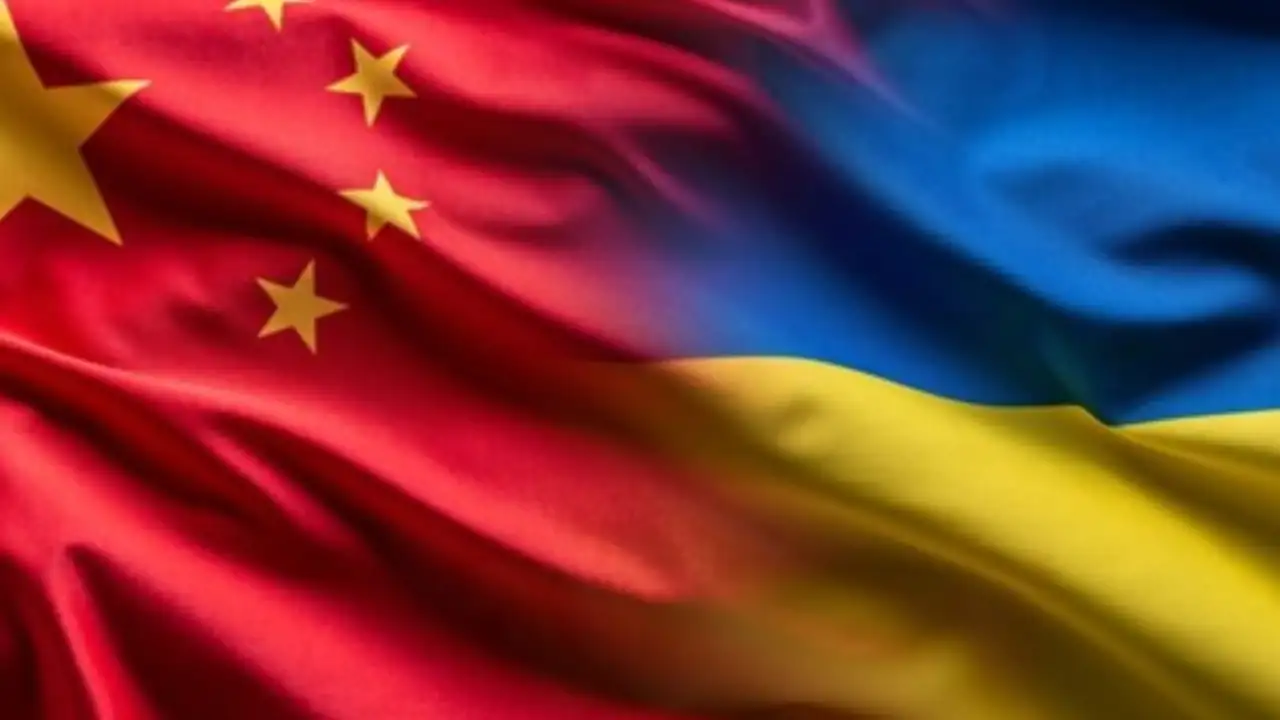
In a pragmatic but revealing decision, the European Union has granted Ukraine permission to spend part of a €6 billion defense loan tranche on Chinese-made drone components. The move underscores Europe’s ongoing challenges in building independent supply chains for critical military technologies amid the intensifying demands of the war in Ukraine.
According to reports from the Financial Times and other outlets, Kyiv secured a specific exemption for the first tranche of the EU’s defense funding, which is largely dedicated to drone procurement. European suppliers simply cannot yet produce or deliver sufficient quantities of essential components such as motors, flight controllers, batteries, cameras, and specialized electronics, at the speed and scale required by Ukraine’s battlefield needs.
This €6 billion package forms part of a broader €90 billion Ukraine Support Loan, with significant portions earmarked for defense industrial cooperation. Just days ago, the EU and Ukraine announced a new “Drone Deal” and defense industrial partnership aimed at joint production of millions of UAVs, combining Ukrainian innovation and combat experience with European manufacturing capacity. European Commission President Ursula von der Leyen described it as Europe’s own “drone deal” during a visit to Kyiv.
The allowance for Chinese components is positioned as a temporary bridge. It enables Ukraine to maintain high-volume drone production, vital for everything from FPV kamikaze strikes to reconnaissance, while European industry ramps up.
The decision throws a spotlight on a deeper structural issue: the West’s reliance on China for drone technology. China dominates global production of key inputs, including lithium-ion batteries, neodymium magnets for motors, fiber optic cables, and various microelectronics. Estimates suggest that even Ukrainian drone makers, who have made strides in domestic production, still source a substantial portion of components from China.
This dependence is not new. Pre-war commercial drone markets were heavily tilted toward Chinese firms like DJI, and the conflict has only amplified the challenge. While Ukraine has reduced reliance over time, critical bottlenecks remain. Europe faces similar constraints, as building alternative supply chains for rare earths, specialized manufacturing, and scaled electronics production takes years and massive investment.
China’s Ambiguous Role and Perceived Double Standards
China’s position in the Russia-Ukraine conflict adds another layer of complexity. Beijing officially maintains neutrality, claims it has not provided lethal weapons to either side, and has imposed export restrictions on certain drones and components to both Ukraine and Russia. However, numerous reports indicate a pattern of selective enforcement that favors Moscow.
While restrictions have at times tightened supplies available to Ukraine, sometimes through direct limits or intermediary complications, China has continued to provide Russia with substantial dual-use technologies, including semiconductors, drone engines, fiber-optic cables, lithium-ion batteries, and other components critical for Russian drone production. This has reportedly enabled a surge in Russian attacks on Ukrainian positions and infrastructure.
Critics describe this as a double standard: publicly advocating for peace while materially supporting one side through its dominant position in global supply chains. Chinese officials counter by emphasizing strict export controls and accusing the West of double standards in fueling the conflict. The net effect is that Ukraine must navigate unreliable access even as it relies on Chinese parts for immediate needs, further highlighting the strategic leverage Beijing holds.
Implications for Strategic Autonomy
▪️Short-term necessity: Allowing purchases from China helps Ukraine sustain pressure on Russian forces and defend its territory without immediate production shortfalls.
▪️Long-term risks: Over-reliance on a geopolitical rival for defense-critical items creates vulnerabilities, especially given selective supply dynamics.
▪️Industrial policy push: The new EU-Ukraine Drone Alliance and related investments signal an urgent effort to localize and scale production. Success will depend on technology transfers, joint ventures, and addressing Europe’s own regulatory and investment hurdles in defense manufacturing.
Analysts note that this episode mirrors broader concerns in Western defense planning. From semiconductors to advanced materials, diversifying away from Chinese dominance is a stated priority, but execution remains a work in progress.
The war in Ukraine has accelerated drone warfare on a massive scale, turning inexpensive UAVs into force multipliers. Ukraine’s ability to innovate rapidly in this domain is widely admired, but scaling it requires reliable inputs. The EU’s decision prioritizes immediate military effectiveness over strict “buy European” rules, a pragmatic choice in wartime.
As Europe invests billions to bolster its defense industrial base and support Ukraine, the episode coupled with China’s uneven role, serves as a reminder of the gap between ambition and current industrial and geopolitical realities. Closing that gap will be essential not only for Ukraine’s defense but for the long-term strategic autonomy of the European Union itself.