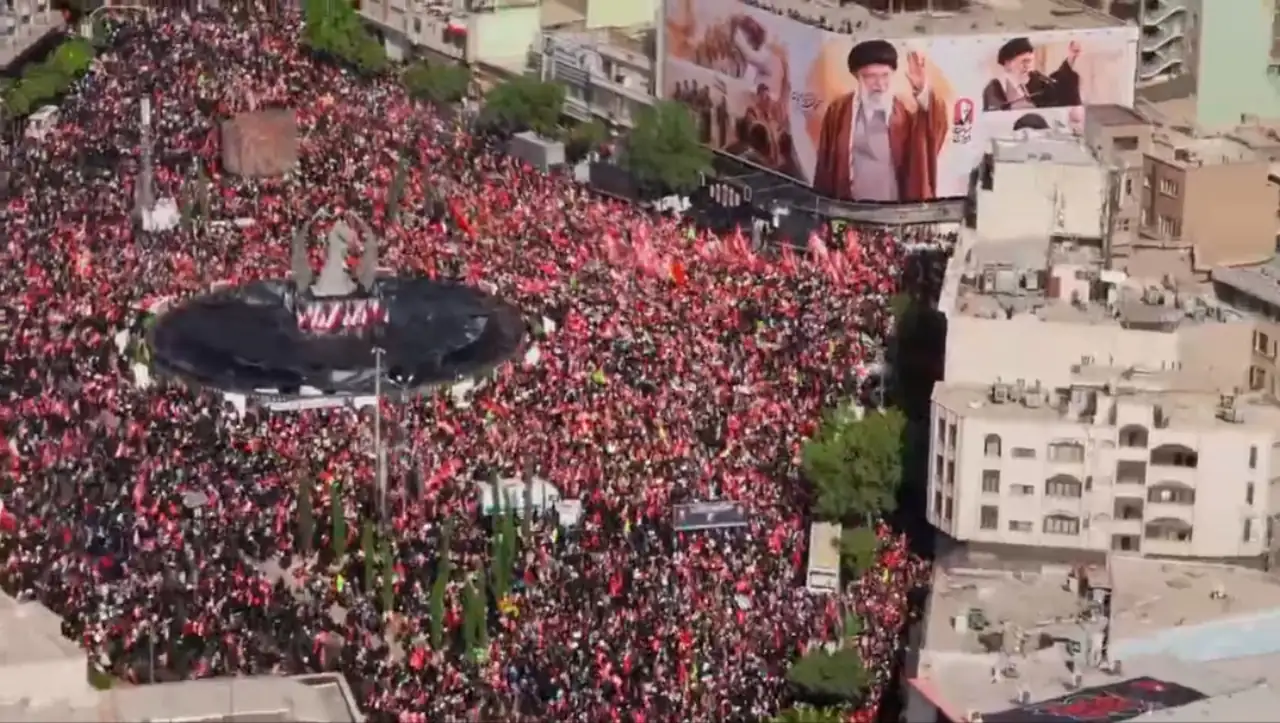
Tehran and other Iranian cities have witnessed an outpouring of grief as the state funeral for Ayatollah Ali Khamenei, Iran’s Supreme Leader for nearly four decades, continues. Khamenei was Martyred at age 86 in a U.S.-Israeli airstrike in late February 2026 during the outset of the Iran war. The multi-day ceremonies, spanning July 3-9 across Tehran, Qom, Mashhad, and parts of Iraq, have been described by Iranian state media and international outlets like Al Jazeera and Tasnim News Agency as potentially the largest funeral gathering in recorded history.
Officials and state-linked reports highlight the massive turnout as evidence of deep national unity and enduring public support for Khamenei and the Islamic Republic’s leadership. The events feature processions with mourners chanting anti-U.S. and anti-Israel slogans, carrying banners calling for revenge, and paying respects to the flag-draped coffins of Khamenei and family members.
Attendance Data and Scale
Iranian authorities and media have provided varying estimates for participation, emphasizing the event’s unprecedented scale, which is expected to surpass the 1989 funeral of Ayatollah Ruhollah Khomeini (attended by around 10 million mourners):
Tehran processions: Reports indicate millions attending daily, with peaks of hundreds of thousands to over a million in key areas like Azadi Square. Some estimates for Tehran alone reach up to 20 million across the week.
Nationwide and overall: Iranian state television and outlets like Tasnim project totals of 12-15 million or higher, with claims of over 30 million in some statements. Al Jazeera and other sources describe it as one of the largest public funerals in modern history, drawing mourners from across Iran and international delegations.
The government has provided transportation, food, and lodging to facilitate attendance, turning the ceremonies into a major display of collective mourning and resilience amid ongoing regional tensions.
Official Statements on Public Support
Iranian officials have Described the massive participation as a profound affirmation of the people’s loyalty to Khamenei and the principles he championed.
“The historic participation of over 30 million people in his funeral is a testament to that divine honor.”
Senior figures and state media have echoed this, describing the crowds as a rejection of external pressures and a show of strength for the new leadership under his son, Mojtaba Khamenei. The events have also served diplomatic purposes, with representatives from over 50-100 countries attending.
The funeral processions are expected to culminate in burial rites in Mashhad. Analysts note that while the scale projects regime continuity, it also occurs against a backdrop of a fragile truce and internal transitions.
This historic gathering underscores the complex interplay of faith, politics, and national identity in Iran during a period of significant challenge.