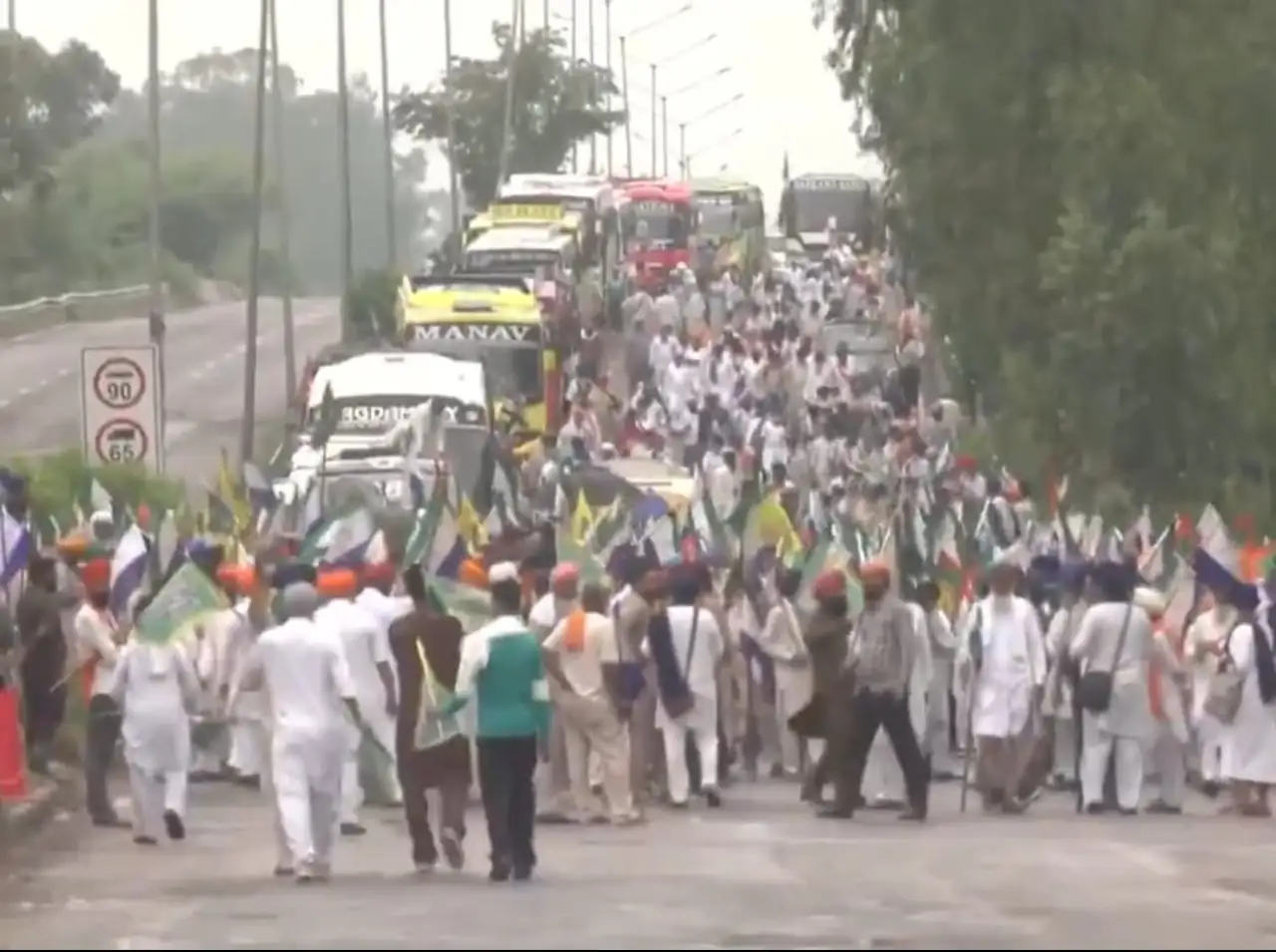
In a significant show of protest, thousands of farmers from Punjab have begun a march to Delhi under the banner of the ‘Desh Bachao Morcha’ to oppose the proposed India-US trade agreement. The farmers fear that the deal, which could open Indian markets to cheaper American agricultural imports including maize, soybeans, cotton, and dairy products, will severely undermine their livelihoods, depress crop prices, and threaten the dairy sector.
The convoy, comprising buses, mini-buses, jeeps, and private vehicles, departed early this morning after prayers at Gurudwara Sri Fatehgarh Sahib in Punjab. Organizers plan to hold a major Kisan Mahapanchayat at Kisan Ghat in Delhi, expecting participation from hundreds of farmer unions and organizations across states.
However, the march has hit a major roadblock at the Shambhu border on the Punjab-Haryana line. Haryana Police have completely sealed the border, deploying heavy security measures including multi-layered barricades, heavy cement-block barriers, iron chains, water cannons, and JCB machines. Vehicular movement has been halted, and authorities have imposed restrictions citing law and order concerns.
Farmer leaders have criticized the restrictions, asserting their right to peaceful protest. The standoff highlights ongoing tensions between farmers and governments over agricultural policies and trade agreements.
Farmers’ Voices: On the Ground at Shambhu Border
“This India-US trade deal will destroy Indian farmers. Cheap imports of maize, soybeans, and dairy from America will crash our prices. We demand its immediate cancellation and a legal guarantee for MSP. We are not here to create trouble — we just want to reach Delhi peacefully and raise our voices.”
— Sarwan Singh Pandher, Coordinator of Desh Bachao Morcha and leader of Kisan Mazdoor Sangharsh Committee
“The government says there will be no compromise on agriculture, but the deal is already in motion. Our fields, our cattle, and our families will suffer hugely. We have left our homes and farms to protect the future of Indian agriculture.”
— Balbir Singh Rajewal, Senior Farmer Leader
“Haryana Police has turned the border into a fortress with cement blocks and machines. But we farmers are determined. This is not just Punjab’s fight — it’s for every small farmer and labourer in the country. We will not let multinational interests ruin our economy.”
— Gurnam Singh Charuni, Bharatiya Kisan Union (BKU) Leader
“We prayed at Fatehgarh Sahib before starting this journey. This deal threatens not only crops but also our dairy and small traders. Why is the government scared of our peaceful march to Kisan Ghat?”
— Surjit Singh Phool, Farmer Activist from Punjab
The protests come amid broader demands, including a legal guarantee for Minimum Support Price (MSP) and protection against genetically modified crops that could flood the market.
As the situation develops, authorities in both Punjab and Haryana remain on high alert. Farmer groups have vowed to continue their efforts, warning of larger nationwide actions if their concerns are ignored. This latest march echoes previous farmer movements, underscoring the deep anxieties within India’s agrarian community regarding globalization and trade pacts.