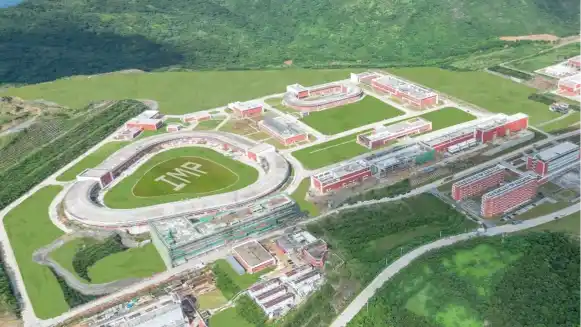
With the successful beam commissioning, China has taken another giant step towards scientific innovation. The High Intensity heavy-ion Accelerator Facility (HIAF) the world’s largest and most advanced ion accelerator is the key accomplishment that propels China to lead the world in nuclear and astrophysical research.
In fact, the HIAF installation, which was achieved within merely eight months, is a landmark that tells the story of China’s ascent in high-tech. One of the notable features of the project was the use of digital twin technology throughout the whole process, initiating a sort of virtual construction where the workers could design, test, and calibrate the components even before the actual site work. The facility harbors more than 6,000 pieces of equipment and about a million meters of pipelines, which made it one of the most complicated and accurately engineered scientific installations in the world.
Experiment-grade ion beams with the highest intensity in the world are what HIAF is intended to deliver. The breakthrough research will be possible with this one machine in various fields of study; such as nuclear physics and astrophysics, energy research, and material sciences. The researchers are confident that this facility will be a source of new concepts on the most basic structure of matter, the atoms’ nuclei properties, and the formation of the elements in the cosmos.
Moreover, the success of the HIAF project is not only China’s scientific potential indicator but also a landmark moment of China’s ambition to be a powerhouse of super-advanced scientific infrastructure and groundbreaking research. While the international competition to increase scientific capacities intensifies, China’s accelerator, apart from setting new records of innovations and productivity, is also a decisive step toward world leadership in advanced physics research.
To sum up, HIAF transcends the concept of a mere research institute — it is a tool for unveiling the universe’s secrets.