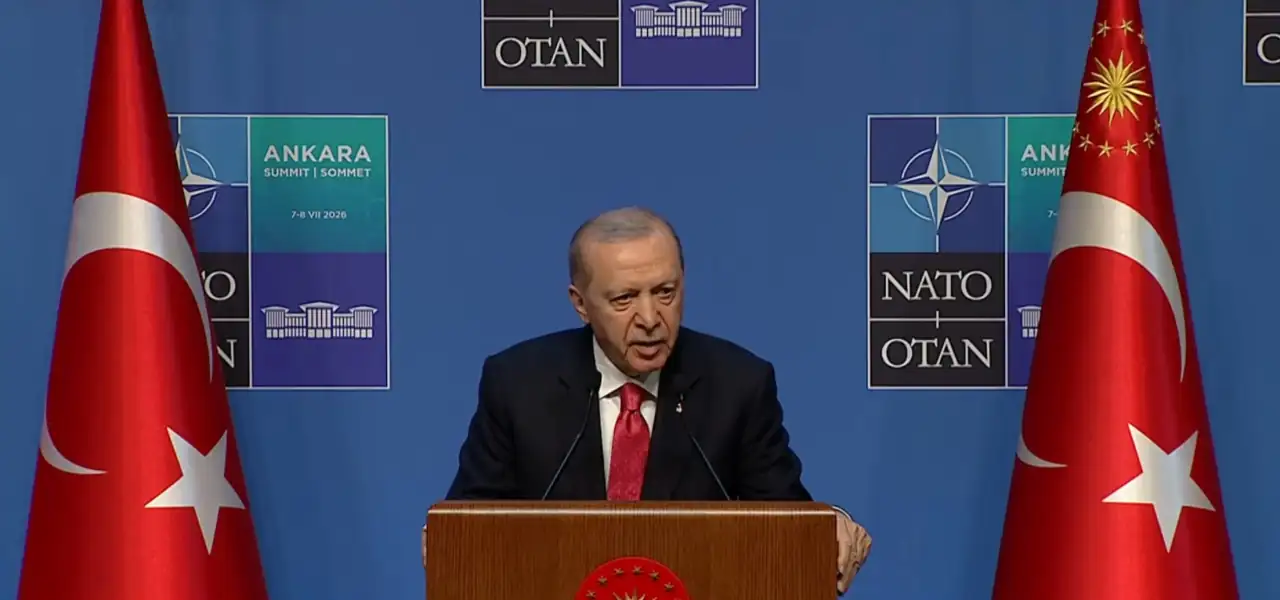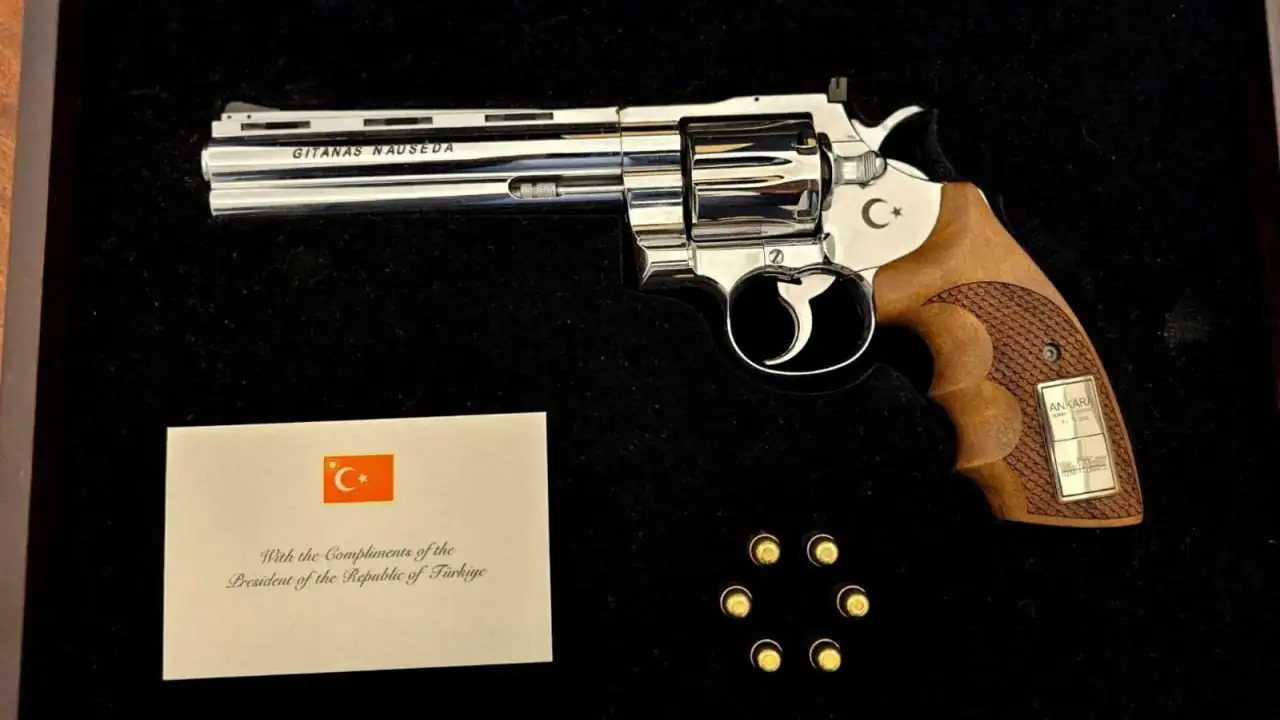
At the conclusion of the 2026 NATO Summit in Ankara (July 7-8), Turkish President Recep Tayyip Erdogan presented each attending NATO leader with a highly unusual farewell gift: a personalized, engraved vintage Turkish-made Gumusay. 357 Magnum revolver, complete with a box of live ammunition, a cleaning kit, and a wooden display case featuring the Turkish flag and NATO logo. The revolvers, rare six-shooters produced by Turkish arms maker MKE in the 1990s, bore the recipient’s name engraved on the barrel and a commemorative placard highlighting it as “the first revolver-type handgun produced in our country.”
The gesture, intended as a symbolic display of Turkish hospitality and defense industry prowess amid discussions on burden-sharing, Ukraine support, and alliance unity, quickly sparked widespread logistical, legal, and security challenges for European officials. Many leaders faced complications with airport security, import/export regulations for firearms and ammunition, and domestic gun control laws upon returning home. Some handed the gifts over to authorities or placed them in official collections, while others navigated bureaucratic approvals.
The incident highlighted tensions in NATO dynamics, with Erdogan’s bold hosting style drawing both amusement and concern. Below is a country by country overview of reactions from European NATO members, focusing on key statements and reported responses, non-European members like the US and Canada are noted briefly where relevant for context.
Information draws from public statements, official offices, and media reports in the immediate aftermath.
Albania
Limited public reaction reported. Albanian officials accepted the gift but emphasized compliance with national security protocols for handling firearms. No major controversies emerged.
Belgium
Prime Minister Bart De Wever discovered the pistol and ammo upon return, triggering immediate security reviews. Belgian authorities handled it through official channels, with spokespeople describing it as an “unexpected diplomatic souvenir” requiring careful legal processing.
Bulgaria
Bulgarian leaders expressed mild surprise but focused on practicalities. The gift was secured and evaluated for compliance with EU and national arms regulations, with no public criticism of the gesture.
Croatia
Croatian representatives accepted the gift in the spirit of alliance camaraderie. It was transferred to government storage pending review, with officials noting Turkey’s symbolic intent positively.
Czech Republic
The Czech delegation viewed it pragmatically, given the country’s own defense industry ties. The revolver was likely destined for official or museum display, with minimal public commentary.
Denmark
Danish officials highlighted strict national gun laws. The gift prompted swift handover to authorities for secure storage or disposal protocols, framed as a routine security matter rather than a diplomatic issue.
Estonia
Estonian leaders, often vocal on security, treated the gift professionally. It underscored alliance symbolism but required adherence to Baltic states’ tight firearms regulations.
Finland
As a relatively recent NATO member with stringent controls, Finland’s response involved immediate protocol activation. Officials noted the logistical “headache” while appreciating the cultural exchange aspect.
France
French President Emmanuel Macron’s team (or representatives) managed the gift discreetly. France’s complex arms laws led to official processing; media coverage emphasized the eccentricity without escalating tensions.
Germany
German Chancellor and delegation faced notable bureaucratic hurdles due to strict gun control. The gift was surrendered or secured promptly, with officials stressing legal compliance. Public discourse framed it as emblematic of Erdogan’s unpredictable style.
Greece
Given historical tensions with Turkey, Greece’s reaction was cautious and protocol-driven. The revolver was handled through official security channels, with limited public statements to avoid inflaming bilateral issues.
Hungary
Prime Minister Péter Magyar (or Viktor Orbán’s successor/context) publicly commented on X: “An unusual gift from President Erdoğan at the Nato summit: a Magnum revolver with ammunition, engraved with my name.” It was presented somewhat lightheartedly amid Hungary’s sometimes divergent NATO stance.
Iceland
Iceland, lacking a standing army, treated it symbolically. The gift was managed through foreign ministry protocols with emphasis on non-military use.
Italy
Italian officials accepted it as a diplomatic token. Logistical handling followed EU guidelines, with media noting the gift’s novelty in summit traditions.
Latvia
Similar to other Baltics, Latvia prioritized security protocols. The gift reinforced symbolic unity but was processed per strict regulations.
Lithuania
President Gitanas Nausėda’s office shared images of the Gumusay .357 Magnum. Lithuania acknowledged the gift publicly while ensuring compliance, reflecting its strong NATO engagement.
Luxembourg
As a small nation with tight controls, Luxembourg handed the item to authorities immediately, viewing it as a minor administrative matter.
Montenegro
Montenegrin leaders focused on alliance solidarity. The gift was accepted and processed routinely.
Netherlands
Dutch officials, including those close to NATO leadership, managed it professionally. Strict laws necessitated quick official handling, with understated public response.
North Macedonia
North Macedonia emphasized integration and accepted the gift in line with protocol, with focus on broader summit outcomes.
Norway
Norway’s response highlighted regulatory compliance. The revolver was secured, reflecting Nordic caution on firearms.
Poland
President Karol Nawrocki received the engraved revolver. Poland, with its defense focus, likely appreciated the gesture’s symbolism while navigating logistics.
Portugal
Portuguese representatives processed the gift through standard channels, with little fanfare.
Romania
Romania treated it diplomatically, ensuring security protocols were followed amid regional security priorities.
Slovakia
Slovak officials handled it administratively, aligning with Visegrád Group pragmatism.
Slovenia
Slovenia focused on legal compliance, viewing the gift as an unusual but non-controversial token.
Spain
Prime Minister Pedro Sánchez’s spokesperson confirmed all leaders received the same model. Spain noted it while highlighting its own defense spending targets in summit context.
Sweden
Sweden, another newer member with strict laws, promptly secured the gift and emphasized procedural handling.
Türkiye (Host)
Erdogan presented the gifts proudly as a mark of respect and Turkish manufacturing achievement.
Non-European
US President Trump and Canadian leaders also received gifts, contributing to broader alliance discussions, but European reactions dominated due to travel and legal complexities.
In gifting these engraved revolvers and live rounds, Türkiye showcased its growing arms industry, demonstrating the quality and innovation of domestic production on a prominent international stage. The gesture served not only as traditional hospitality but also as a strategic signal of Ankara’s rising influence within NATO and among European countries, subtly asserting its role as a key defense player capable of shaping alliance narratives through both diplomacy and industrial prowess. The episode is likely to be remembered as one of the more memorable (and meme-worthy) moments in recent NATO summit history.