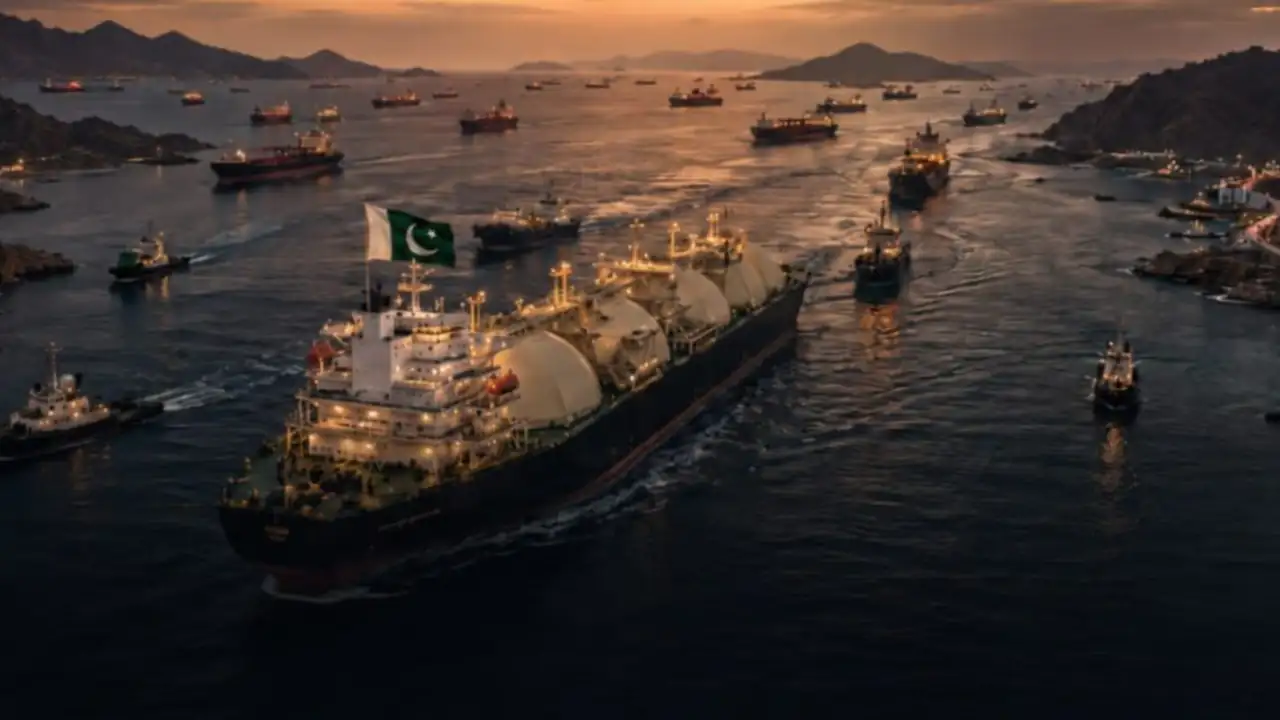
Renewed fighting between US and Iranian forces in the Strait of Hormuz has severely disrupted liquefied natural gas (LNG) shipments from the Persian Gulf, plunging Pakistan into a deepening energy crisis. The critical chokepoint, through which much of Qatar’s LNG exports flow, has been effectively blocked since March, leaving the South Asian nation struggling to keep the lights on.
Pakistan, heavily reliant on imported LNG to meet its power generation needs, is now facing acute shortages. The disruption has exacerbated existing vulnerabilities in the country’s energy infrastructure, where domestic gas fields are depleting rapidly and alternative supplies remain uncertain.
“Since Qatar’s LNG flows through the Strait of Hormuz seized up in March, the country has been living with a 4,000-megawatt daily power shortfall. That’s not an abstraction—that’s hospitals on backup generators, factories cutting shifts, families sitting in the summer heat because the power cut hit at 2 p.m. again.”
— Amir Jahangir, co-founder and CEO of Mishal Pakistan
The human cost is immediate and widespread. Power outages have become routine, hitting essential services and ordinary citizens alike during the scorching summer months. Industries are scaling back operations, affecting employment and economic output, while healthcare facilities rely on costly and unreliable diesel generators.
Efforts to Mitigate the Crisis
Officials and energy experts are pursuing a multi-pronged strategy to stabilize supplies:
Diversifying long-term contracts: Pakistan is in discussions with suppliers such as TotalEnergies and American LNG producers. However, these negotiations have repeatedly stalled due to pricing disputes, geopolitical risks, and logistical challenges.
Building strategic gas reserves: Authorities are accelerating plans to establish buffer stocks to cushion against future supply shocks.
Accelerating renewables and domestic production: With Pakistani gas reserves declining, there is renewed urgency to expand solar, wind, and other renewable capacity, alongside efforts to boost local exploration and production.
As recently as early 2026, Pakistan enjoyed a surplus of LNG. Rapidly falling costs of solar power had made gas-fired generation less competitive in some segments, temporarily easing pressure on imports. That surplus has now evaporated amid the Hormuz disruptions.
The crisis underscores Pakistan’s over-reliance on a volatile global energy supply chain. Energy security analysts warn that without sustained investment in domestic renewables and diversified import routes including potential overland pipelines and expanded port infrastructure, similar shocks could become more frequent.
The government faces a difficult balancing act: securing immediate imports to prevent blackouts while pushing through structural reforms to build resilience. As talks with international suppliers continue and domestic projects are fast-tracked, millions of Pakistanis continue to endure the daily reality of power cuts.