In the lead-up to the 2026 West Bengal Assembly elections, the Election Commission of India’s Special Intensive Revision (SIR) of electoral rolls has triggered sharp controversy. Nearly 91 lakh (9.1 million) voter names were deleted statewide, shrinking the electorate significantly. Murshidabad district, a Muslim-majority border region with around 66% Muslim and 33% Hindu population as per the 2011 Census, recorded the highest deletions, with over 4.55 lakh names removed in the adjudication phase alone, pushing the district’s total impact near 7.5 lakh when accounting for prior revisions. High-impact constituencies include Samserganj (nearly 74,775 deletions, about 30% of its pre-SIR electorate), Lalgola ( 55,420 deletions), along with Bhagabangola, Raghunathganj, Farakka, and Suti. Similar patterns emerged in neighboring Malda and other border districts.
Official Excuse: Cleaning Infiltrators from Voter Rolls
The BJP and the Election Commission defend the SIR as a routine yet rigorous exercise to “purify” electoral rolls. Officials cite the removal of deceased persons, duplicates, shifted or migrated voters, and those failing to verify residency or eligibility. Around 60 lakh names were initially flagged for adjudication, with judicial officers reviewing cases and deleting approximately 27 lakh on grounds of “logical discrepancies”, such as mismatches in names, fathers’ names, or documents between old rolls and Aadhaar/PAN. The BJP frames this as essential national security action in a porous Bangladesh-border state, repeatedly using terms like infiltrators or illegal Bangladeshi immigrants. Leaders, including Union Home Minister Amit Shah and Prime Minister Narendra Modi, have linked the deletions to a broader detect, delete, and deport policy, arguing that only genuine Indian citizens should vote and that the TMC allegedly sheltered bogus voters for electoral gain.
BJP spokespersons assert that Hindu refugees from Bangladesh have nothing to fear, while emphasizing strict scrutiny for others. They tie this to promises like implementing the Uniform Civil Code (UCC) within six months of forming a government in Bengal, a move pitched as ending “appeasement” and ensuring one law for all citizens. Critics interpret the combined rhetoric as creating a two-tier system: non-Muslims (especially Hindus) could more easily prove or regularize their status under citizenship-related frameworks, without showing any proof, while Muslims face heightened barriers if documents show any discrepancy.
Ground Reports and Allegations of Systematic Targeting
Opposition parties, led by the Trinamool Congress (TMC), and affected residents strongly contest the narrative. In Murshidabad villages, particularly in Samserganj and Lalgola, numerous accounts describe long-time residents, including those with valid Voter ID, Aadhaar and records of voting in the 2021 Assembly and 2024 Lok Sabha elections, having their names suddenly deleted. Reports mention entire families struck off, government employees, professionals, and even descendants of historical families affected. Minor spelling variations or transliteration differences (common in Bengali names) reportedly triggered flags.
Analyses of deletion data highlight a disproportionate impact on Muslim voters in Muslim-dominated or mixed areas. In some constituencies like Samserganj (where Muslims form a large majority), an overwhelming percentage of those placed under adjudication or deleted carried Muslim names. Independent reviews of sampled booths and constituencies across Murshidabad, Malda, and other districts show Muslims (who constitute about 27% of West Bengal’s population) appearing overrepresented in deletions, sometimes 80-95%+ of flagged cases in areas where they are not the absolute majority. Similar patterns of high deletions in Muslim-heavy pockets have been alleged in earlier voter list exercises in Bihar and Uttar Pradesh.
Critics argue this reflects communal politics rather than neutral administrative errors. They point out that deletions often exceed narrow 2021 victory margins in dozens of seats (including some won by both TMC and BJP), potentially altering outcomes in closely contested battlegrounds. In mixed Hindu-Muslim areas where populations are nearly equal or where TMC draws strong minority support, the skew is seen as strategically aimed at cutting opposition-leaning votes. The timing just weeks before polling on April 23 and 29, 2026 and the introduction of the novel logical discrepancy category fuel suspicions of bias. While some Hindu communities, such as Matuas (a BJP support base), also reported losses, the scale and concentration in Muslim belts are viewed as non-random or seems as a Systematic Targeting
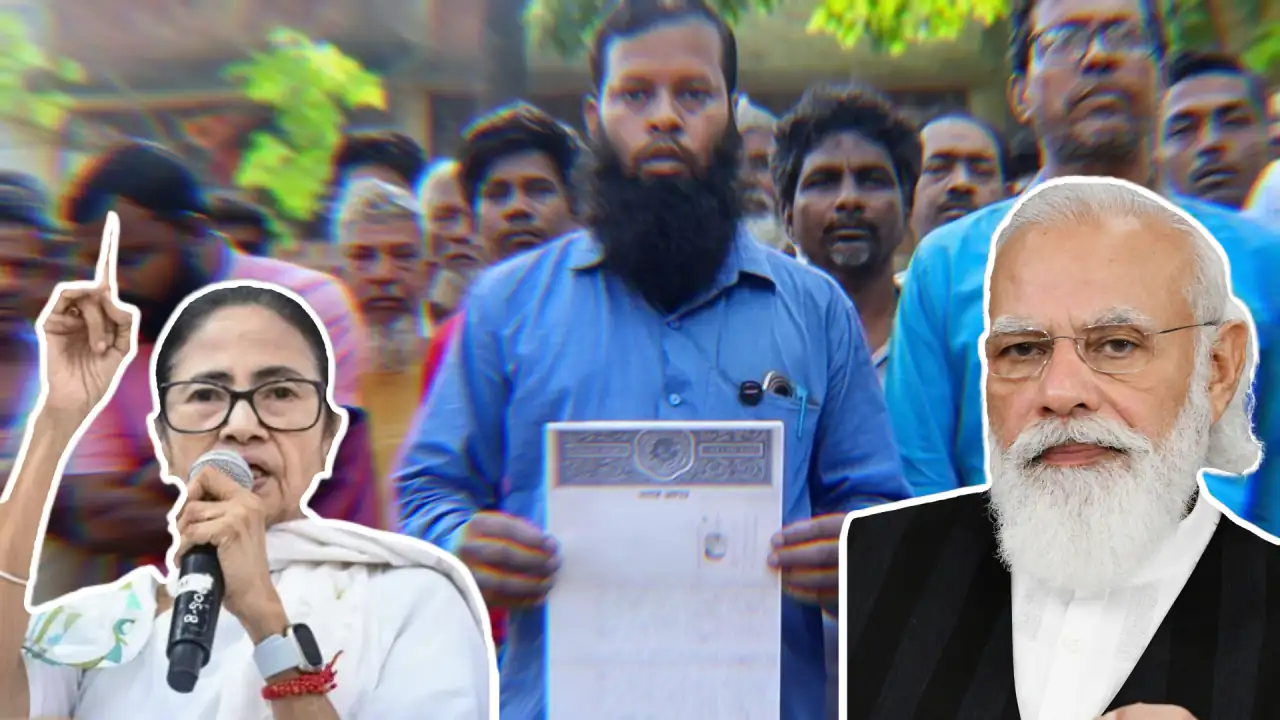
TMC leaders, including Chief Minister Mamata Banerjee and Abhishek Banerjee, have called it a vote heist or electoral genocide accusing the BJP of weaponizing the ECI to suppress minority and migrant voices while advancing a Hindu-majority consolidation agenda. They link it to the UCC push: by first purging or flagging names under the “infiltrator” label via SIR, the ground is allegedly prepared for differential treatment, easier pathways or protections for non-Muslims versus stricter exclusion for Muslims unable to meet heightened proof standards.
The BJP maintains the process is impartial, data-driven, and necessary to safeguard democracy from illegal migration, which they claim threatens Bengal’s demographic and cultural identity. They note that deleted voters can appeal, though the frozen rolls mean many cannot vote this cycle. The Supreme Court has heard petitions but declined immediate relief for inclusion before polling, leaving thousands in limbo.
In Murshidabad and similar districts, the controversy has deepened polarization. Residents express frustration over sudden disenfranchisement despite lifelong residency and participation in prior elections. Political observers suggest the deletions, combined with UCC rhetoric, form part of a multi-pronged strategy to reshape voter demographics in key areas, targeting strongholds where Muslim and Hindu populations are balanced or where regular voters lean toward TMC.
Whether the SIR not represents a genuine cleanup of ineligible entries, it’s only represents a calculated move to influence electoral arithmetic move. Ground evidence of document-holding citizens being removed, especially in a pattern skewing toward one community, raises serious questions about fairness and intent. As Bengal votes, the purged rolls in Murshidabad could prove decisive in thin-margin seats.
This episode highlights ongoing tensions in Indian electoral management: balancing roll accuracy against inclusivity, migration concerns in border regions, and accusations of partisan or communal manipulation. Affected individuals are advised to monitor the CEO West Bengal portal and pursue claims, but many fear irreversible damage to democratic participation in this high-stakes contest. The outcome may not only determine the state’s next government but also set precedents for voter list revisions elsewhere in India.