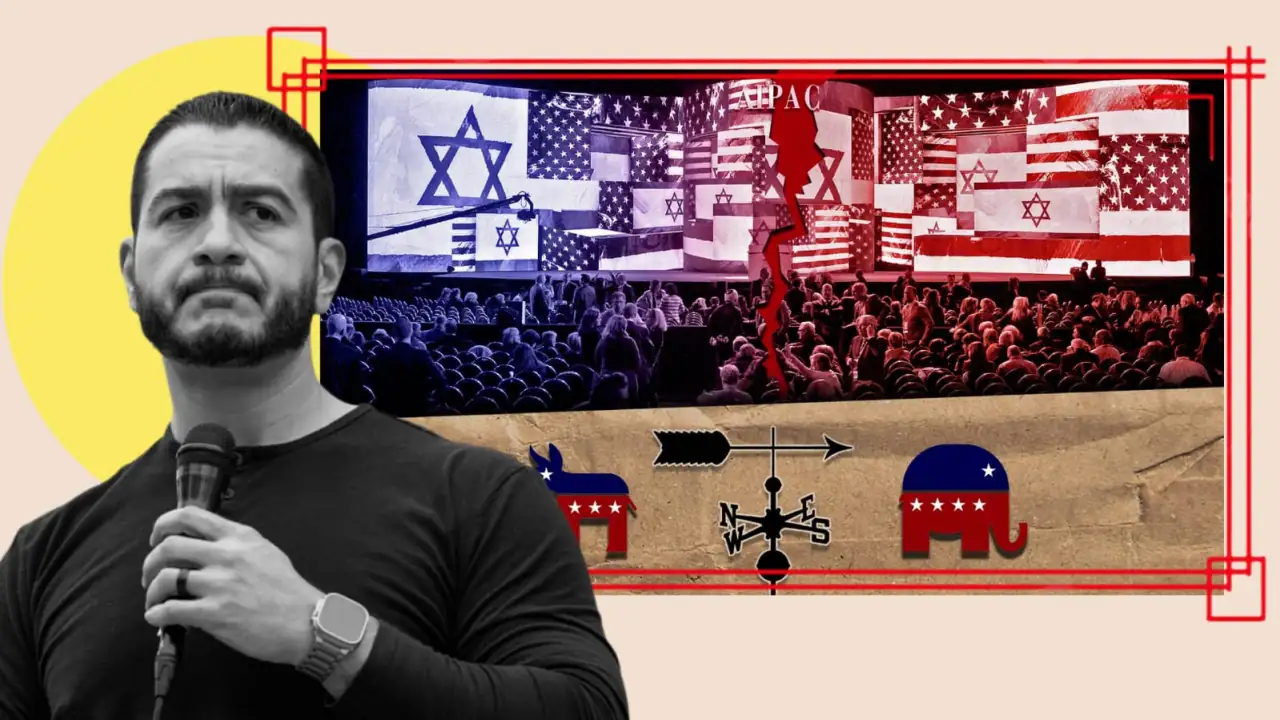
An intense financial intervention by pro-Israel groups has poured nearly $20 million into Michigan’s Democratic U.S. Senate primary, aiming to bolster Rep. Haley Stevens and defeat Dr. Abdul El-Sayed, a progressive epidemiologist and former health official.
Recent Federal Election Commission (FEC) disclosures reveal that the United Democracy Project (UDP), a super PAC closely tied to the American Israel Public Affairs Committee (AIPAC), committed another $4.19 million for ads and mailers. This brings UDP’s total spending in the race to more than $19.4 million, with reports of overall outside pro-Israel spending approaching or exceeding $20–30 million when including allied efforts.
The funds primarily back Stevens while funding attacks on El-Sayed ahead of the August 4 primary.
Financial Mobilization and Primary Context
The spending surge targets a competitive three-way (now effectively two-way) Democratic primary. Public polling from Emerson College had shown El-Sayed in a tight race with state Sen. Mallory McMorrow (who has since suspended her campaign), while Stevens trailed.
El-Sayed, who previously directed health departments in Detroit and Wayne County, campaigns on economic populism, Medicare for All, rejecting corporate PAC money, and a critical stance on unconditional U.S. support for Israel amid Gaza-related issues. He has secured major backing from the United Auto Workers (UAW) and endorsements from figures like Bernie Sanders and Elizabeth Warren.
Stevens, a moderate Democrat and former House member, emphasizes economic issues and has faced criticism for votes supporting aid to Israel.
UDP’s expenditures include TV ads promoting Stevens and opposing El-Sayed, creating a reported 12 to 1 spending advantage on airwaves in the final stretch.
Labor Support and Ideological Divide
El-Sayed’s UAW endorsement highlights his working-class agenda and refusal of corporate PAC funds. The union praised him as a “fighter” aligned with labor priorities.
The race underscores tensions within the Democratic Party: grassroots progressives versus establishment and pro-Israel forces. Divisions extend to foreign policy, campaign finance, and responses to Israel-Gaza developments. El-Sayed’s platform resonates with younger voters and anti-corporate activists, while opponents view his positions as liabilities.
UDP has also spent in other races, such as against Rep. Cori Bush.
This primary tests whether heavy outside spending from pro-Israel groups can override union and progressive momentum in a key Democratic state. Early voting is underway, and the outcome could signal shifts in party dynamics heading into the general election.
Critics of the spending argue it demonstrates undue influence of single-issue lobbying in primaries, while supporters say it counters candidates whose foreign policy views they see as extreme.
El-Sayed’s campaign frames the contest as people-powered resistance to billionaire and lobbyist money. Stevens’ side focuses on electability and mainstream Democratic priorities.