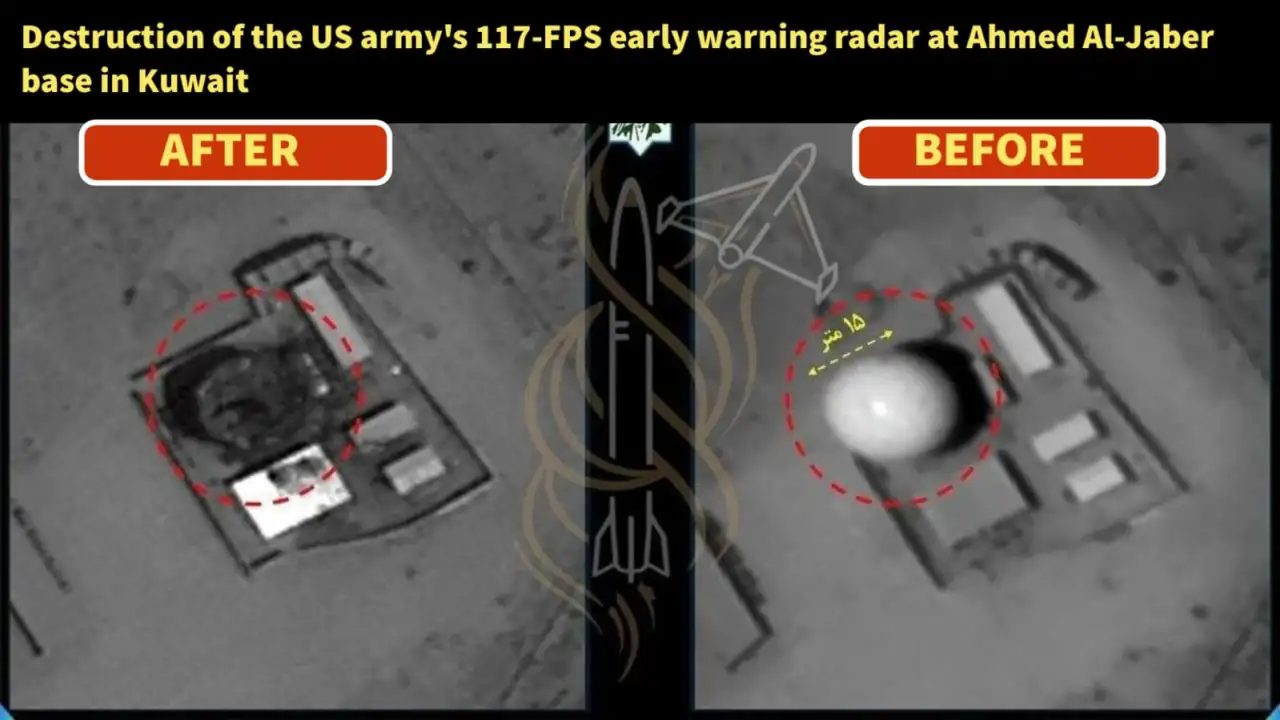
In the context of the escalating 2026 Iran-US regional conflict, the Islamic Revolutionary Guard Corps (IRGC) has claimed a significant strike on US-linked military assets in Kuwait. Specifically, Iranian sources assert that precision missile and drone attacks targeted and destroyed key air defense and surveillance systems, including an AN/FPS-117 (often referred to as 117-FPS) early warning radar at Ahmed Al-Jaber Air Base.
Ahmed Al-Jaber Air Base, located in southern Kuwait, serves as a key facility for the Kuwaiti Air Force and hosts US Air Force operations, including support for aircraft like A-10s and MQ-9 drones under US Central Command (CENTCOM). The base has historical significance from the Gulf War era and remains strategically important for regional air surveillance and operations.
According to IRGC statements reported in mid to late July 2026, the strikes were part of retaliatory operations sometimes referenced in waves of “Operation Nasr” or similar, aimed at degrading US early warning and air defense capabilities in the Gulf. Iranian media and affiliated outlets described hitting an early warning radar, a missile defense radar, an FPS-117 system, Patriot batteries, and related satellite communications at the base. These actions were framed as responses to US strikes on Iranian targets, including radar sites and facilities near the Strait of Hormuz.
Iran has released purported before and after satellite imagery and statements emphasizing the success of these precision strikes in creating a “dark night” for American surveillance networks across Kuwait, Bahrain, and other areas.
US and Allied Responses
US CENTCOM and Kuwaiti authorities have generally described Iranian claims of major damage as exaggerated or false in similar incidents, emphasizing successful interceptions by air defenses and minimal impact on operations. Reports from Kuwaiti sources around related drone incidents noted material damage and minor injuries but did not confirm widespread destruction of high-value US radars. Independent verification of the specific FPS-117 destruction at Al-Jaber remains limited amid the fog of conflict, with much of the reporting relying on OSINT analysis and partisan claims.
Cost of the AN/FPS-117 Radar
The AN/FPS-117 is a Lockheed Martin-produced L-band phased-array 3D air search radar designed for long-range surveillance (up to ~250 nautical miles instrumented range). Exact unit costs vary by configuration, upgrades, and era, but historical and sustainment data provide context:
▪️Individual systems or major modernizations/parts programs often run in the tens of millions of USD.
▪️For example, support and logistics contracts for fleets of these radars e.g, Atmospheric Early Warning System have ceilings in the $25 million range for sustainment, with radome replacement programs at
▪️$52 million IDIQ.
▪️Earlier procurements and upgrades e.g ~$46.8 million for modernizing dozens of units in the 2010s, indicate a single advanced long-range radar installation, including site setup and integration, can represent a high-value asset worth tens to over $100 million when fully equipped, though precise flyaway costs for a deployed FPS-117 variant are not publicly standardized like fighter aircraft.
▪️Loss or damage to such a system would represent a notable tactical and financial setback, affecting regional air surveillance, missile warning, and integration with systems like Patriot.
Statements from Both Sides
breaking-news, Kuwait, America, FPS-117, middle-east
Iranian Side ( IRGC )“The zealous sons of powerful Iran have dealt crushing blows… hit and destroyed an early warning radar, a missile defense radar system on an FPS-117 radar, a Patriot defense system, and a satellite communication system… at the Ahmed Al-Jaber base in Kuwait. With this radar clearing, the enemy must be prepared for more decisive and devastating attacks.”
international-news
US/Allied Side:Iranian claims of damaging key US facilities, including radars and command nodes, are often overstated. Operations continue with interceptions of threats, and there are no (or minimal) reports of significant personnel harm or operational crippling from such strikes.
This incident fits into a broader pattern of tit for tat strikes highlighting vulnerabilities in forward-deployed air defense networks. As the conflict evolves, the true extent of damage at Al-Jaber and its operational impact will likely be assessed through further more satellite imagery and official confirmations. The event underscores ongoing tensions over the Strait of Hormuz and Gulf security architecture.