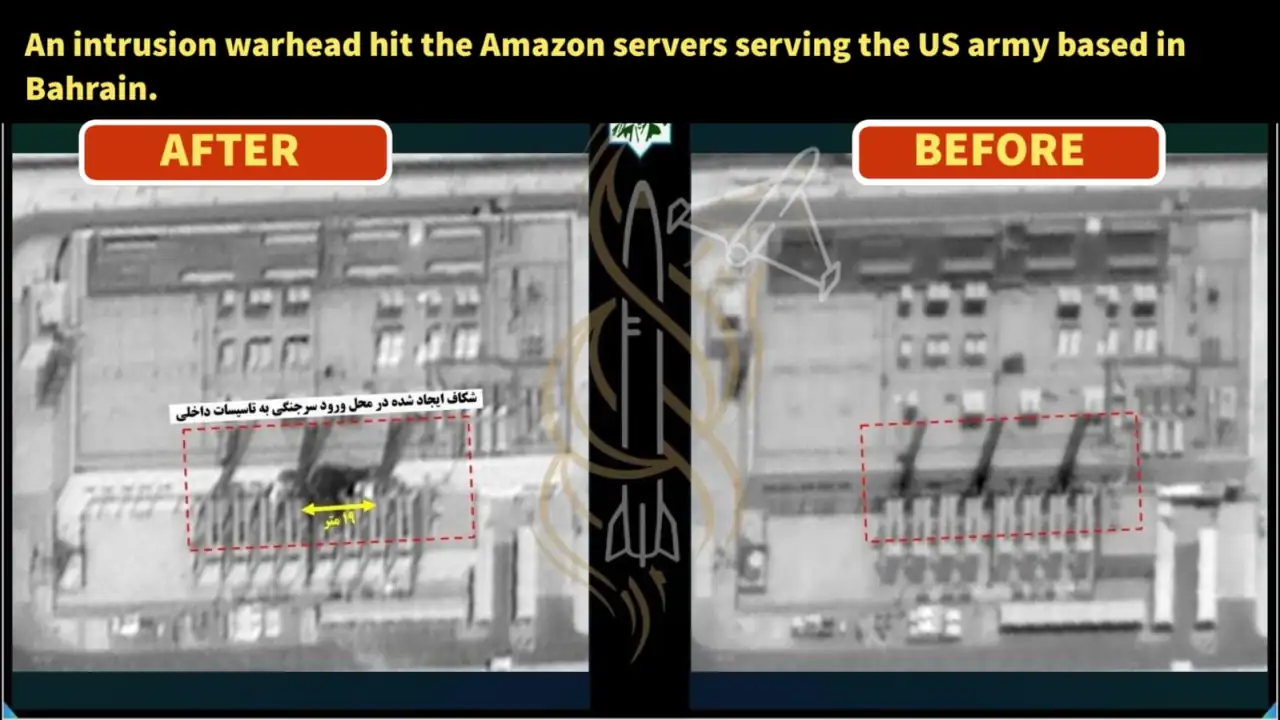
In a significant escalation of the ongoing Iran-US conflict, Iran’s Islamic Revolutionary Guard Corps (IRGC) claimed responsibility for striking Amazon Web Services (AWS) data infrastructure in Bahrain with cruise missiles. The attack targeted facilities reportedly supporting US military operations in the region, marking another instance of commercial cloud infrastructure becoming a battlefield target.
The strike, described by Iranian state media as hitting the “central data infrastructure” of Amazon in Bahrain, caused substantial physical damage, including impact marks visible in satellite imagery on the Batelco RJR Data Center in the Askar area and a nearby substation. This follows earlier disruptions to AWS regions in Bahrain (me-south-1) and the UAE from drone strikes in March 2026, which had already led to prolonged outages, power failures, structural damage, fires, and water damage from suppression systems.
Extent of Destruction and Estimated Costs
The latest attack has further degraded AWS capabilities in the Gulf, affecting cloud services used by governments, banks, businesses, and reportedly US military clients. While exact figures for the most recent strike are still emerging, prior incidents provide context:
Amazon reported significant downtime, forcing customer migrations and issuing credits. One estimate placed direct losses from earlier strikes at around $150 million for Amazon, including service credits and recovery efforts (insurance reportedly did not fully cover war-related damages).
Broader economic ripple effects from data center disruptions in conflict zones can multiply quickly due to lost productivity, emergency migrations, and compromised operations. Global cyber and physical warfare-related damages were already projected in the billions annually.
For a major facility like this, reconstruction, hardware replacement (servers, networking, cooling), enhanced physical security, and redundancy builds could push total costs into the hundreds of millions to over $1 billion, factoring in prolonged outages and national security implications. US military data handling and operational continuity would add classified but substantial classified remediation expenses.
AWS has maintained a status of disruption for the Bahrain region for months, advising customers against expecting normal redundancy. Recovery is described as prolonged, with workloads shifted to other global regions.
Statements from Both Sides
Iranian Statement (IRGC via state-linked media):
“The central data infrastructure of the American company Amazon in Bahrain was attacked with several cruise missiles and destroyed. This strike was in response to the child-killing US Army’s actions, including attacks on Iranian sites.”
US / Amazon-Affiliated Perspective:
Amazon and US officials have been measured in public comments, focusing on technical disruptions without confirming specific military usage. A broader US stance in the conflict emphasizes retaliation against Iranian aggression
“The United States will continue targeted strikes on IRGC capabilities to protect allies, shipping lanes, and forces in the region. Attacks on critical infrastructure, including commercial assets supporting lawful operations, will not go unanswered.”
The incident underscores the blurring lines between civilian infrastructure and military support in modern hybrid warfare, raising questions about data sovereignty, cloud resilience, and the protection of commercial assets in conflict zones. AWS continues recovery efforts while customers reassess regional dependencies.