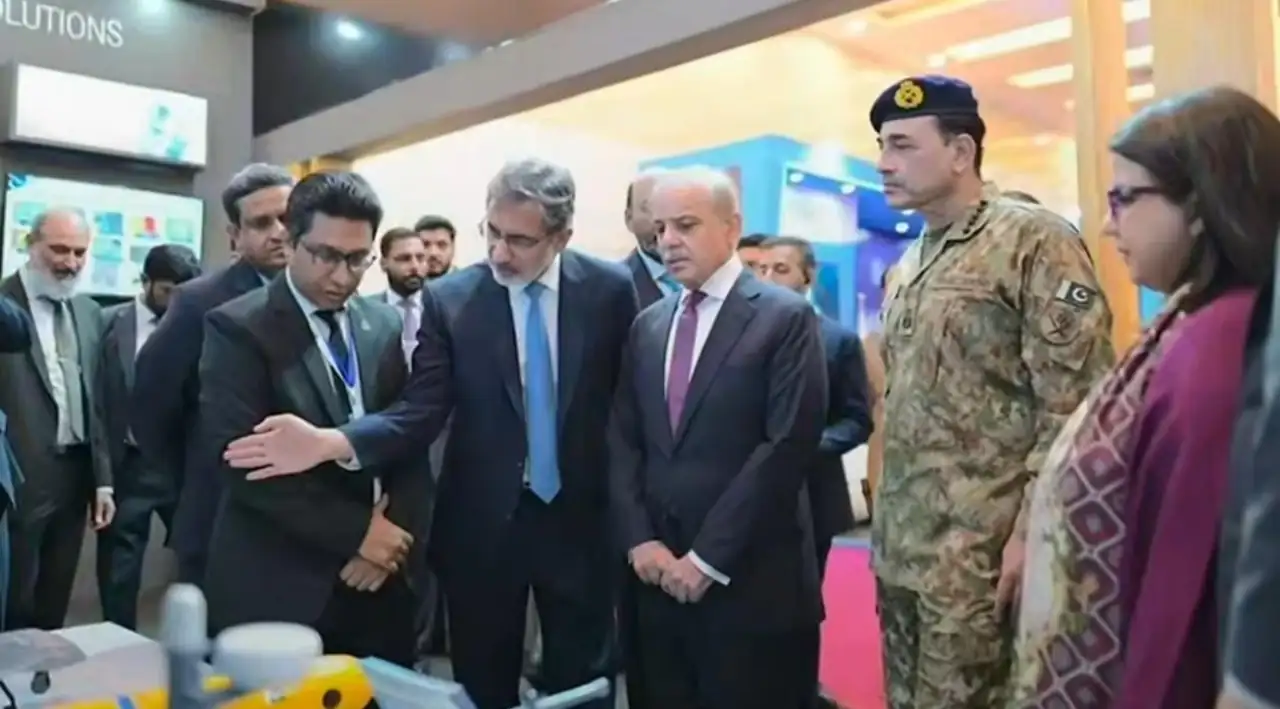
In a powerful display of Pakistan’s growing self-reliance in defense technology, Prime Minister Shehbaz Sharif and Field Marshal Syed Asim Munir, Chief of Army Staff and Chief of Defence Forces, personally inspected cutting-edge homegrown military systems at the Indus RAS (Robotics and Autonomous Systems) Expo 2026. The two-day national event, held at the Pak-China Friendship Centre, highlighted Pakistan’s strides in robotics, drones, autonomous systems, and AI-driven defense solutions.
The high-profile visit underscored the government and armed forces’ commitment to indigenization, reducing reliance on foreign suppliers, and bolstering national security through technological sovereignty. Officials and exhibitors presented a range of platforms developed by Pakistani entities such as the Pakistan Aeronautical Complex (PAC), Global Industrial Defence Solutions (GIDS), and other national research organizations.
Key Technologies on Display
Among the standout exhibits were several systems that blend training, surveillance, strike, and maritime capabilities:
Super Mushshak: This Pakistani-made basic trainer aircraft, in service since 2001 with the Pakistan Air Force and allies like Saudi Arabia, has evolved into a versatile platform. It supports pilot training while also being equipped to fire laser-guided missiles and rockets for light attack roles.
Blaze 400: A newly unveiled Pakistani drone adding to the country’s expanding fleet of unmanned aerial vehicles, designed for enhanced operational flexibility.
Muhassir: A 10-meter naval drone capable of speeds up to 40 knots and patrols exceeding 400 nautical miles. Equipped with advanced cameras and a remote-controlled weapon station, it strengthens maritime surveillance and defense.
ISRAR: Pakistan’s first foray into autonomous underwater vehicles, first publicly shown in 2025. This underwater drone marks a significant milestone in sub-surface autonomous capabilities.
Shahpar Family of Drones: The Shahpar series continues to mature. Earlier models offer ranges around 250 km and endurance of up to 7 hours. The advanced Shahpar-II (and emerging Shahpar-III variants) boast extended endurance of up to 20 hours or more, weapon-carrying capacity, and enhanced ISR (Intelligence, Surveillance, Reconnaissance) features, positioning them as formidable MALE (Medium Altitude Long Endurance) platforms.
These systems reflect broader themes at the expo, including defense robotics, drone technology, maritime autonomous systems, and human-machine teaming.
Statements from Leadership and Experts
“Under the dynamic leadership of Field Marshal Asim Munir, our armed forces are embracing cutting-edge technologies to safeguard Pakistan’s frontiers. Today’s exhibition of indigenous capabilities fills every Pakistani with pride. We are not just consumers of technology — we are creators. This is the path to a stronger, self-reliant Pakistan.”
— Prime Minister Shehbaz Sharif
“The progress we witness here is a testament to the vision, innovation, and dedication of our scientists, engineers, and soldiers. These homegrown systems will enhance our deterrence, protect our sovereignty, and ensure peace. Pakistan’s defense industry is ready to meet any challenge.”
— Field Marshal Syed Asim Munir, Chief of Army Staff and Chief of Defence Forces
“The Indus RAS Expo demonstrates Pakistan’s rapid advancement in autonomous systems. Platforms like the Shahpar series and naval drones such as Muhassir show how local R&D is delivering operationally relevant solutions at a fraction of import costs. This bodes well for both defense and potential exports.”
— Defense Analyst and Expert
“From underwater drones to armed UAVs, Pakistan is building a comprehensive ecosystem. The integration of AI and robotics will revolutionize training, surveillance, and combat effectiveness while creating high-tech jobs for our youth.”
— Technology Expert from National Centre of Robotics & Automation (NCRA)
The expo also featured innovations beyond defense, including industrial automation, agritech, assistive robotics, and student competitions like RoboWars, fostering collaboration between the military, academia, industry, and startups.
Analysts view the event as more than a showcase, it signals Pakistan’s strategic intent to modernize its forces amid regional dynamics and to position itself as an emerging player in global defense technology markets. By investing in indigenous production, the country aims to enhance operational readiness, achieve cost efficiencies, and potentially boost exports of these systems.
The successful conclusion of Indus RAS Expo 2026 reinforces a national narrative of resilience, innovation, and technological empowerment, aligning civilian leadership with military modernization goals for a secure and prosperous future.