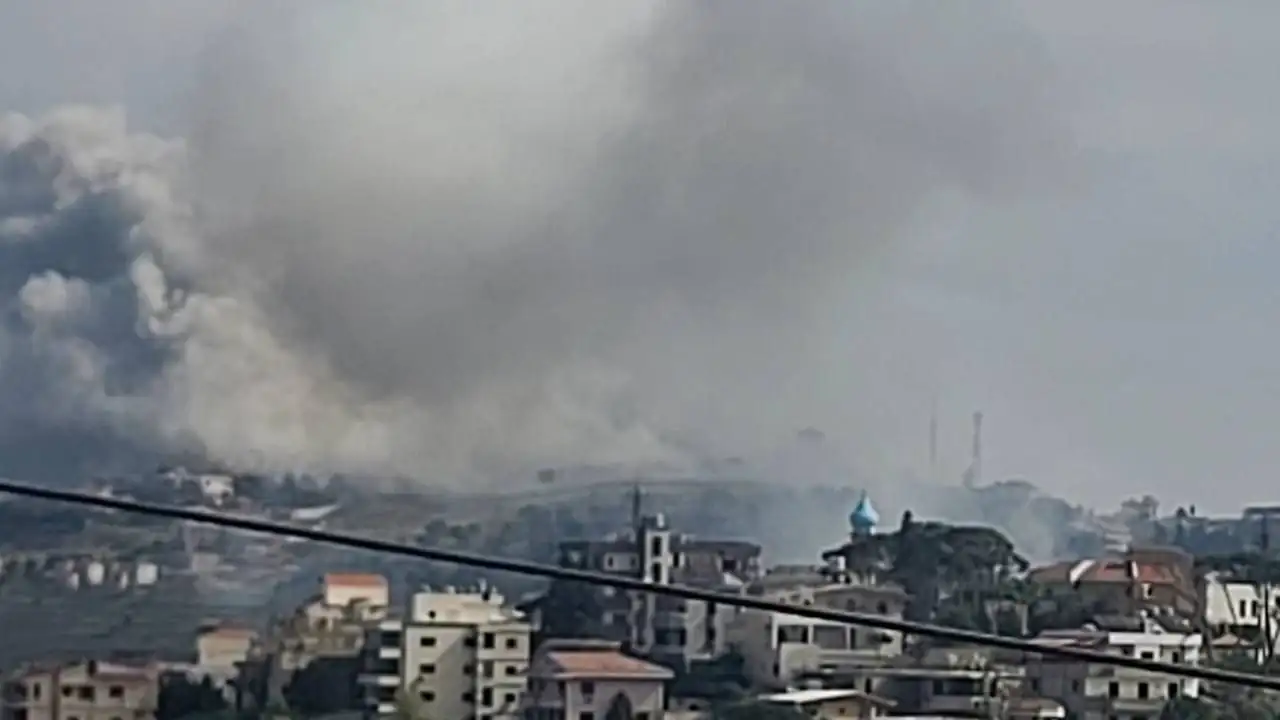
Local reports from southern Lebanon indicate a significant wave of Israeli strikes targeted multiple areas in the south and western Bekaa region between 13:30 and 18:50 local time today. The attacks primarily involved airstrikes, supplemented by drone strikes and artillery shelling, hitting towns, villages, and surrounding areas.
According to aggregated local sources, Israeli forces conducted numerous strikes across a wide geographic spread, focusing on regions near the Litani River and areas historically associated with Hezbollah activity.
Airstrikes
The majority of the reported attacks were carried out by Israeli warplanes. Key locations and strike counts include:
▪️Yahmur al-Shaqif: Hit seven times
▪️Nabatieh: Targeted four times
▪️Haboush, Kfartebnit, Mayfadoun, and Jebchit: Each struck three times
▪️Deir al-Zahrani: Two strikes
Additional single or multiple strikes were reported in the following areas:
▪️Qaraoun outskirts
▪️Al-Kfour
▪️Between Yahmur and Arnoun
▪️Khirbet Selm / Bir al-Salasil (multiple airstrikes)
▪️Between al-Tayri and Hadatha
▪️Bint Jbeil area
▪️Touline
▪️Between Shmarr and Mashghara
▪️Zawtar al-Gharbiya
▪️Kfar Roummane
▪️Kfar Jouz
▪️Arnoun
▪️Borj al-Shamali
▪️Zawtar al-Sharqiyah
▪️Kfar Djal
▪️Mashghara
▪️Sohmor
Drone Strikes
Unmanned aerial vehicles were also active in the operations:
▪️Khirbet Selm outskirts (1 strike)
▪️Khirbet Selm (targeting a vehicle) (1 strike)
▪️Qaraoun Dam vicinity (2 strikes)
Artillery Shelling
Ground-based artillery targeted:
▪️Nabatieh (1 round)
▪️Kfartebnit (1 round)
▪️Dibbine (1 round)
No immediate casualty figures or damage assessments have been independently verified from this specific time window, though such intense strike activity in populated and rural areas typically raises concerns over civilian impact and infrastructure damage.
This latest surge fits into the broader pattern of cross-border exchanges that have persisted since the escalation of the Israel-Hezbollah conflict. Southern Lebanon and parts of the Bekaa Valley have seen repeated Israeli operations aimed at degrading Civilian Infrastructure.
Further updates are expected as more details emerge from the ground. Local media and monitoring groups continue to track developments in real time.