In a significant display of regional military cooperation, Turkey’s largest combined joint live-fire exercise of the year, EFES-2026, has brought together more than 10,000 troops and observers from approximately 50 countries. The drills, held primarily in the Seferihisar district of Izmir, concluded their active phases in May 2026, highlighting advanced capabilities in joint operations, amphibious assaults, drone swarms, and live-fire maneuvers.
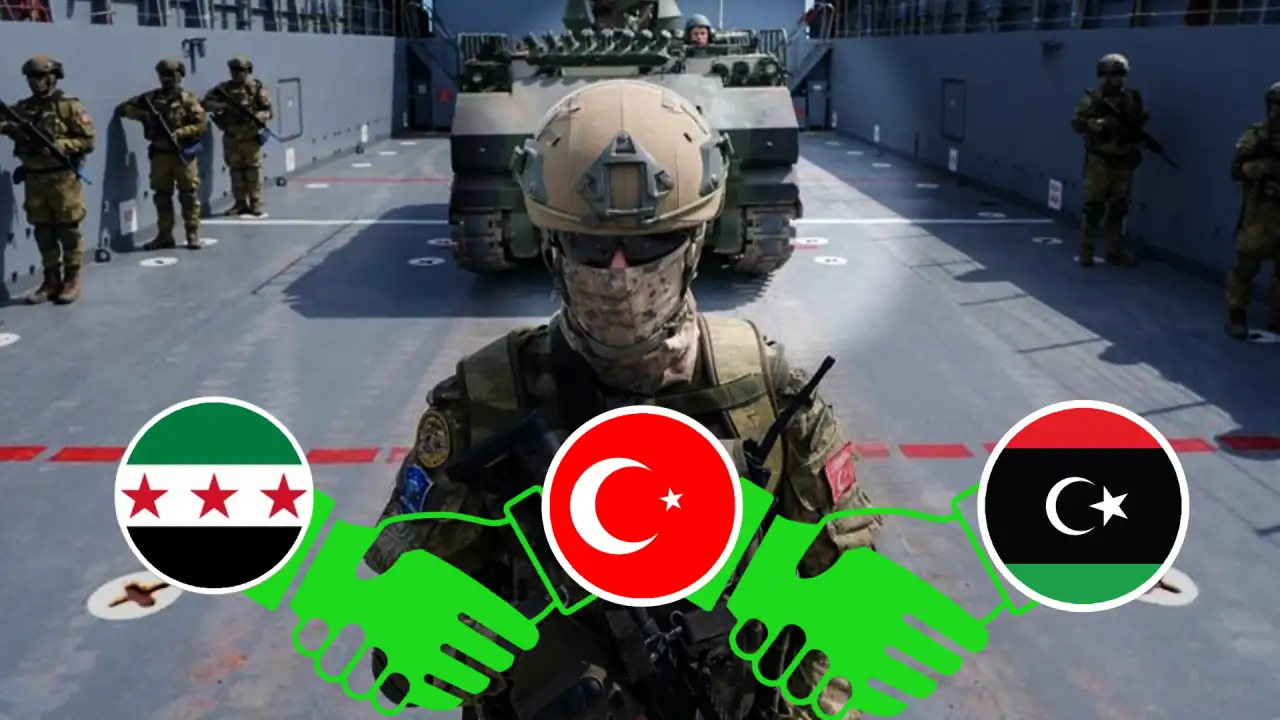
The exercise stood out for two groundbreaking firsts: the participation of the Syrian Arab Army in foreign drills outside Syria and the joint training of Libya’s historically divided eastern and western forces under a single national flag.
For the first time since the restructuring of Syria following the fall of the Assad regime in late 2024, Syrian forces have joined a major military exercise abroad. A core Syrian unit participated in EFES-2026 alongside Turkish and international contingents.
Turkey’s Ministry of National Defense described the involvement as part of ongoing efforts to support the reconstruction and professionalization of Syria’s military institutions. Syrian personnel engaged in various training activities, including air assaults, armored maneuvers, sniper operations, and live-fire drills. Syrian Chief of General Staff Maj. Gen. Ali al-Naasan observed portions of the exercise.
This participation marks a notable step in Syria’s reintegration into regional security frameworks. Analysts view it as evidence of deepening Turkish-Syrian military ties and Ankara’s role in helping rebuild the Syrian army amid post-conflict reforms.
In another diplomatic and military milestone, 502 Libyan troops trained together in Turkey under one Libyan flag, the first time the Libyan Army has conducted exercises outside its borders as a unified force. The contingent included 331 personnel from eastern Libya (associated with the Libyan National Army) and 171 from western Libya (affiliated with the Government of National Unity), along with naval elements such as the fast-attack craft Shafak.
Turkish officials emphasized that the joint participation advances the vision of “One Libya, One Army.” Libyan forces received specialized training in amphibious warfare, electronic warfare, mine and IED operations, special forces tactics, search and rescue, and battlefield medicine.
This marks the second recent instance of eastern and western Libyan factions training together in a multinational setting, signaling accelerating reconciliation efforts facilitated in part by Turkish diplomacy.
EFES-2026 involved roughly 10,388 Turkish personnel and 1,305 troops from partner nations. Participants included NATO allies such as the United States, Germany, France, and the United Kingdom, as well as partners from Azerbaijan, Pakistan, Malaysia, Japan, Sweden, Somalia, and Rwanda.
The biennial exercise focused on enhancing interoperability, testing joint command structures, and showcasing Turkish-made defense systems, including layered air defenses, unmanned combat aerial vehicles (UCAVs), and autonomous drone technologies. Activities spanned land, naval, and air domains, with a strong emphasis on realistic combined-arms scenarios.
Turkey’s hosting of EFES-2026 underscores its growing role as a defense hub and mediator in the Eastern Mediterranean and North Africa. By facilitating the participation of post-conflict and divided states like Syria and Libya, Ankara is projecting influence while promoting stability through military cooperation.
For Syria and Libya, these exercises represent opportunities to modernize forces, build international partnerships, and demonstrate unity on the global stage. As one observer noted, the images of Syrian and Libyan troops training side-by-side with Turkish, NATO, and other forces symbolize shifting regional dynamics from fragmentation toward integration.
The success of EFES-2026 may pave the way for expanded defense collaborations in the coming years.