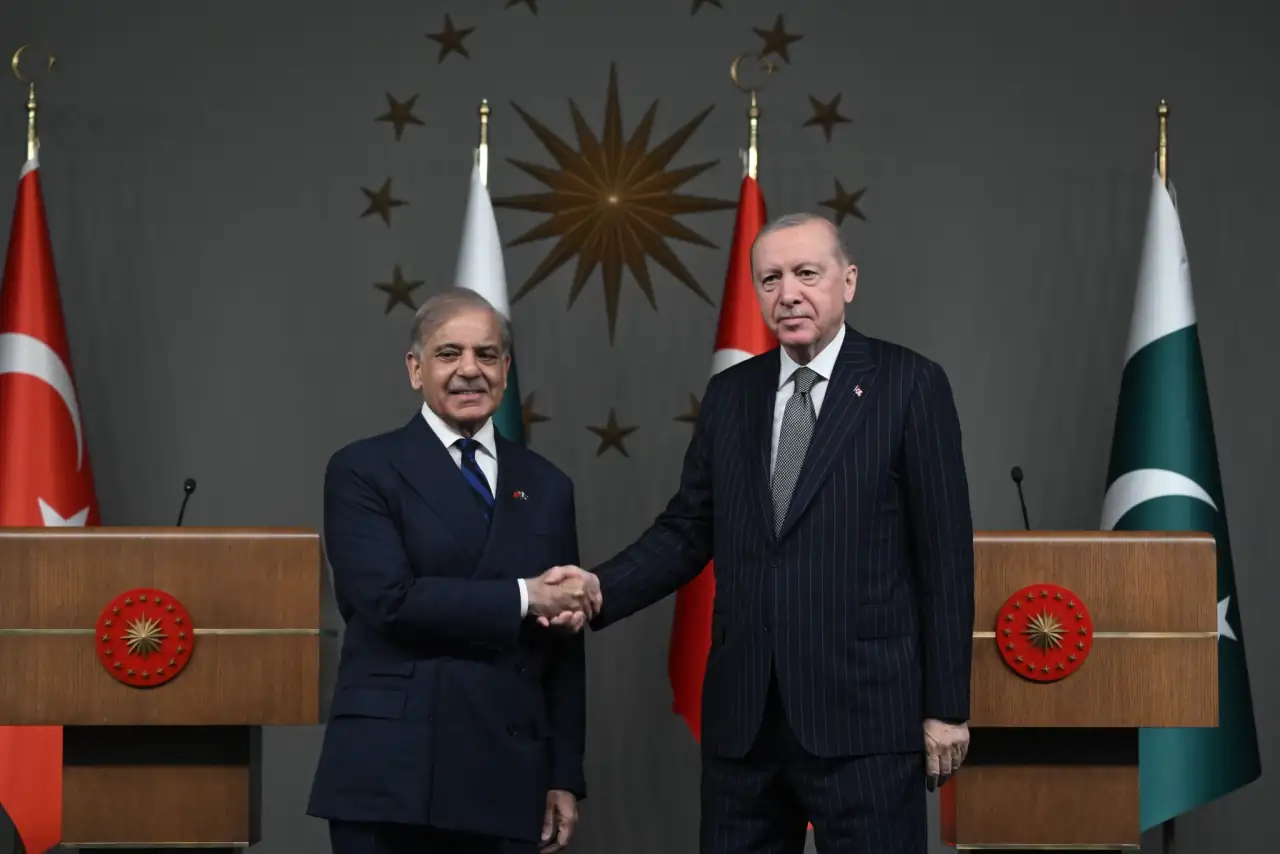
Islamabad and Ankara have taken a significant step toward deepening bilateral ties with the signing of key agreements focused on strategic minerals, energy cooperation, and economic collaboration. During Pakistani Prime Minister Shehbaz Sharif’s visit to Türkiye, high-level talks with President Recep Tayyip Erdoğan centered on boosting trade, energy security, transport, and mining sectors.
The two nations aim to dramatically expand bilateral trade from the current $1.3 billion to $5 billion, signaling a shift from tactical deals to a comprehensive long-term strategic partnership.
A cornerstone of the pact is enhanced energy collaboration. Türkiye’s state-owned Turkish Petroleum Overseas Company (TPOC) has secured five exploration concessions in Pakistan valued at over $300 million. In return, Pakistan will gain access to advanced seventh-generation drilling vessels, cutting-edge seismic technology, and specialized training for engineers.
TPOC is also establishing an office in Islamabad, underscoring a commitment to sustained engagement in Pakistan’s energy sector. This partnership is expected to reduce Pakistan’s reliance on LNG imports while leveraging Turkish expertise in resource development.
To attract investment, the two countries are establishing a Special Economic Zone (SEZ) in Karachi dedicated to Turkish manufacturers. The zone will offer competitive costs and streamlined approvals through Pakistan’s Special Investment Facilitation Council (SIFC), which functions as a “one-window” operation for investors.
In the IT sector, opportunities abound in e-commerce, software development, and telecommunications, with plans for joint ventures between Pakistani and Turkish tech firms.
Pakistan is keen to harness its rich mineral resources, including copper, cobalt, antimony, and rare earth elements. Multiple Memorandums of Understanding (MoUs) have been signed to enable joint extraction and processing projects. Türkiye will contribute capital, technology, and operational expertise to help Pakistan transition from import dependence to becoming a minerals exporter.
Supporting this vision, a $390 million, 1,350 km railway line from the Chagai mines in Balochistan to the national rail network has been approved. The Karachi SEZ will double as a key logistics hub. Additionally, the Balochistan Mines and Minerals Act 2025 introduces a clearer regulatory framework to attract foreign investors.
“Türkiye has a significant edge in technology and resource funding of these kinds of projects which in the future could benefit both states economically, as well as strengthen political engagement.”
— Bilal Hyder Simair, research officer at the Centre for Pakistan and Gulf Studies in Islamabad
For Pakistan, the agreements promise reduced energy dependence, technology transfer, job creation, and infrastructure development, particularly in Balochistan. Türkiye stands to gain new markets, a strategic foothold in South Asia, and reliable access to critical minerals essential for its industries and global supply chains.
Analysts view this pact as more than a series of commercial deals, it lays the foundation for stronger political and economic alignment between the two Muslim-majority nations. As implementation progresses, the partnership could serve as a model for regional South-South cooperation in strategic resources and infrastructure.