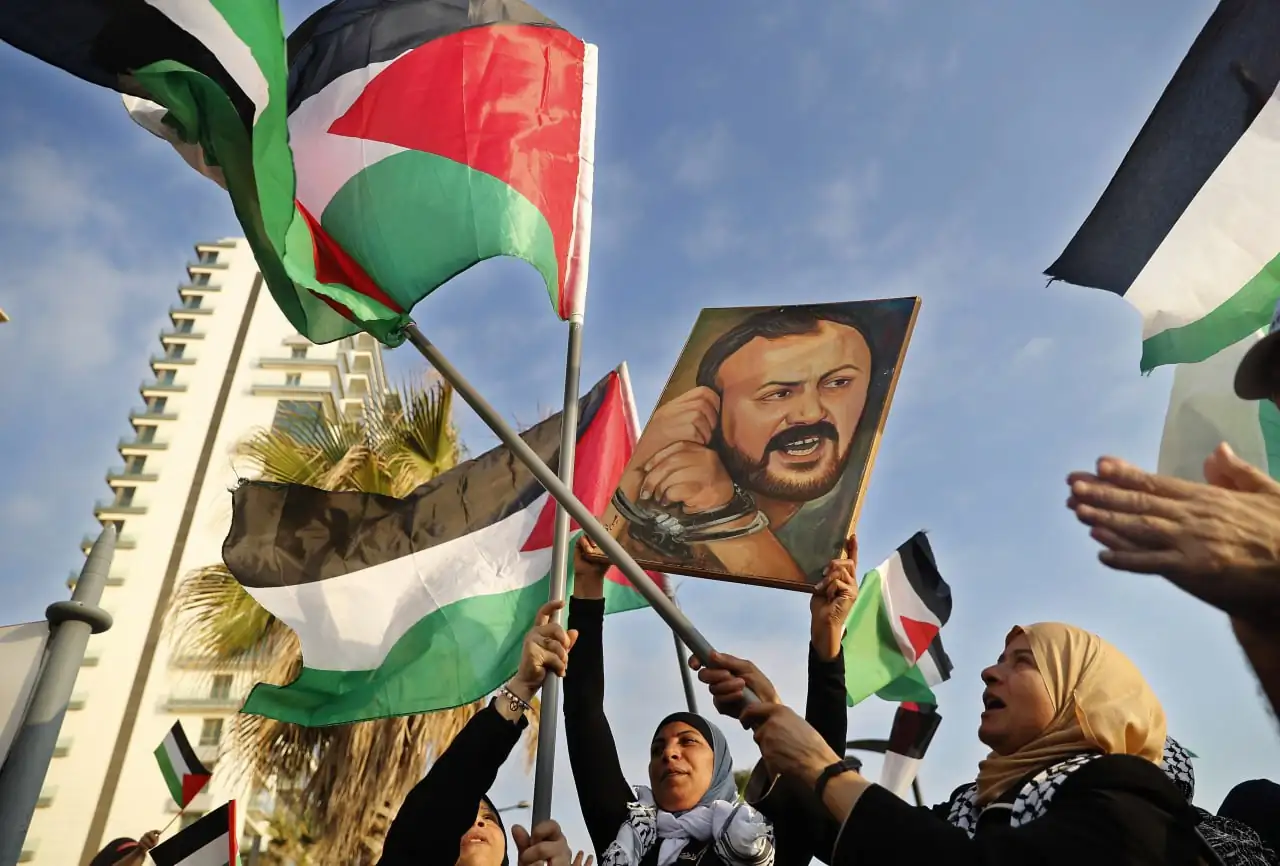
Marwan Barghouti, the veteran Fatah leader languishing in Israeli captivity for nearly 25 years, has signaled his determination to contest the next Palestinian presidential election. Sources close to the imprisoned figure confirmed to Sky News Arabia that Barghouti remains steadfast in his candidacy and has explicitly rejected any notion of withdrawing from the race should polls finally be held.
His potential run surfaces as the Ramallah-based Palestinian Authority faces intense pressure from western powers to move toward long-stalled elections. While current President Mahmoud Abbas has signaled a potential path for parliamentary and presidential ballots, the move is viewed by many as a calculated response to external demands rather than a genuine shift in the authority’s exclusionary governing style.
Barghouti continues to command significant public support across the occupied territories, frequently outperforming both the Fatah old guard and rival factions in polling. As his family reports escalating abuse and physical decline within Israeli detention, his supporters increasingly view him as a necessary figure to break the long-standing leadership vacuum and restore a sense of unified national direction.
The 66-year-old leader, often described as a symbol of Palestinian resistance, was arrested by Israeli forces in 2002 during the height of the second Intifada and later convicted in an Israeli military court on charges widely regarded by his supporters as politically motivated. Despite the harsh conditions of his imprisonment, Barghouti has maintained influence over Fatah affairs through smuggled messages and loyal intermediaries, positioning himself as a unifying voice capable of bridging divisions between factions and generations.
Analysts note that Barghouti’s enduring popularity stems from his reputation as a pragmatic yet firm advocate for national liberation, untainted by the corruption scandals and governance failures that have eroded trust in the current Palestinian leadership. Recent informal surveys conducted in the West Bank and Gaza consistently place him as the frontrunner in any presidential contest, far ahead of Abbas and other potential candidates. His candidacy could galvanize a disillusioned Palestinian public yearning for change after nearly two decades of Abbas’s rule without elections.
Pressure for fresh ballots has mounted amid growing international scrutiny of the Palestinian Authority’s legitimacy and its handling of internal affairs. Western diplomats have privately urged Ramallah to schedule elections as a precondition for renewed financial and political support. Yet critics argue that Abbas, now in his late 80s, has repeatedly delayed polls out of fear of losing power, preferring to maintain control through appointed institutions rather than democratic mandate.
Barghouti’s family has repeatedly highlighted the deteriorating health conditions inside Israeli prisons, including reports of medical neglect and restrictions on family visits. “He is paying a heavy price for his commitment to the Palestinian cause,” a close relative told Sky News Arabia, calling for his immediate release alongside demands for broader prisoner exchanges. Supporters frame his potential presidency not merely as a leadership transition but as a strategic necessity to confront the ongoing occupation and revive stalled peace efforts on Palestinian terms.
Fatah officials, while cautious in public statements, acknowledge the momentum behind Barghouti. Some insiders suggest that his participation could reinvigorate the movement, which has struggled with factionalism and declining relevance in the face of Hamas’s challenge in Gaza. However, Israeli authorities have made clear their opposition to any arrangement that would free Barghouti, viewing him as a security threat despite his widespread acclaim among Palestinians as a potential statesman.
As the question of succession looms larger over Palestinian politics, Barghouti’s unyielding stance from behind bars underscores a deeper truth: the Palestinian struggle for self-determination continues to find its most potent voices in those who have sacrificed their freedom. Whether the Palestinian Authority will allow a genuine electoral process remains uncertain, but the imprisoned leader’s resolve has already injected new urgency into the long-overdue debate over the future of Palestinian leadership.