Russia has reduced its oil production by an estimated 300,000 to 400,000 barrels per day (bpd) in April 2026 compared to the average levels seen in the first quarter, according to industry sources and Reuters calculations. This marks the steepest monthly drop in Russian oil output since the COVID-19 pandemic disruptions six years ago.
The decline comes as Ukraine has intensified a sustained campaign of long-range drone strikes targeting Russia’s energy infrastructure, including refineries, export ports on the Baltic and Black Seas, and pipeline facilities. These attacks have significantly curtailed export capacity, reportedly by up to 1 million bpd at peak, or roughly 20% of Russia’s total, creating a backlog that has forced producers to throttle output rather than risk overflowing storage and pipeline constraints.
Infrastructure Under Siege
Key factors driving the production cut include:
Refinery disruptions: Repeated Ukrainian drone strikes have hit major facilities, such as the Novokuibyshevsk and Syzran refineries in the Samara region, the Tuapse refinery on the Black Sea (struck multiple times), and the Novo-Ufimsk refinery, where a critical crude distillation unit was shut down after a fire. These attacks have reduced domestic refining throughput, leaving more crude without processing outlets.
Port and terminal halts: Baltic Sea ports like Ust-Luga, Primorsk, and Vysotsk have faced suspensions or reduced operations due to drone-induced fires and damage. Black Sea facilities, including Novorossiysk and Tuapse terminals, have also been targeted, limiting tanker loadings. At one point in late March, around 40% of export capacity was reportedly affected before partial recoveries.
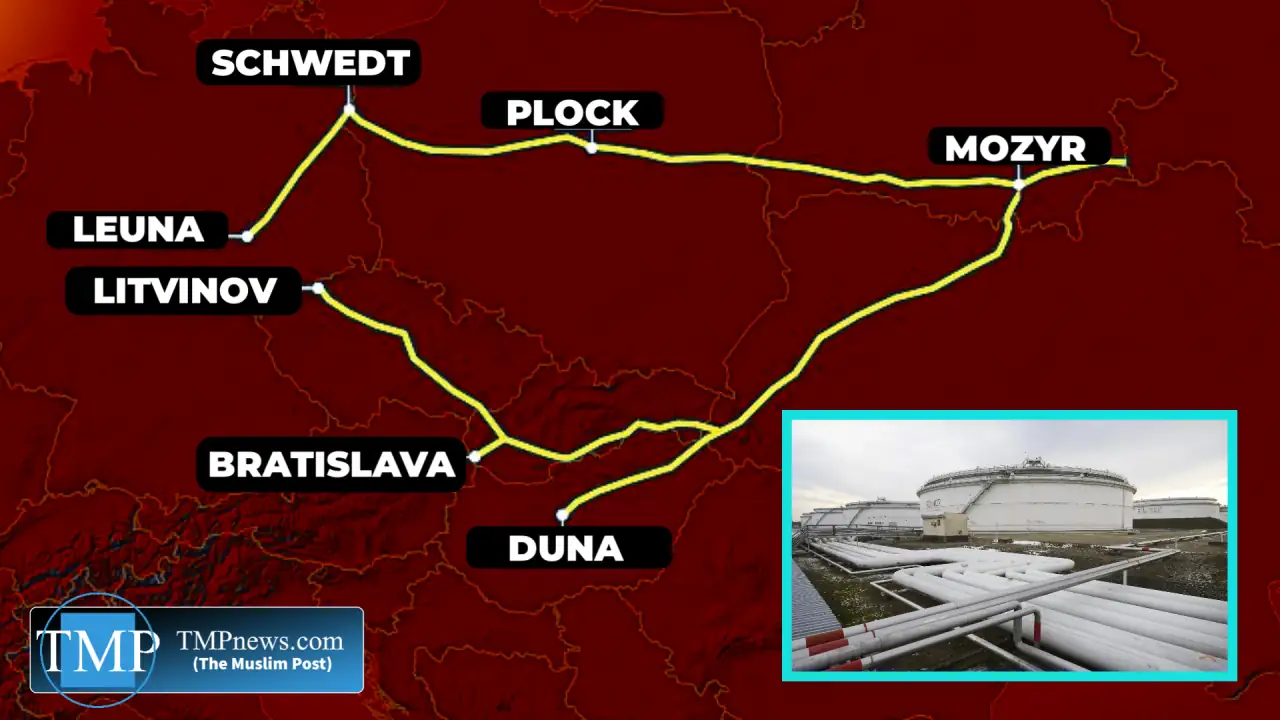
Pipeline issues: The Druzhba pipeline route to Europe remains shut following earlier damage, removing a key export pathway for crude to landlocked countries like Hungary and Slovakia. Additional pipeline segments and pumping stations have been hit in recent strikes.
According to Reuters that, with storage filling and spring maintenance seasons approaching, “it will be difficult to place oil without cutting output.” The April reduction equates to a potentially larger year-over-year drop of 500,000–600,000 bpd when compared to late 2025 levels.
Economic and Strategic Implications
Oil and gas revenues remain a cornerstone of Russia’s budget, historically funding a significant portion of state spending, including military operations. The production cuts arrive at a sensitive time, even as global oil prices have seen support from other geopolitical tensions, such as disruptions in the Middle East. However, the direct hit to export infrastructure undermines Moscow’s ability to capitalize on higher prices.
Russia, the world’s third-largest oil producer, has kept official production data classified since early in the Ukraine conflict. March 2026 estimates from OPEC placed Russian output at around 9.167 million bpd, suggesting the April drop represents a notable reversal from relative stability earlier in the year.
Ukraine has framed the strikes as a legitimate effort to degrade Russia’s war economy, with its drone forces publicly acknowledging hits on facilities deep inside Russian territory. Russian officials have reported fires and operational disruptions at the targeted sites, though they often downplay long-term damage.
The cuts are not solely attributable to Ukrainian actions; routine maintenance and OPEC+ commitments (where Russia has coordinated production adjustments) also play a role. Yet sources emphasize that the surge in drone attacks on export and refining assets has made output reductions “unavoidable” in the short term.
Analysts note that while Russia has adapted in the past by rerouting exports (notably to Asia) and discounting crude, the scale and persistence of the current infrastructure campaign pose fresh challenges. Partial recovery in some ports has occurred, but ongoing strikes and the Druzhba shutdown continue to constrain flows.
This development highlights the evolving nature of the conflict, where relatively low-cost drones are being used to impose asymmetric economic pressure on a critical revenue stream for the Russian state. As spring maintenance adds further pressure, the full extent of the April decline and its ripple effects on global markets, will become clearer in coming weeks.