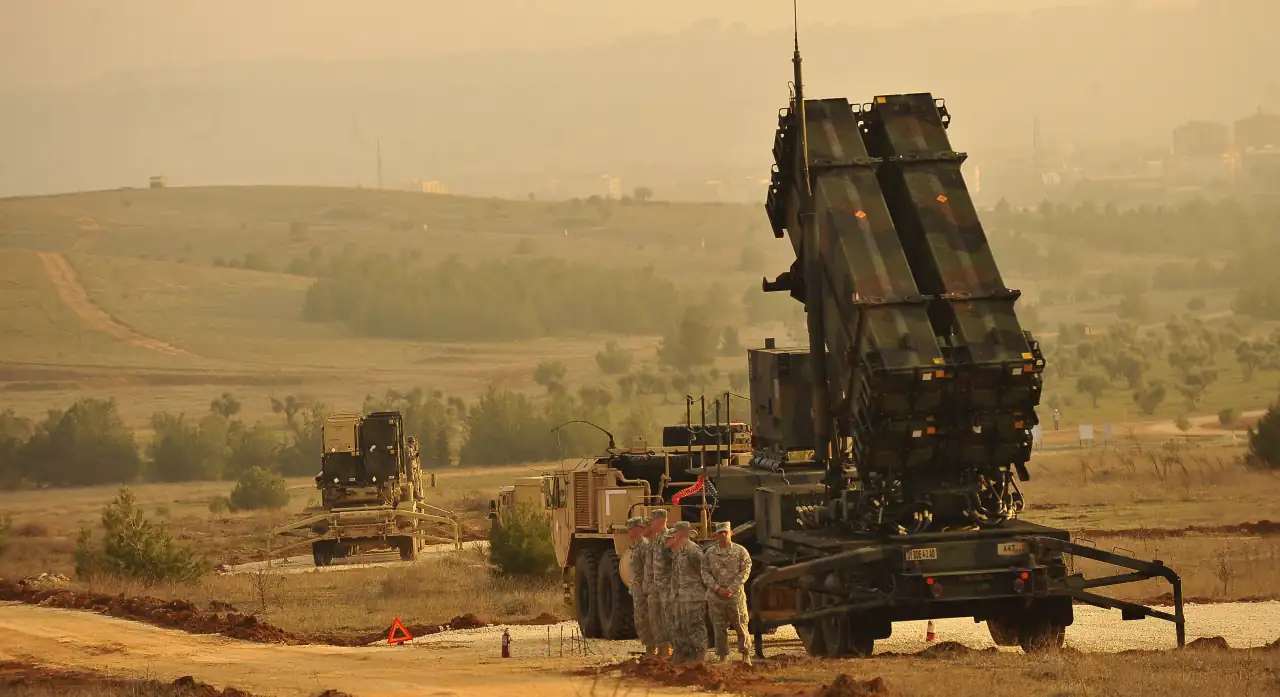
New low-resolution satellite imagery has emerged appearing to show damage to a MIM-104 Patriot air defense battery at a US-linked facility near Erbil International Airport in Iraqi Kurdistan. The images, analyzed by various open-source and media outlets like EGYOSINT etc, depict fire and structural damage consistent with a successful strike by Iranian missiles or drones.
This development follows claims by Iran’s Islamic Revolutionary Guard Corps (IRGC) of targeting and striking US Patriot systems in the region amid escalating tensions in the Middle East, reportedly part of broader retaliatory operations (sometimes referred to as waves of “Operation Nasr-2” or similar).
The strike is said to involve Iranian Shahed-136 drones or missiles hitting positions at the base. Low-res satellite photos released publicly show apparent destruction or heavy damage to launcher elements and surrounding areas of the Patriot battery.
Iranian Side (IRGC Statement):
The IRGC has asserted that its forces successfully struck and, in some claims, “completely destroyed” a US Patriot air defense system near Erbil, along with other targets. Iranian state-affiliated media described the operation as a precise retaliatory measure against US military presence and alleged interference in regional affairs, such as in the Strait of Hormuz. Officials claimed the strike neutralized key air defense capabilities, with additional reports of damage to related facilities. Iran portrayed the action as defensive and proportionate, emphasizing minimal collateral impact on civilian or Iraqi infrastructure.
US / Coalition Side:
The United States and Iraqi/Kurdish authorities have not issued detailed public confirmations of significant damage to Patriot systems at Erbil in the immediate reports. Previous similar incidents have seen US statements downplaying impacts, noting successful interceptions by defenses, or confirming only minor disruptions. In related escalations, coalition forces reported intercepting many incoming projectiles, with smoke, fires, and limited operational effects observed but no major casualties widely reported at Erbil. Independent verification of the full extent of damage remains limited, as is common in such contested strike assessments.
US officials have historically emphasized the resilience of Patriot systems while avoiding specifics that could aid adversaries.
Cost of Destruction
A full MIM-104 Patriot battery is a high-value asset. According to defense analyses:
Approximate cost of a Patriot battery: Around $1 billion USD including radars, launchers, control stations, and support equipment; export configurations can reach $2–2.5 billion.
Individual PAC-3 MSE interceptors cost roughly $4–6 million each, with a battery’s missile loadout adding hundreds of millions more.
Damage or destruction of even part of a battery e.g launchers, radar components could result in losses in the hundreds of millions of dollars, depending on the specific elements hit and missiles expended or destroyed. Repair, replacement, and temporary capability gaps would add further strategic and logistical costs. Exact figures for this incident are not publicly disclosed.
This event occurs against a backdrop of heightened Iran-US tensions, direct strikes, and retaliatory cycles across Iraq, Kuwait, Jordan, and the Gulf. Satellite imagery has become a key tool for open-source verification in these conflicts.
Both sides continue to frame operations as defensive. The incident underscores the vulnerabilities of forward-deployed air defenses and the risks of escalation in the region. Further independent assessments and official responses are expected as more details emerge.