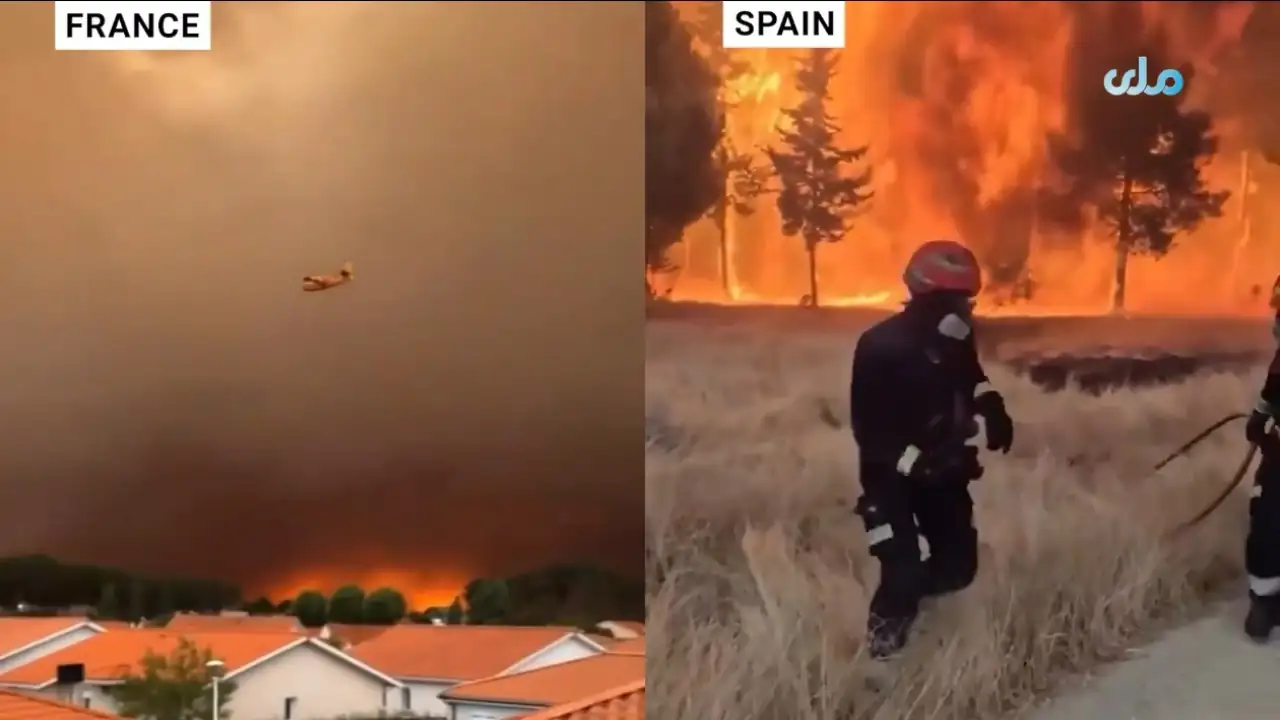
Extreme heat and prolonged drought have ignited some of Europe’s most severe wildfires in decades, forcing more than 250,000 people from their homes across southwestern France and parts of Spain. The blazes, fueled by record temperatures, dry vegetation, and shifting winds, have scorched tens of thousands of hectares, prompted international reinforcements, and led officials to warn of continued difficult days ahead.
In France, the epicenter has been the Gironde region near Bordeaux, along with neighboring Landes. Authorities ordered the evacuation of roughly 167,000 to more than 200,000 residents and tourists as an intense “XXL” or convective blaze described by officials as self-sustaining and unprecedented in scale, raced through pine forests and toward populated areas. The fire threatened tourist destinations including the Cap Ferret peninsula, where some residents and visitors were evacuated by boat. Tens of thousands of hectares burned, with reports of homes destroyed and firefighters stretched thin. France requested activation of the European Union’s Civil Protection Mechanism, bringing in aircraft and helicopters from Croatia, Portugal, the Czech Republic, Slovakia, and elsewhere. Military personnel were also mobilized to support exhausted civilian crews.
Spain declared a national emergency as multiple fires, particularly west of Madrid in areas including Ávila and Toledo, merged and expanded. Over 70,000 people were evacuated or ordered to shelter, with additional significant displacements in the Valencia region, including around La Vall d’Uixó in Castellón province and Manises. At least one fatality was reported near Valencia, with some accounts noting a second death. Thousands of hectares burned in the Madrid vicinity alone, and firefighters faced challenging conditions from heat and wind changes.
Both countries have received or requested cross-border support, with military aircraft and ground teams joining the effort. Persistent high temperatures and unpredictable winds have complicated containment, leaving many communities on edge as firefighters work around the clock.
Leaders in both nations have stressed the priority of protecting lives while pledging long-term recovery support.
Statements from French and Spanish Officials
French President Emmanuel Macron:
“Everywhere the flames strike, thousands of hectares have been ravaged, homes destroyed, activities disrupted, lives upended. We will rebuild, we will repair, and we will be there as long as it takes.”
Macron also confirmed the request for EU civil protection assistance and the mobilization of military resources, thanking firefighters and international partners.
Spanish Prime Minister Pedro Sánchez:
“Our priority, our thinking, our aim is for your lives, to save your lives and protect inhabited areas. We are going to have some complex hours ahead because although the temperatures have gone down, we do not know exactly how the wind will develop, how strong it will be.”
Sánchez emphasized saving lives as the overriding goal during emergency planning meetings near the fire zones and noted the scale of the crisis was difficult to grasp.
French Interior Minister Laurent Nuñez described the Gironde blaze as a convective fire of a magnitude never before seen, calling the overall situation “totally unprecedented” and reporting historic levels of land burned nationwide.
As firefighting efforts continue with international backing, authorities urge residents in affected and at-risk areas to follow evacuation orders and safety guidance closely. The crisis underscores the growing challenges of extreme weather across southern Europe, with recovery and rebuilding expected to take considerable time once the flames are brought under control.