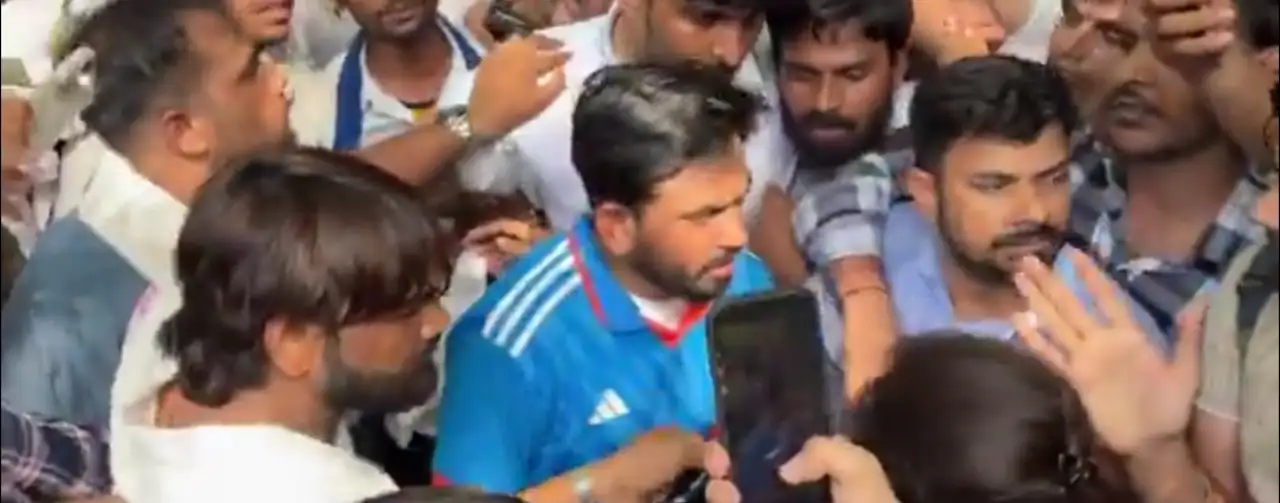
Thousands of young protesters, many identifying as part of India’s Gen Z, gathered at the historic Jantar Mantar in Delhi today for the first offline protest organized by the viral Cockroach Janta Party (CJP). The demonstration, led by founder Abhijeet Dipke, called for the resignation of Union Education Minister Dharmendra Pradhan amid widespread allegations of irregularities in national examinations, including the NEET-UG 2026 paper leak and issues with CBSE’s On-Screen Marking system.
The CJP began as a satirical online movement in mid-May 2026, shortly after Chief Justice of India Surya Kant faced criticism for remarks referring to jobless youth as “cockroaches” or “parasites.” On May 16, 30-year-old Abhijeet Dipke, who had been in the United States, posted a Google form inviting registrations for the “Cockroach Janta Party.” What started as digital satire quickly snowballed into a major youth-led phenomenon, amassing millions of followers across social media platforms, reportedly over 22 million on Instagram alone.
The movement tapped into deep frustrations among students and young people over unemployment, repeated exam scandals, and perceived governance failures in the education sector. Protesters have positioned CJP as a voice for accountability, using humor and symbolism while emphasizing peaceful, democratic action.
Abhijeet Dipke arrived in Delhi from the US ahead of the event and was seen at the airport before heading to the protest site. Social activist Sonam Wangchuk joined the gathering, lending significant visibility and energy to the demonstration.
The protest, which ran roughly from 10 AM to 5 PM, remained largely peaceful despite heavy police deployment and barricades around the venue. Organizers had secured permission for the event, in line with Supreme Court guidelines that prohibit a complete ban on protests at Jantar Mantar.
Key demands included:
▪️Immediate resignation of Education Minister Dharmendra Pradhan.
▪️Thorough investigation and reforms to prevent future leaks and irregularities in exams like NEET, CUET, and others affecting millions of students.
▪️Broader focus on education, employment, healthcare, and infrastructure.
Reports noted a more modest physical turnout than the massive online following might have suggested, but participants and speakers delivered strong messages on student grievances. Some right-wing groups attempted to disrupt the event but were reportedly handled by authorities.
Dipke and other organizers repeatedly stressed the need for love, peace, and non-violence, even urging protesters to offer flowers to police personnel.
The protest has drawn mixed reactions. Supporters, including voices like Dhruv Rathee, hailed it as a powerful example of youthful dissent and the transition of an online movement into real-world action. Critics questioned the scale and long-term impact, while some dismissed it as politically motivated.
For many young Indians, the CJP protest symbolizes growing disillusionment with systemic issues in education and governance. Whether this marks the beginning of a sustained political force or remains a one-off expression of anger remains to be seen.
As one protester summarized the sentiment at Jantar Mantar: “The goal of the protest is not protest, but change.”
The event concludes a significant chapter for the nascent movement, with organizers hinting at future actions to keep the pressure on for systemic reforms.