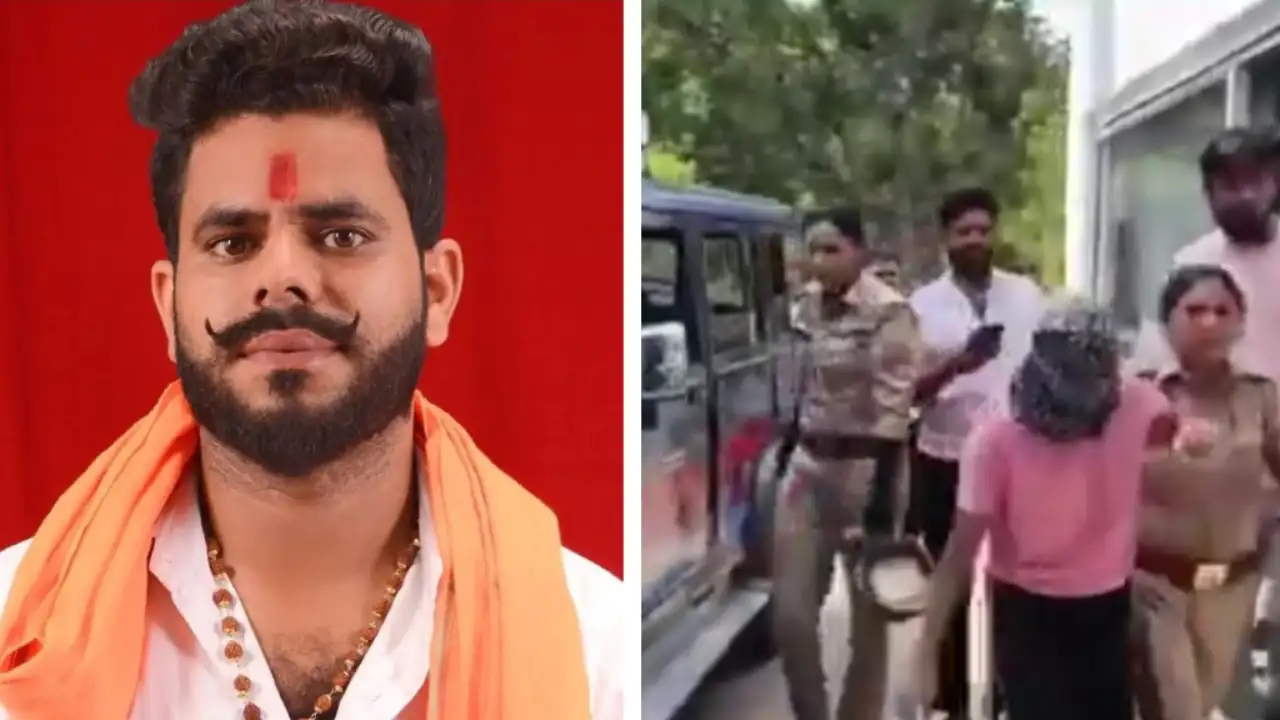
A startling investigation by the Meerut police has uncovered a complex conspiracy involving a self-styled right-wing leader, Nakul Gurjar, who stands accused of orchestrating a fake “love jihad” and gangrape case to extort money from two Muslim youths. The incident has once again turned the spotlight on the vulnerability of sensitive communal narratives to criminal exploitation and the complex political dynamics governing law enforcement responses in Uttar Pradesh.
The incident began on May 30, 2026, when Nakul Gurjar, who has reported ties to right-wing organizations like the Vishva Hindu Parishad (VHP), approached the Medical police station with a tip-off. Gurjar claimed that two Muslim men, identified as Jishan and Shahvez, were actively abducting and assaulting a young woman in a car near the Ring Road area. Acting swiftly, law enforcement intercepted the vehicle, took the distressed woman into protective custody, and arrested the two accused men.
However, the high-profile communal narrative quickly disintegrated during routine police interrogation. The woman, a resident of Bulandshahr, confessed to investigators that the entire episode was an elaborate setup. She revealed that Gurjar had lured her with promises of a secure job and a payout of ₹10 lakh to approach the youths, stage an abduction scenario, and create fabricated evidence. The ultimate objective, according to police sources, was to weaponize UP’s strict legal framework to pressure the families of the accused for massive extortion payouts.
As of June 2, 2026, Gurjar remains at large with police teams actively tracking his whereabouts. Meanwhile, the legal case against Jishan and Shahvez has effectively collapsed following the woman’s official testimony.
This case highlights a deeply entrenched debate regarding governance, political accountability, and the rule of law in Uttar Pradesh. For observers and citizens alike, the incident raises a critical question, How effectively can the state government crack down on fringe groups that misuse sensitive communal laws?
Supporters of the current administration argue that the state’s legal machinery operates strictly on the merits of evidence. In this instance, local law enforcement did not blindly follow the communal narrative, instead, rigorous interrogation and statutory verification processes successfully filtered out the malicious complaint. From this perspective, the dropping of charges against the falsely accused and the active pursuit of Gurjar demonstrate that the UP government’s legal system possesses the necessary checks and balances to punish those who attempt to subvert the law for personal vendettas or financial extortion.
Conversely, political analysts, human rights organizations, and opposition parties argue that a deeper conflict of interest exists at the state and central levels. Critics point out that localized right-wing groups and fringe leaders frequently serve as crucial ground-level mobilizers during election campaigns, acting as vital components of the ruling party’s electoral vote bank.
Because these groups provide significant electoral benefits, critics argue that governments are often hesitant to launch widespread, systemic crackdowns against them. There is a widespread concern that strict anti-conversion legislation, while intended to prevent forced crimes, inadvertently creates a climate of impunity where vigilante groups feel emboldened to weaponize the law, secure in the belief that their political utility protects them from severe consequences.
The Meerut extortion plot underscores the profound dangers of allowing communal rhetoric to bypass rigorous institutional scrutiny. While individual police officers can successfully dismantle fabricated cases through diligent investigation, the broader challenge remains systemic. Now it remains to be seen what action the Uttar Pradesh government will take on this issue, whether it will ban such unrecognised groups or not. If such incidents continue unchecked, many innocent youths could get trapped in false cases. If the UP government truly does not want to engage in vote-bank politics, then strict action should definitely be taken.