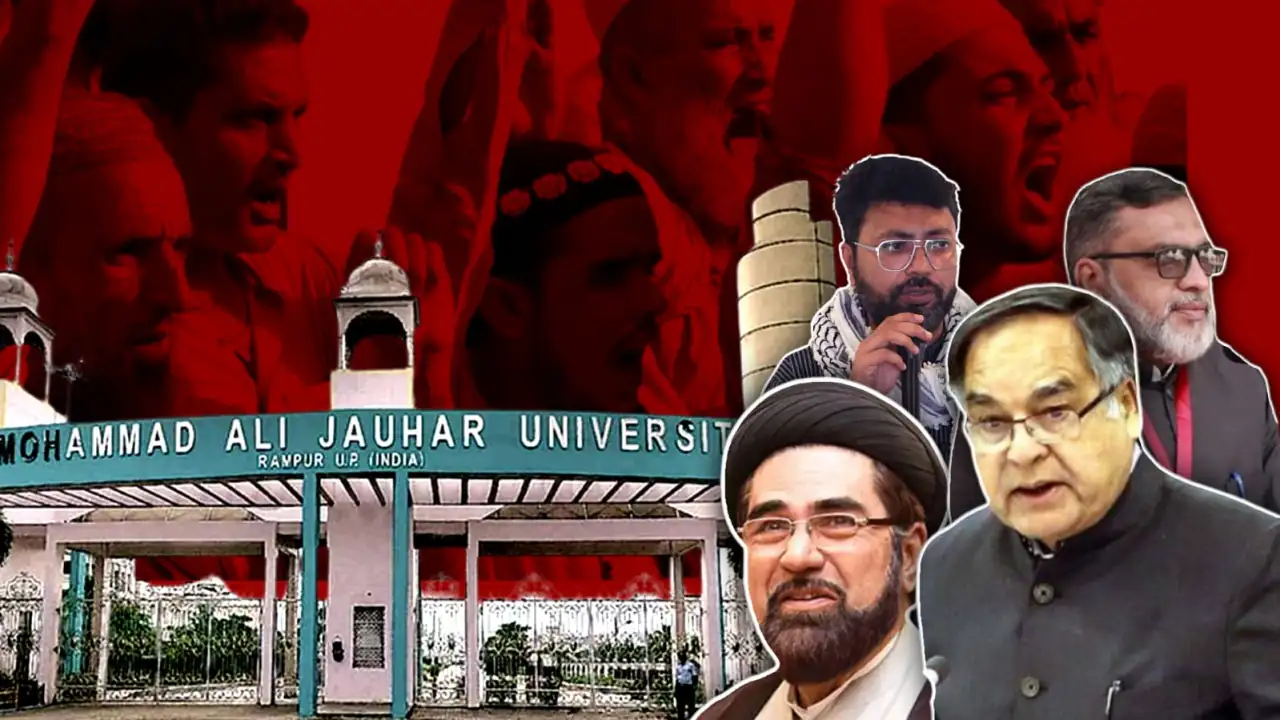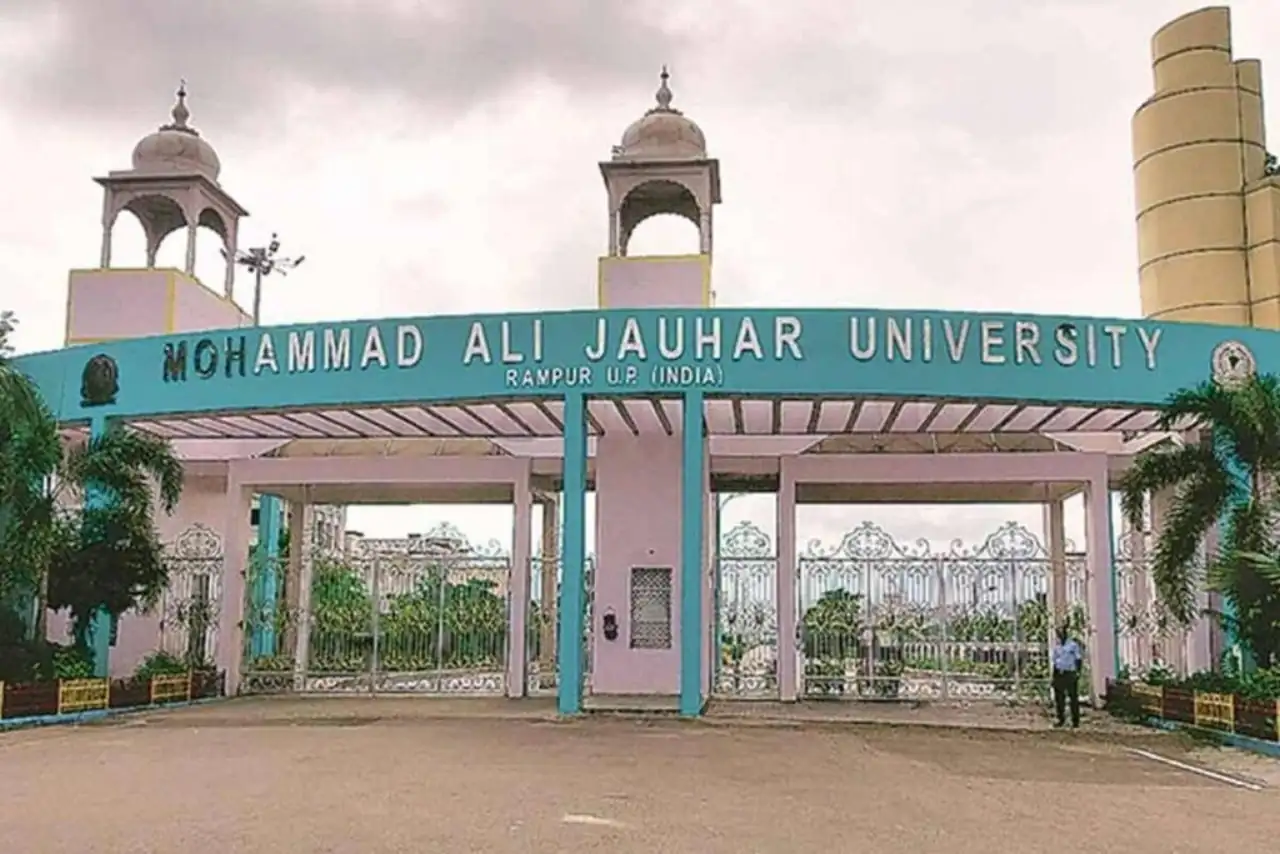
Higher education remains one of the most powerful levers for social mobility in India. For communities that have historically lagged in access to quality institutions, the existence of minority educational spaces carries particular weight. Muhammad Ali Jauhar University in Rampur, Uttar Pradesh, is one such institution.
Founded under the Mohammad Ali Jauhar Trust associated with Azam Khan, it holds official minority status and has become a significant centre of learning for thousands of students, many from economically disadvantaged backgrounds. Against the backdrop of limited Muslim-minority universities nationwide and a recent demolition order targeting most of its buildings, the university’s importance has come into sharper focus.
The Broader Landscape of Higher Education in India and Uttar Pradesh
According to data tracked by the University Grants Commission (UGC) and the Press Information Bureau, India has approximately 1,338 recognised universities. Uttar Pradesh accounts for 84 of these, placing it among the states with the highest number of universities. These figures draw from the Ministry of Education’s All India Survey on Higher Education (AISHE) framework and related official compilations.
Within this national and state picture, Muslim minority universities form a small subset. Available tracking indicates roughly 23 such universities across India, with Uttar Pradesh hosting the largest concentration at 6. This distribution is noteworthy because Uttar Pradesh also has one of the largest Muslim populations in the country.
Estimates place the Muslim share of the state’s population at around 21%. Advocates of proportional access argue that if higher-education institutions were distributed strictly according to demographic share, the community would require a substantially larger number of dedicated or minority-focused universities—closer to 18 in a state with 84 institutions overall.
By this reasoning, the current count of 6 leaves a shortfall of roughly a dozen. While universities are not allocated purely by population ratios, and many factors including historical development, private initiative, and state policy shape their growth, the numerical disparity is frequently cited by community leaders and education activists as evidence of under-representation.
Indian Muslims, as the country’s largest minority, operate with a limited number of full-fledged universities that can be counted on the fingers of one’s hands at the national level. The concentration of six in Uttar Pradesh is therefore significant.
Among them, Muhammad Ali Jauhar University ranks as one of the more substantial campuses in terms of student strength and infrastructure. Its potential diminution through large-scale demolition would remove not a marginal facility but what many describe as the second or third largest Muslim-minority university in the state.
Profile and Mission of the University
Established by the Mohammad Ali Jauhar Trust, the university carries an official Minority Status Certificate issued by the National Commission for Minority Educational Institutions (NCMEI). This status allows it to prioritise the educational needs of the Muslim community while remaining open to students from other backgrounds. In practice, the student body reflects this dual character: a significant proportion come from the Muslim minority, alongside representation from Hindu, Sikh, Dalit, Christian and other communities.
The campus serves nearly 3,000 students. A substantial share of these learners come from economically weaker sections. For many, institutional fee concessions and support mechanisms make the difference between pursuing a modern professional or degree course and remaining outside the higher-education system. In regions where family incomes are constrained and access to expensive private colleges is limited, such concessions function as a practical bridge to opportunity.
The founding vision, as articulated by the trust and its leadership, centres on educational upliftment of a marginalised community. Azam Khan’s association with the project is well known; the university has been described by its supporters as a long-term effort to create institutional capacity where it was previously scarce.
Tazeen Fatma, Azam Khan’s wife and university secretary, has publicly maintained that the institution’s sole genuine objective has been the educational advancement of a disadvantaged section of society. She has characterised the legal cases and administrative actions surrounding the campus as manufactured attempts to dismantle this project.
The trust further asserts that all land transfers related to the university were carried out through legal agreements and that appropriate compensation was distributed. These claims form part of the ongoing legal and administrative contestation over the campus’s status.
Socio-Economic Role and the Question of Access
Beyond numbers, the university’s importance lies in the concrete pathways it opens. Higher education correlates strongly with improved employment prospects, income mobility, and intergenerational change. For first-generation learners from minority and low-income households, an accessible local or regional university reduces the barriers of cost, distance, and cultural unfamiliarity that often accompany migration to distant metropolitan institutions.
Muslim minority institutions across India have historically played this role, even when their total numbers remain modest. Studies of Muslim-managed colleges and universities have repeatedly noted that such spaces often enrol students who might otherwise struggle to enter mainstream higher education.
At the same time, many of these institutions also admit substantial numbers of non-Muslim students, functioning as mixed educational environments rather than exclusively communal ones. Muhammad Ali Jauhar University fits this pattern: its minority status coexists with a diverse student demographic.
The scarcity of comparable institutions amplifies the stakes. When only a handful of universities carry explicit minority character in a large state, each one acquires outsized importance. Losing significant infrastructure at one of the larger campuses would not merely reduce seating capacity; it would contract the limited ecosystem of affordable, minority-accessible higher education in Uttar Pradesh.
The Current Controversy and Its Implications
In mid-July 2026, the Rampur Development Authority issued an order directing the demolition of 38 of the university’s 40 buildings on grounds of lacking required construction approvals. Only the medical college and one academic block were spared.
University officials have contested the order, arguing that constructions predated the Authority’s jurisdiction in the area and that earlier local permissions had been obtained. As of late July 2026, demolition had not commenced; the matter remains under legal challenge, with students continuing protests and the administration offering counselling for possible transfers.
Opposition political leaders and civil society voices have responded sharply. They describe the action as selective targeting and warn of its human cost.
“The BJP sees communalism even in education. Education, teachers, students, and the jobs that come with education are not on the BJP’s agenda. When will the BJP demolish the illegal buildings of its unregistered allies?”
— Akhilesh Yadav, President, Samajwadi Party
The Samajwadi Party has termed the demolition order “unjustified” and alleged selective targeting of the institution. Leaders from the Indian National Congress and other opposition MPs have echoed the language of “political vendetta” and “bulldozer justice.” They contend that the timing and scale of the action serve to divert public attention while placing the academic futures of more than 3,000 enrolled students in jeopardy.
Community organisations have voiced parallel concerns. The All India Muslim Personal Law Board issued a statement describing the notice as “biased, vindictive and unjust,” arguing that the move is directed not merely against one educational institution but against the educational advancement of the Muslim community.
Other activist and religious organisational voices have stressed that whatever legal or political controversies surround the founder, the students themselves should not bear the cost. One statement noted that thousands of students from poor families study at the university and that demolition would put their future at risk.
Students have responded with sit-in protests and formal memorandums submitted to the District Magistrate seeking an immediate stay. Their participation has been described as diverse, reflecting the mixed composition of the campus. For many of these young people, the university represents not an abstract political project but the practical means of completing degrees already underway.
Wider Context of Minority Educational Institutions
The debate over Muhammad Ali Jauhar University sits within a longer conversation about minority educational rights and institutional capacity in India. Constitutional provisions and judicial interpretations have affirmed the right of religious and linguistic minorities to establish and administer educational institutions of their choice. Minority status certificates, such as the one held by this university, are formal recognitions of that framework.
At the same time, questions of regulatory compliance, land use, and construction approvals remain legitimate domains of state authority. The current dispute turns precisely on those regulatory questions.
Supporters of the university insist that the process has been weaponised; critics of the institution maintain that rules must apply equally. What is not in dispute is the human reality of the enrolled students and the relative scarcity of comparable minority universities in the state.
Education activists frequently point to the broader under-representation of Muslims in higher education enrolment relative to population share. While overall participation has improved over decades, gaps persist, particularly at higher levels and in professional courses.
Institutions that lower financial and social barriers therefore acquire strategic importance. When such an institution faces existential threat to its physical infrastructure, the conversation inevitably expands beyond one campus to the health of the minority higher-education ecosystem itself.
Potential Consequences of Large-Scale Demolition
If the bulk of the buildings are ultimately demolished, the immediate effect would be disruption of ongoing academic programmes. Students would face transfer, interruption, or possible abandonment of courses. For those relying on fee concessions and local access, alternatives may prove more expensive or geographically distant.
Faculty and non-teaching staff would also be affected. Over the longer term, the loss of capacity would shrink the already limited pool of Muslim-minority university seats in Uttar Pradesh.
Community observers note that the university ranks among the more significant of the six minority universities in the state. Its reduction would therefore register as the loss of a major node rather than a peripheral facility.
In a context where advocates already argue that the community is short of a dozen institutions relative to population share, further contraction carries symbolic as well as practical weight.
Voices from the Ground and the Call for Resolution
Beyond formal political statements, the controversy has drawn comments from students and local residents who emphasise the university’s day to day role.
Some students have spoken of the academic environment and opportunities, particularly for young women from the region, that the campus has provided. Others have simply urged that the future of enrolled learners be protected irrespective of the political identity of the founder.
The founding trust continues to maintain the legality of its land arrangements and the educational purpose of the project. Opposition parties and minority organisations continue to frame the demolition order as an instance of selective enforcement that risks collective educational harm. Students continue to press for a stay so that academic continuity is not broken.
Muhammad Ali Jauhar University occupies a distinctive place in Uttar Pradesh’s higher-education landscape. It is one of only six Muslim minority universities in a state that hosts 84 recognised universities overall, and one of roughly two dozen such institutions nationally.
It educates nearly 3,000 students, many from economically disadvantaged backgrounds who depend on institutional support. It holds formal minority status and has served a mixed student body while prioritising the educational needs of a community that remains under-represented in higher education relative to its population share.
The numerical disparity—6 minority universities against a 21 percent population share that, by simple proportion, would suggest a need for closer to 18, underscores why each existing institution matters. The recent demolition order against 38 of 40 buildings has therefore raised stakes that extend beyond regulatory compliance.
Opposition leaders, community organisations, and students have characterised the action as political targeting that endangers academic futures. Whether the legal challenges succeed or the regulatory findings are upheld, the episode highlights the fragility of minority educational capacity in a large and diverse state.
Preserving functional higher-education spaces that serve disadvantaged and minority students is not a partisan demand, it is a practical requirement for inclusive development.
Muhammad Ali Jauhar University, whatever the controversies surrounding its founder, has functioned as one such space. Its importance for the Indian Muslim community and for minorities more broadly lies in the concrete opportunities it has created and in the scarcity of alternatives that currently exist.