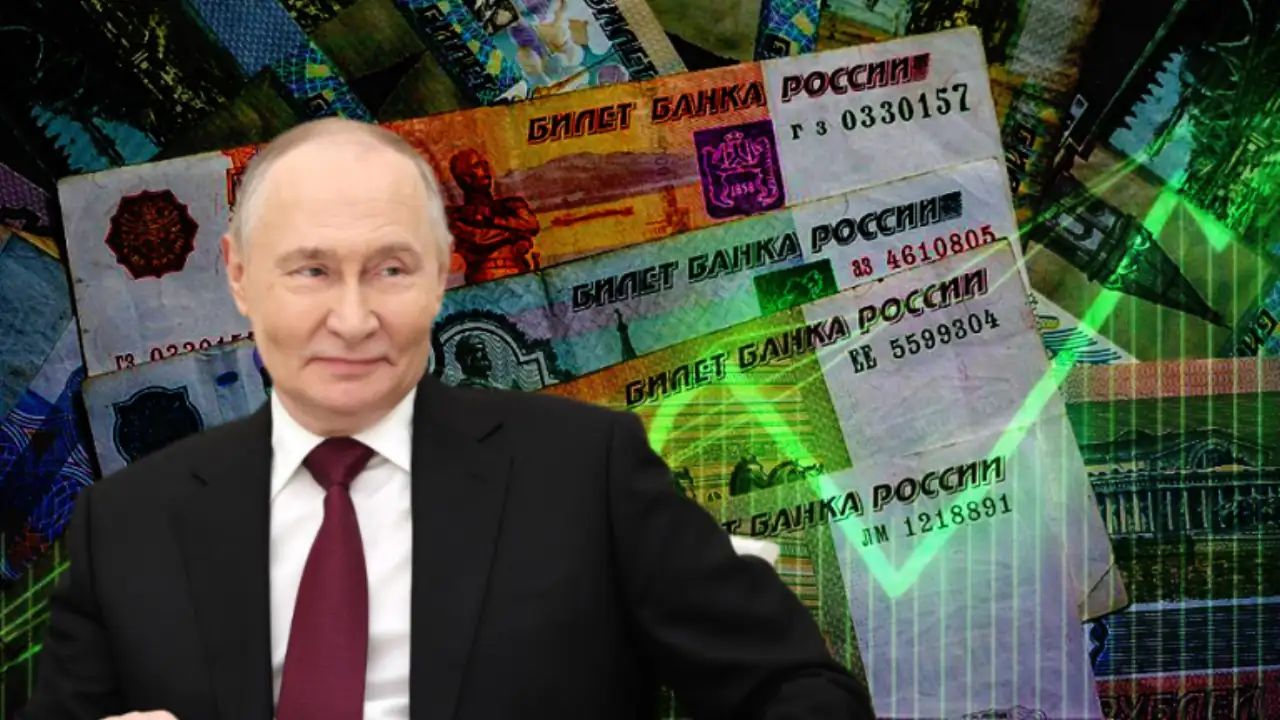
In a striking display of resilience against Western sanctions and global economic headwinds, the Russian ruble has emerged as the world’s best-performing major currency this quarter. The ruble has surged approximately 12% against the US dollar since early April, reaching 72.6 per dollar, its strongest level since early 2023.
This remarkable appreciation stands in sharp contrast to the currency’s struggles in the immediate aftermath of the 2022 Ukraine conflict, when it briefly cratered before stabilizing through capital controls, high interest rates, and redirected energy exports.
The primary driver behind the ruble’s rally is a sharp surge in global oil prices triggered by the ongoing US-Israel war against Iran, which began on February 28, 2026.
The conflict has disrupted oil flows from the Middle East, one of the world’s most critical energy regions. Attacks on Iranian infrastructure, including facilities near key export terminals, and threats to shipping through the Strait of Hormuz have tightened global supply. Brent crude and other benchmarks have spiked, directly benefiting Russia as one of the world’s largest oil producers and exporters.
Russia has capitalized on this by ramping up exports to willing buyers in Asia, particularly China and India, bypassing many Western restrictions through shadow fleets and alternative payment mechanisms. Higher oil revenues have bolstered the Kremlin’s budget, increased foreign currency inflows, and supported the ruble’s value despite ongoing sanctions.
Several other elements have contributed to the ruble’s strength:
Tight Monetary Policy: The Bank of Russia has maintained elevated key interest rates, making ruble-denominated assets attractive and curbing capital flight.
Trade Surplus: Strong energy exports have helped Russia maintain a healthy current account balance.
Capital Controls: Restrictions on currency outflows continue to limit downward pressure on the ruble.
Weaker Dollar Dynamics: Broader market shifts, including expectations around US policy, have played a supporting role.
As of May 22, 2026, the USD/RUB pair hovers around 71.3–72.6, depending on the platform and timing, reflecting significant gains over recent weeks.
A stronger ruble is a double-edged sword. On one hand, it reduces import costs, helping to tame inflation and improve living standards for ordinary Russians reliant on imported goods. It also signals confidence in Russia’s ability to weather sanctions.
On the other hand, a too-strong ruble can hurt the competitiveness of non-energy exports and reduce ruble-denominated oil revenues for the federal budget (since oil is priced in dollars). Russian officials have occasionally intervened to moderate excessive appreciation.
Despite these challenges, the currency’s performance underscores the limits of Western financial pressure. Russia has successfully pivoted its economy eastward and deepened ties with non-Western partners.
The ruble’s surge comes at a time of heightened geopolitical volatility. The Iran conflict has ripple effects across global markets, from elevated energy prices fueling inflation concerns in Europe and Asia to increased defense spending worldwide.
For currency traders and emerging market investors, Russia’s performance highlights how commodity-linked currencies can thrive in times of supply shocks. However, risks remain: any de-escalation in the Middle East could reverse oil gains, while further escalation might introduce new sanctions or logistical hurdles for Russian exports.
Analysts expect the ruble to remain supported in the near term as long as oil prices stay elevated. Longer-term forecasts vary, with some projecting stabilization around current levels and others warning of potential volatility if the Iran conflict resolves or global demand softens.
The ruble’s unexpected renaissance serves as a reminder that in today’s fragmented world economy, traditional assumptions about sanctions and isolation do not always play out as planned. For now, Moscow has reason to celebrate its currency’s unlikely triumph.