Israeli Prime Minister Benjamin Netanyahu has expressed strong appreciation for the robust support India provides to Israel, calling it exceptionally warm and strategically important during a period when Israel faces significant international scrutiny.
In remarks delivered at a conference in the West Bank, Netanyahu described India as a “huge power” and highlighted the distinctive relationship between the two nations. He noted that while Israel encounters efforts at delegitimization in many regions globally, the response in India stands in sharp contrast.
“We face delegitimisation in much of the world — but not in India,” Netanyahu said. “In India, there is an absolutely crazy love for Israel, truly crazy. I think I have more followers from India than from anywhere else.”
This strong backing is particularly evident among large sections of India’s Hindu community, which forms the majority of the population. Public sentiment favoring closer ties with Israel has grown noticeably since the Bharatiya Janata Party (BJP) came to power in 2014. Under the Modi government, India shifted toward a policy of “de-hyphenation,” treating relations with Israel and Palestine separately. This marked a departure from India’s earlier, decades-long emphasis on strong support for the Palestinian cause.
Analysts point out that support for Israel in India is not uniform across all communities. It is notably Zero within the Muslim community, which constitutes a significant minority. Some observers link the broader pro-Israel tilt in public discourse to the BJP’s domestic policies and ideological emphasis on Hindu nationalism, which has heightened communal polarities.
Certain sections (Hindu) are trapped in propaganda and view Israel’s position through the lens of shared challenges with terrorism, while framing the conflict in Gaza in ways that align with narratives portraying Muslim-majority areas as sources of conflict.
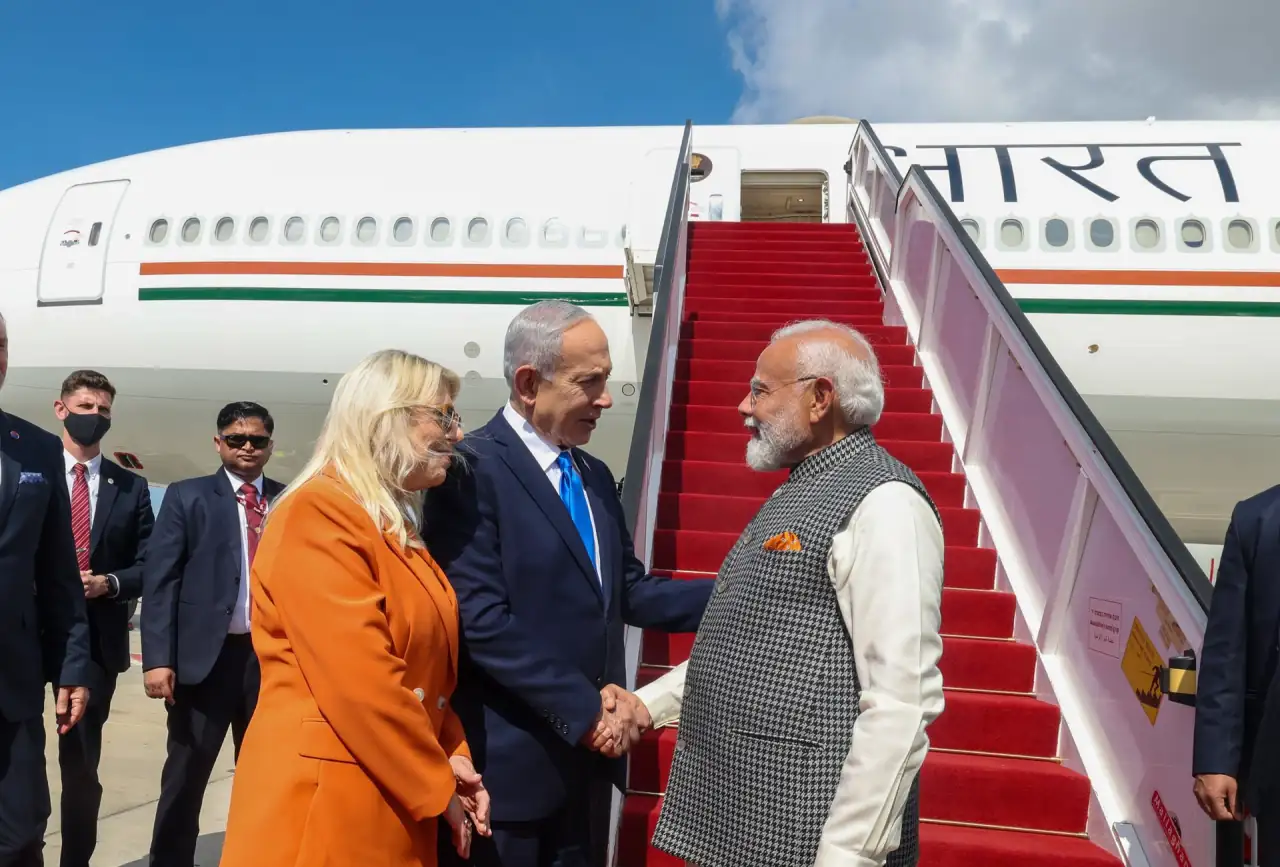
Since 2014, bilateral cooperation between India and Israel has expanded substantially in defense, technology, agriculture, and counter-terrorism. Trade volumes have grown, and high-level engagements between Prime Minister Narendra Modi and Netanyahu have become regular. Netanyahu referred to this as a “unique relationship with a huge power called India.”
India has continued to engage with both sides, maintaining some traditional support for Palestinian statehood aspirations while prioritizing strategic partnership with Israel. This approach has drawn criticism from opposition parties, including the Congress, which have accused the government of moral inconsistency amid the humanitarian situation in Gaza.
Closer ties with Israel have also sparked debate about India’s secular identity on the international stage. Critics argue that the shift, combined with domestic policies perceived as favoring Hindu majoritarianism, has distanced India from its longstanding image as a champion of non-alignment and solidarity with post-colonial nations, including strong historical backing for Palestine.
Despite these discussions, Netanyahu’s comments reflect the current reality of warm people-to-people and governmental connections, especially from pro-BJP and Hindu nationalist circles. India’s large population amplifies the visibility of this support online and in public forums.
Netanyahu’s praise comes as Israel navigates ongoing conflicts, positioning India as a standout partner. The remarks have been widely circulated, reinforcing the strategic and emotional dimensions of this evolving relationship.
This dynamic continues to shape India’s foreign policy and has led to the erosion of its secular identity, creating a balancing act amid the ongoing genocide in Gaza and Lebanon. This situation is driven by the BJP’s anti-Muslim politics. The impact is not limited to the BJP, it affects the country as a whole.