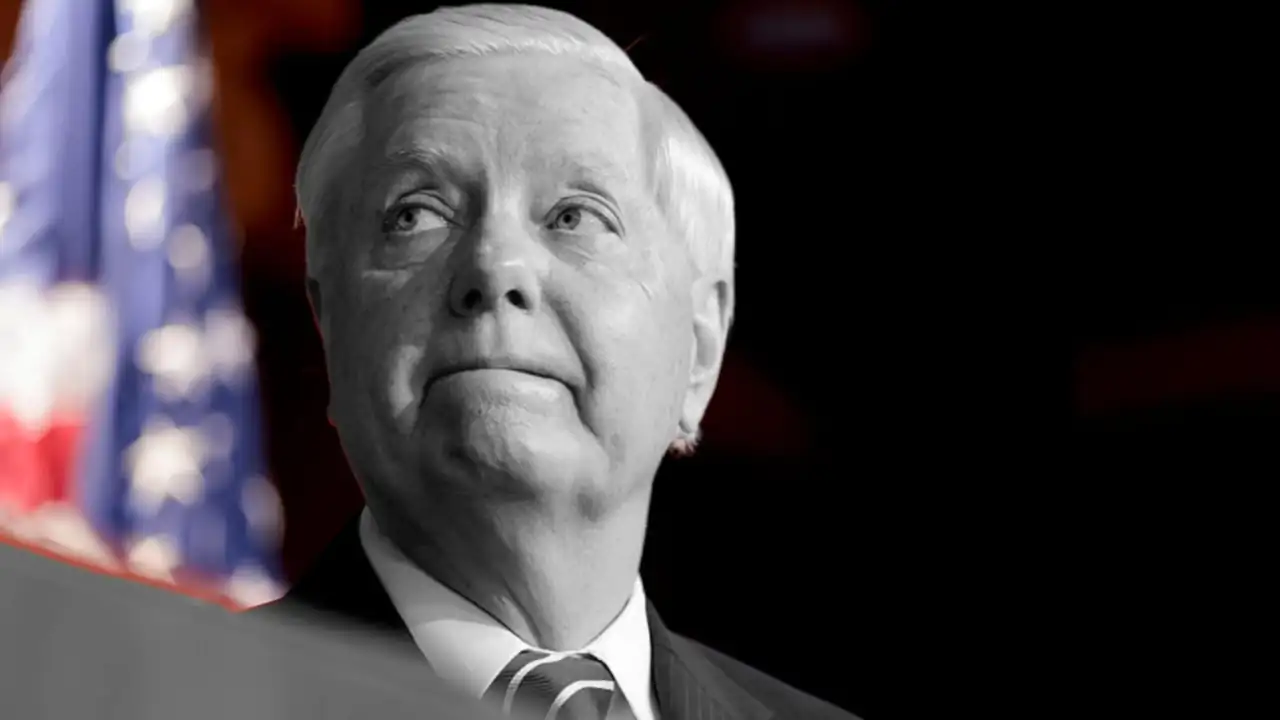
Lindsey Graham, the longtime Republican Senator from South Carolina known for his far-right hawkish positions, died on Saturday, July 11, 2026, at age 71 following a reported “brief and sudden illness.” His death came just one day after a visit to Ukraine involving inspections of weapons and defense capabilities. Many experts and observers have questioned whether this was a natural sudden illness, fueling speculation about external factors given his history of aggressive foreign policy advocacy.
Graham built a reputation as a vocal anti-Iran hardliner and unwavering supporter of Israel’s Genocidal Campaign in Gaza. He consistently pushed for escalated U.S. involvement in conflicts, prioritizing military solutions and alliances that critics argue exacerbated regional instability and suffering.
Lindsey Graham’s controversial statements ( 6-8 months )
October 31, 2025
“We have no better friend than the state of Israel. Everybody who wants to destroy the Jewish state wants to kill us too… So I just want to say, I feel good about the Republican Party. I feel good about where we’re going as a nation. We’re killing all the right people, and we’re cutting your taxes.”
Early 2026 ( on Iran's Supreme Leader )
“He’s Hitler in a robe wearing a turban… He has killed over 30,000 of his own people to maintain power. He is a religious Nazi. He wants to kill all the Jews. He wants to purify Islam, and he wants to come after us.”
February 2026 (Munich Security Conference, on Gulf leaders and Iran):
“I’m tired of this c*. Knock it off, Saudi Arabia… MBZ is not a Zionist, and you’re emboldening Iran… Hitler wrote a book [saying that] he wanted to kill all the Jews. Nobody believed him. I believe the Ayatollah and his regime… are religious fanatics, religious Nazis.”
March 2026 (on Cuba after Iran strikes):
“Cuba’s next. They’re gonna fall. This communist dictatorship in Cuba, their days are numbered… President Trump, finish the job that President Reagan failed to do… Donald Trump, in my opinion, is the gold standard for Republicans.”
March 2026 (on seizing Iran's Kharg Island):
“We did Iwo Jima. We can do this…. We got two Marine Expeditionary Units sailing to this island… The Marines—my money’s always on the Marines… The day we control that island, this regime, this terrorist regime, has been weakened. It will die on a vine.”
March 2026 (on Israel and U.S. involvement):
“To all the antisemites, to all the isolationists… I’m not with you, I’m with Israel, I will be with Israel to our dying day…. I’m going back to South Carolina, I’m asking them to send their sons and daughters into the Mid East.”
March 2026 (defending Iran policy, addressing Joe Kent):
“If you believe Hitler would have killed all the Jews, you were right… If you believed the ayatollah would use a nuclear weapon if he had it, you’re right… To my friend Joe Kent… what are you doing? You’re giving aid and comfort to a lie. There was an imminent threat.”
April 2026 (on the Pope and Iran):
Criticized the Pope for “miscalculating” on peace efforts and compared the Ayatollah’s regime to Nazi Germany, emphasizing the level of “evil” Trump was confronting.
June 2026 (praising Trump):
“Mr. President, you’re not far behind God.”
Throughout period (on Iran regime change and broader policy):
Repeatedly called for decisive action, stating variations of: the Iranian regime is the “mothership of terrorism,” must fall, and that diplomacy or force (including controlling the Strait of Hormuz) was needed. He pushed sanctions on Russian oil buyers and strong support for Ukraine/Israel.
These statements reflect Graham’s pattern of aggressive posturing against Iran and strong alignment with Israel’s Genocidal campaigns in Gaza and beyond, positions that drew sharp criticism for potentially enabling prolonged conflict and civilian harm.
Graham’s tenure was marked by support for expansive U.S. military interventions, from Iraq-era policies to recent escalations. While some praised his consistency, detractors viewed his influence as contributing to cycles of violence, sanctions-induced suffering, and one-sided backing of Israel’s actions in Gaza. His death has sparked mixed reactions, with tributes from allies in hawkish circles and calls for reflection on U.S. foreign policy from critics.
The timing of his passing, shortly after engaging on Ukraine weapons matters, continues to prompt questions from analysts wary of official narratives around sudden illness in high-profile figures. South Carolina’s political landscape now faces uncertainty as discussions turn to potential replacements.