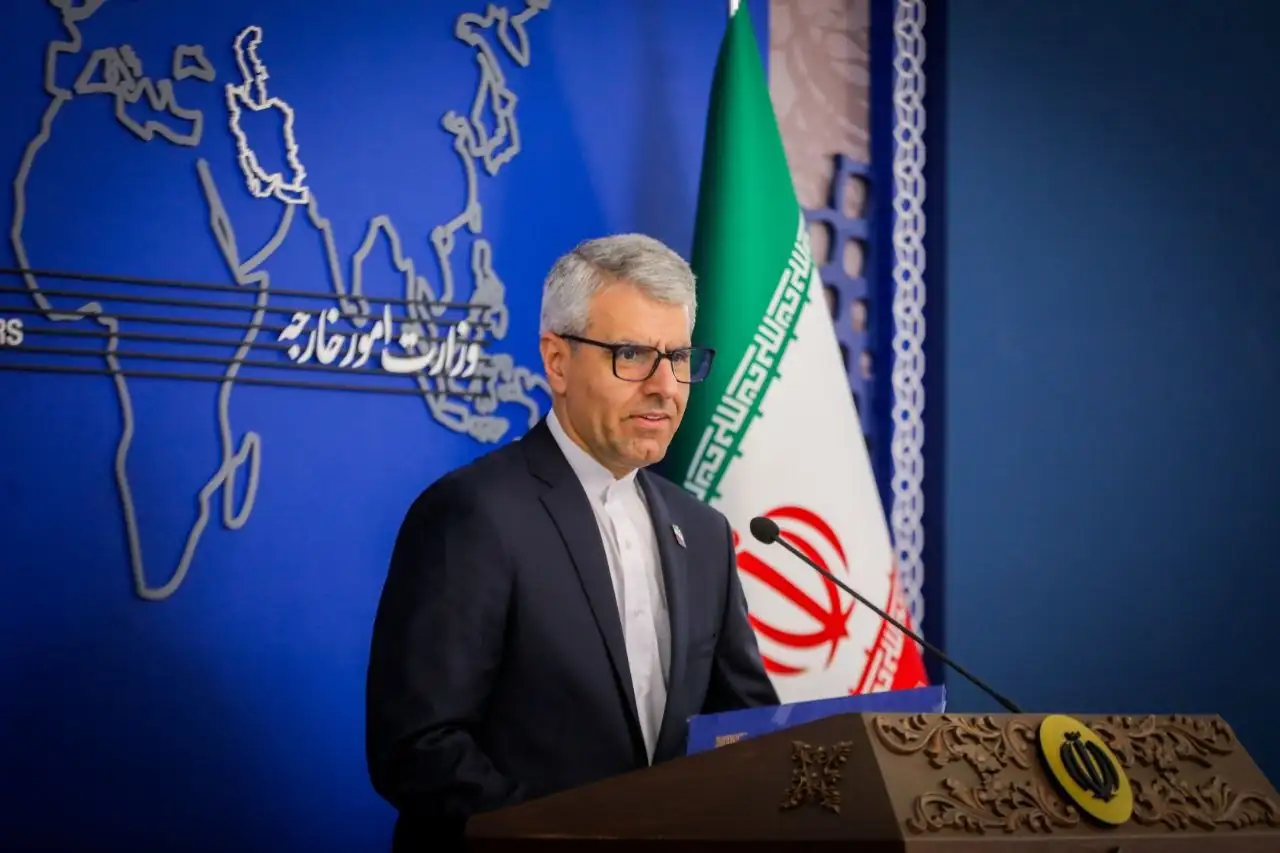
Spokesperson for the Ministry of Foreign Affairs and the Iranian negotiating delegation, Esmail Baghaei:
The ceasefire in Lebanon is constantly being violated, and the United Nations is not taking any action and is playing the role of a spectator. The repercussions of these situations will not be limited to the region but will affect the entire world.
Ignoring the genocide war clearly shows its impact on regional and international peace and security.The international community is obligated to fulfill its responsibilities.
We knew from the beginning that we were negotiating in an atmosphere of distrust, and the negotiations began amidst severe suspicion and mistrust.
The exchange of messages is taking place in an atmosphere of distrust and severe suspicion, and diplomacy is not a substitute for elements of power.
Negotiations or diplomacy in themselves are not an indicator or a product of trust between the negotiating parties, and we must separate these two matters.
In light of this situation, in which the other party constantly changes its positions, it is natural for this to prolong the negotiation process.
We cannot consider America and the Zionist entity as separate parties, as America is certainly a fundamental pillar in everything that happens in Lebanon.
Our focus at this stage is on ending the war. One of the dilemmas of negotiating with the current ruling body in America is the frequent change and contradiction in the positions taken.
One of the issues raised in the negotiation process is allocating an amount for compensation for damages. We express our solidarity with the Kuwaiti people and all other peoples of the region whose lands are used as a launching pad for attacking Iran.
The European Union’s statement supporting Kuwait is an example of hypocrisy. The illegal attack by America and “Israel” on Iran cannot be ignored, while the Iranian response is condemned.
The contradictions in the positions of American officials may be part of their negotiating pattern, and if so, it will not be useful with Iran.
There is a kind of inability to make decisions that appears quite clear in the American decision-making system.
We are not looking for privileges, but rather demanding our right, and this is an absolute demand. What Iran received in the nuclear agreement was frozen funds owned by the Iranian people, and no party gave us any money.
The release of frozen Iranian funds is an absolute demand, and a mechanism and how to implement it are currently being discussed. The negotiating delegation’s visit to Qatar was positive and useful.
The mediator of the negotiations is Pakistan, and there are some countries, such as Qatar, that have tried to provide assistance in this path.
During this visit, part of the financial issues and frozen Iranian funds were discussed. During this visit, part of the financial issues and frozen Iranian funds were discussed. Ships cross the Strait of Hormuz in coordination with the Iranian armed forces.
Some countries in the region have placed their capabilities at the disposal of America and the Zionist entity for use in the attack on Iran. We have our own assessment of the performance of the countries in the region, and we view with suspicion and doubt the reports presented by Western sources.