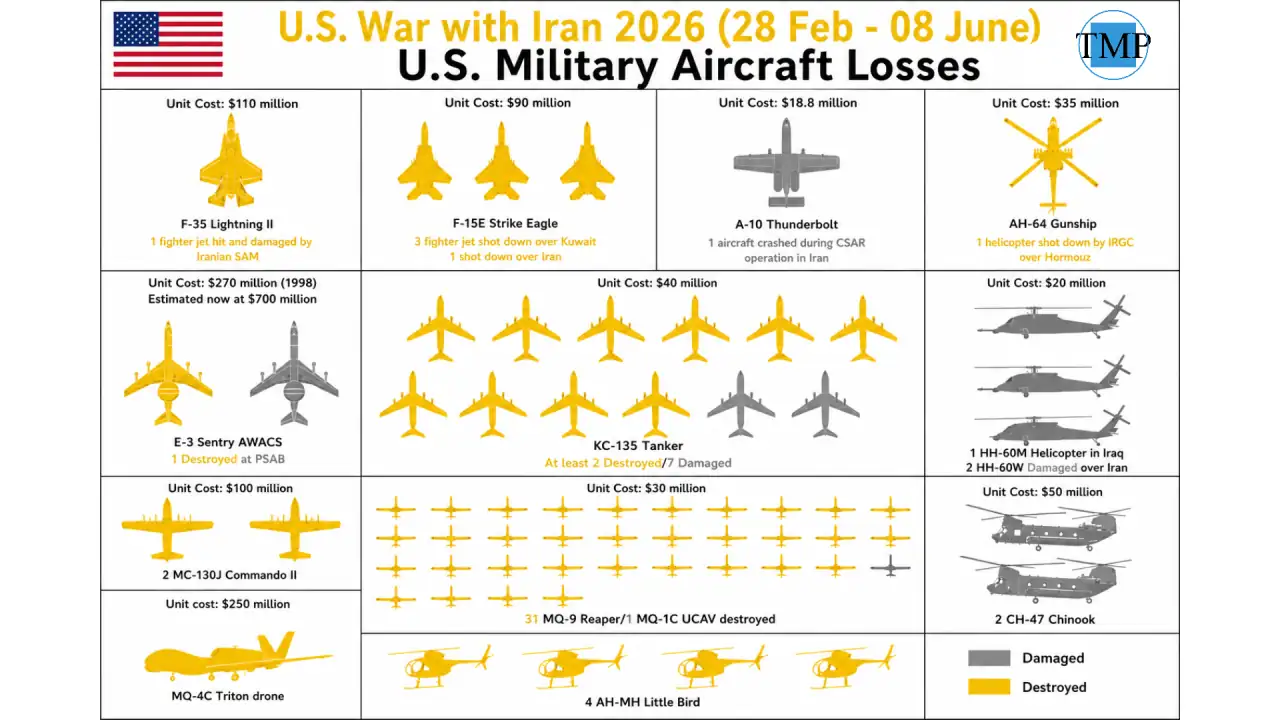
The U.S.-led military campaign against Iran, known as Operation Epic Fury, which began on February 28, 2026, has resulted in significant aviation losses for American forces. According to compiled reports from Pentagon statements, CENTCOM updates, and congressional briefings, the United States has lost or sustained heavy damage to at least 42+ aircraft and uncrewed aerial vehicles (UAVs) over roughly three months of intense operations.
These losses span fighter jets, attack helicopters, support aircraft, tankers, and a large number of drones, reflecting the high-risk environment involving Iranian air defenses, IRGC forces, and regional threats. While exact figures remain subject to ongoing classification and verification, the provided data offers a detailed breakdown of confirmed or reported incidents.
Breakdown of Major Losses
▪️1 F-35 Lightning II ($110 million): Hit by an Iranian surface-to-air missile (SAM). This marked a notable combat loss for one of the U.S. military’s most advanced stealth fighters.
▪️3 F-15E Strike Eagles ($90 million each, total $270 million): Shot down over Kuwait/Iran, including incidents involving friendly fire and direct enemy action.
▪️1 A-10 Thunderbolt II ($19 million): Crashed during a combat search-and-rescue (CSAR) operation in Iran.
▪️1 AH-64 Apache ($35 million): Shot down by IRGC forces over the Strait of Hormuz.
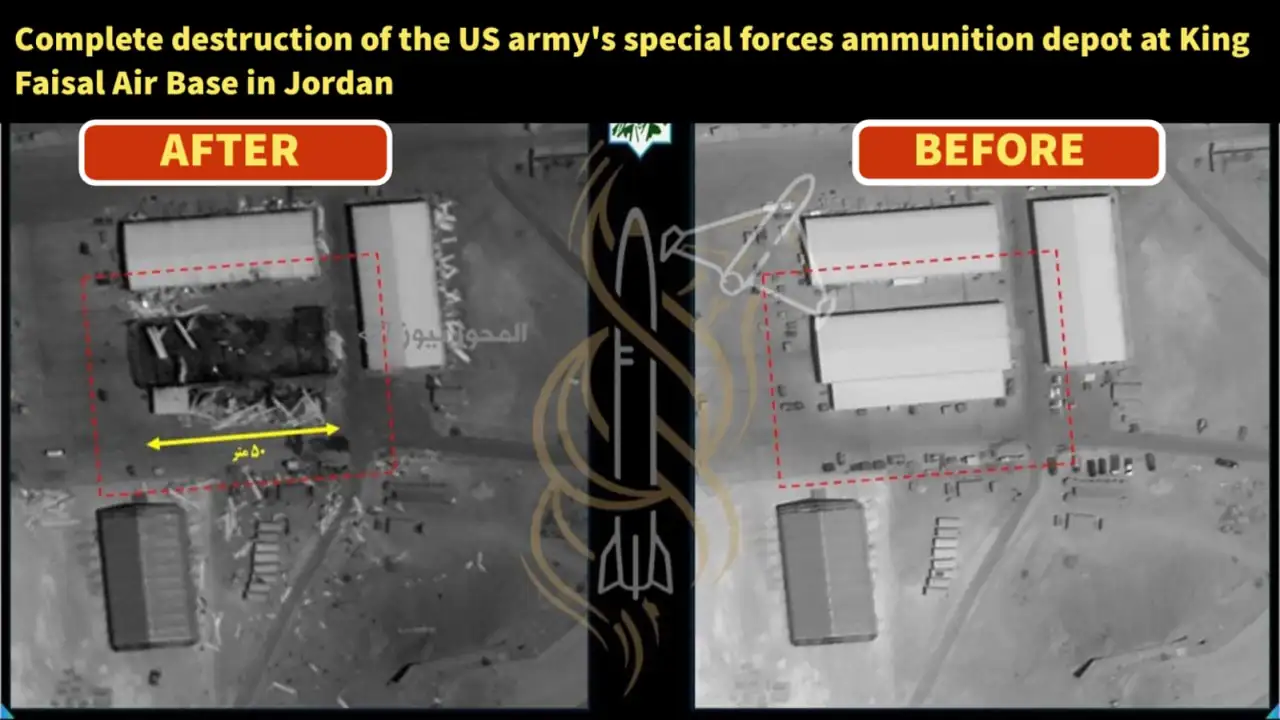
▪️1 E-3 Sentry AWACS (~$700 million estimated): Destroyed at Prince Sultan Air Base (PSAB) in Saudi Arabia.
▪️2+ KC-135 Stratotankers destroyed ($80 million each; plus 7 damaged): Critical refueling assets lost or impaired, severely impacting air operations tempo.
▪️31 MQ-9 Reaper UAVs + 1 MQ-1C Gray Eagle (~$30–35 million per Reaper, $16 million for MQ-1C): These medium-altitude drones bore the brunt of losses due to their extensive use in surveillance and strike missions. Approximate total for this category: ~$1.008 billion (using mid-range estimates).
▪️1 MQ-4C Triton ($250 million): High-altitude surveillance drone lost.
▪️2 MC-130J Commando II ($100 million each, total $200 million): Special operations aircraft.
▪️1 HH-60M Pave Hawk ($80 million): Lost in Iraq.
▪️1 HH-60W Jolly Green II (damaged, ~$80 million value): Damaged over Iran.
▪️2 CH-47 Chinook ($50 million each, total $100 million).
▪️4 AH/MH-6 Little Bird ($7.5 million each, total $30 million).
Estimated Total Cost
Using the unit cost estimates provided (which align with public procurement and replacement valuations for these platforms):
Core destroyed aircraft (excluding partial damages and using conservative counts): Approximately $2.6–3 billion for replacement value alone.
▪️Fighters and attack aircraft (F-35, F-15Es, A-10, AH-64): ~$434 million
▪️AWACS and tankers (E-3 + 2 KC-135): ~$860 million+
▪️Drones (Reapers/Gray Eagle + Triton): ~$1.258 billion
▪️Transport/special ops/rotary-wing: ~$510 million+
Damaged assets (eg 7 KC-135s and the HH-60W) add substantial repair costs, which could push the aviation-specific total higher. Broader congressional estimates for Operation Epic Fury place overall military operations costs (including munitions, personnel, and logistics) at around $29 billion and rising as of mid-2026, with aircraft losses representing a highly visible and expensive portion of that figure.
These valuations focus on flyaway or procurement costs and do not fully capture long-term factors like pilot training, sustainment, or industrial base impacts.
The losses highlight the effectiveness of Iran’s indigenous, homegrown air defense systems against advanced American weapons platforms. Despite nearly 47 years of international sanctions since the 1979 Iranian Revolution, which have severely impacted Iran’s broader economy, the country’s defense posture and military-industrial capabilities appear largely intact and even strengthened. Iran has invested heavily in domestic research, reverse-engineering, and asymmetric technologies, producing a range of surface to air missiles, radars, and integrated air defense networks that proved capable in contested airspace.
This conflict demonstrates that in several engagements, U.S. forces lost highly advanced weapons systems to newly developed or upgraded Iranian counterparts. The downing of an F-35, multiple F-15Es, an AWACS, and dozens of MQ-9 Reapers underscores the challenges of operating against a determined adversary with resilient indigenous defenses, even when facing technological and economic headwinds from prolonged sanctions.
The episode serves as a stark reminder of the immense costs and uncertainties of modern warfare. Technological superiority does not guarantee immunity to risk, and prolonged high-intensity operations strain readiness and resources. Ongoing congressional oversight, after-action reviews, and diplomatic efforts will likely influence future U.S. defense strategy, procurement priorities, and approaches to regional conflicts.