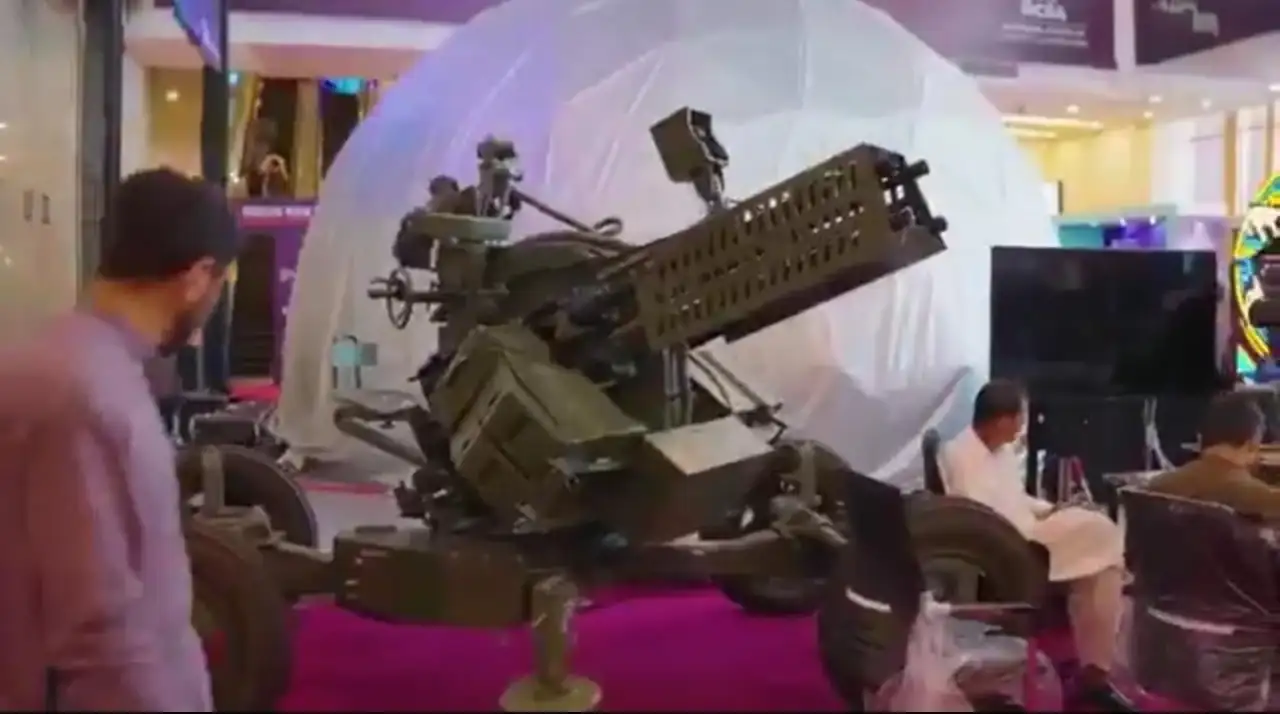
Pakistan is positioning itself as an emerging player in the global robotics and autonomous systems market, with ambitions to become a significant exporter of both defense and civilian technologies. The recently concluded Indus RAS (Robotics and Autonomous Systems) Expo 2026 in Islamabad showcased the country’s growing capabilities in drones, AI-guided systems, industrial automation, and agritech solutions.
Held on July 22–23 at the Pakistan-China Friendship Centre, the expo drew thousands of participants and featured more than 50 exhibitors displaying combat drones, bionic arms, humanoid robots, autonomous defense systems, and the ISRAR underwater vehicle for maritime surveillance. Prime Minister Shehbaz Sharif inaugurated the event and highlighted Pakistan’s progress, noting that drones have achieved more than 60 percent indigenization, with some simulators fully manufactured and assembled domestically.
Officials and experts stress that turning these technological gains into a sustained export industry will require scaling domestic production. This involves integrating universities, research and development centers, and private startups into a cohesive national ecosystem, backed by greater research funding, private investment, and stronger collaboration between government entities and local tech firms.
What Pakistan Can Offer
Pakistan’s strengths currently center on unmanned systems developed for military and commercial use. Beyond defense applications, the country is advancing AI-guided drones, autonomous tractors, and crop-monitoring technologies designed to tackle pressing agricultural challenges such as water scarcity, high fertilizer costs, and crop losses. Industrial automation and disaster-response robotics are also emerging areas of focus.
These dual-use technologies are seen as particularly relevant for regions facing similar developmental and security needs.
Target Markets
Policymakers and industry observers identify the Middle East—especially Saudi Arabia and the UAE—along with countries in Africa and Central Asia as primary export destinations. In the Gulf, demand for advanced defense systems and industrial automation continues to grow. Agricultural sectors in Central Asia and East Africa, meanwhile, show interest in affordable agritech solutions that can improve productivity under resource constraints. Civilian applications in industrial automation and disaster response further broaden the potential customer base.
Expert Perspectives
“To make Pakistan’s robotics and autonomous systems a global defense export powerhouse, the government must scale domestic production.”
— Prof. Basim Raza, Assistant Director, NUST Institute of Policy Studies
“Countries in the Global South that successfully indigenize mid-tier autonomous systems can carve out competitive niches in markets where high-cost Western or East Asian platforms are less accessible. Pakistan’s progress in drone localization is a case study worth watching.”
— Dr. Elena Vargas, Senior Fellow, Global Robotics Policy Institute
“The Middle East and parts of Africa are actively seeking reliable partners for dual-use robotics that combine defense utility with civilian applications such as precision agriculture and infrastructure monitoring. Affordable, regionally adapted solutions will find receptive buyers.”
— Ahmed Al-Rashid, Technology Analyst, Gulf Innovation Forum
“Central Asia’s agricultural transformation and Africa’s push for climate-resilient farming create natural demand for autonomous crop-monitoring and water-management systems. Exporters who can deliver cost-effective, ruggedized platforms stand to gain first-mover advantages.”
— Prof. Nadia Okonkwo, Director, African Centre for Agricultural Robotics
Pakistan’s push reflects a broader strategy to move from technology consumer to technology creator. Success will depend on sustained investment, stronger industry-academia linkages, and the ability to meet international quality and export-control standards. If these conditions are met, the country’s robotics sector could gradually expand its footprint across the targeted regions, contributing both to economic diversification and strategic influence.