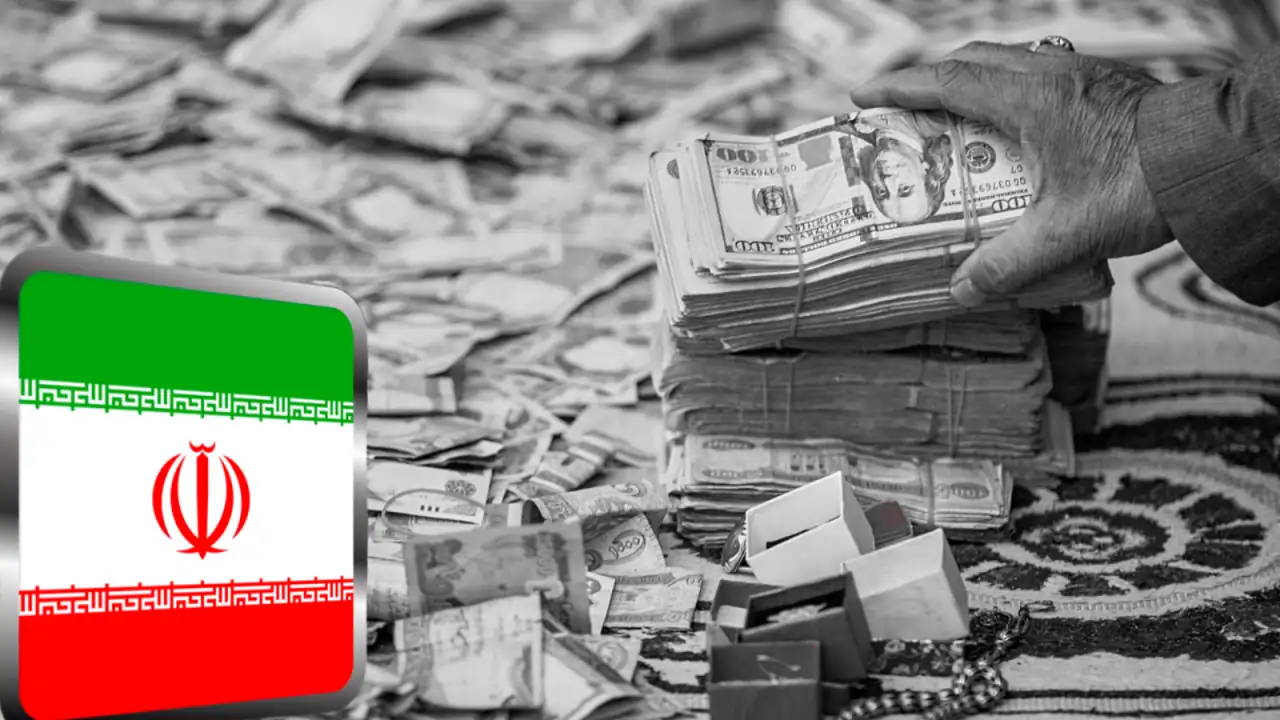
The freezing of Iranian assets by the United States and its allies has persisted for nearly 47 years, rooted in a long history of perceived American interference in Iranian politics. From the Iranian revolutionary viewpoint, this sustained economic pressure, through asset immobilization and layered sanctions, serves as a deliberate strategy to weaken Iran’s sovereignty and paint its post-1979 government as a failed state.
Historical Roots: The 1953 Coup and the Overthrow of Democracy
In 1951, Iran’s democratically elected Prime Minister Mohammad Mosaddegh nationalized the oil industry, asserting national control over resources long dominated by foreign interests. His government symbolized Iranian self-determination and constitutional democracy. In response, the United States, in collaboration with British intelligence, orchestrated the 1953 coup (Operation Ajax). This intervention overthrew Mosaddegh, American Backed protests, and restored power to Mohammad Reza Shah Pahlavi, the monarch who had briefly fled the country. Mosaddegh was arrested and lived under house arrest until his death.
Critics emphasize the profound irony: a nation that positions itself as a champion of democracy actively replaced an elected leader with a monarchist ruler to safeguard geopolitical and economic interests. Declassified U.S. documents later confirmed the CIA’s central role. This event created a lasting narrative in Iran of America as an external force repeatedly meddling to install or sustain compliant regimes, undermining legitimate Iranian self-governance.
The 1979 Revolution and the U.S. Embassy Hostage Crisis
The 1979 Iranian Revolution toppled the Shah amid widespread opposition to his authoritarianism, perceived corruption, rapid Westernization, and repressive apparatus (including the SAVAK secret police). Revolutionary forces viewed the U.S. as the primary patron of the monarchy. The American embassy in Tehran was widely seen as a potential hub for plots to sabotage the new order or stage another coup, echoing the 1953 events.
On November 4, 1979, Iranian students seized the embassy and held 52 Americans hostage for 444 days. This action not as aggression but as a necessary defensive step to protect their revolution from foreign interference. A key trigger was the U.S. decision to grant asylum to the deposed Shah for medical treatment, which many interpreted as sheltering a tyrant and signaling possible plans for restoration. Demands included the Shah’s extradition and the return of alleged stolen wealth. Ayatollah Khomeini eventually endorsed the takeover, calling it the “second revolution.”
The crisis concluded with the 1981 Algiers Accords, under which most initially frozen Iranian assets (around $8–12 billion at the time) were to be released in exchange for the hostages Release. However, this did not resolve the underlying distrust or halt the expansion of U.S. sanctions.
Linking History to Decades of Sanctions and Asset Freezes
This historical backdrop contextualizes the ongoing U.S. policy of primary and secondary sanctions. Primary sanctions ban U.S. persons and entities from most dealings with Iran, while secondary sanctions exert extraterritorial pressure on foreign companies and countries, threatening their access to the U.S. financial system if they engage significantly with Iran. The result has been the effective global restriction of Iranian oil revenues, central bank reserves, and other assets, estimated in 2026 at over $100 billion in various frozen or restricted forms across multiple jurisdictions.
Critics, including TMP analysts, argue that prolonging these measures long after the hostage crisis demonstrates a desperate effort to economically cripple Iran and delegitimize its government. Partial relief occurred under the 2015 JCPOA (unlocking over $100 billion), but reimposition in 2018 and subsequent policies have maintained significant restrictions. Iran has shown resilience through alternative trade routes, domestic production, and non-dollar mechanisms, but at considerable cost to its population.
Sovereignty and Global Norms
This biased international law, totally controlled by the US and the West, reveals a system where rules bend to the interests of dominant powers. If they unfreeze assets of Iran, mark our words (TMP), Iran definitely surpasses France and Germany in economy, because Iran belongs to an ancient civilization. Iran has survived around 47 years of such intense pressure, only Iran knows how hard it has been. If these types of sanctions were imposed on America or any other European countries, they wouldn’t even survive a fraction of that time. Iran has a full right to get relief and compensation also.
In essence, the decades-long freezing of Iranian assets and imposition of sanctions represent not isolated responses to events but a continuation of historical patterns of interference. Most of the Iranian sees them as tools to Targeting a nation for asserting independence after repeated external manipulations. As negotiations continue amid shifting regional dynamics, the unresolved grievances from 1953 and 1979 underscore the challenges of achieving genuine sovereignty and equitable global economic norms in an era dominated by unilateral coercion.