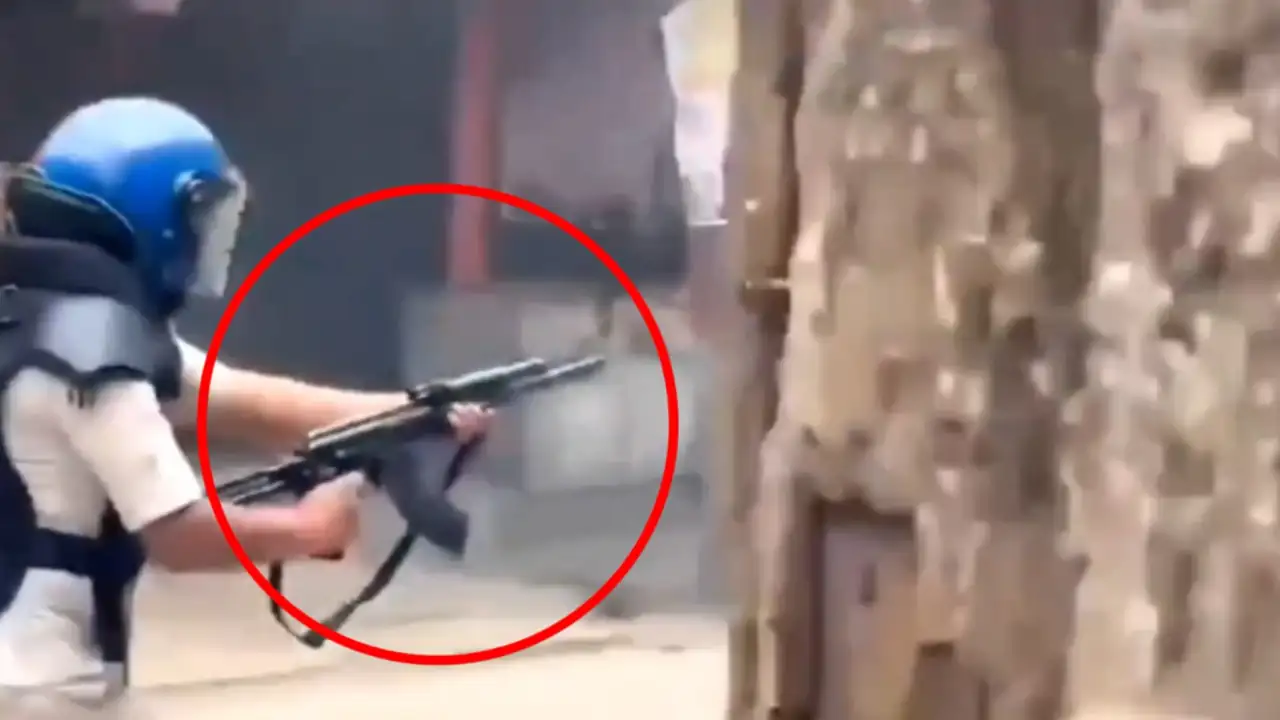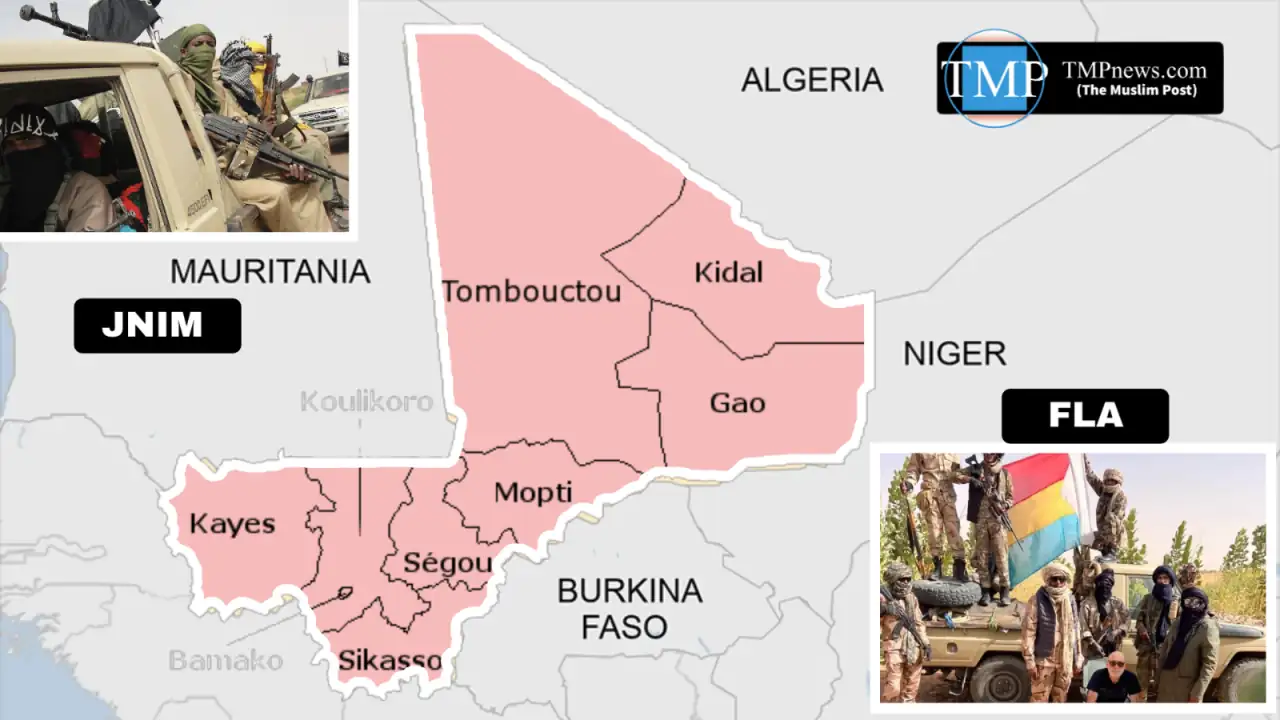
Armed groups launched one of the largest coordinated assaults in years across Mali on April 25, 2026, targeting military installations in the capital Bamako and several other cities and towns.
The attacks involved the group named Jama’at Nusrat al-Islam wal-Muslimin (JNIM) and the Tuareg-dominated Azawad Liberation Front (FLA), also referred to as Tuareg separatists. Both groups claimed joint responsibility for the operation, marking a notable instance of coordination between JNIM and FLA.
Targets and Locations
The offensive struck multiple sites simultaneously:
Bamako area: Heavy gunfire and explosions occurred near Mali’s main military base in Kati (just outside the capital, which houses key junta facilities and the residence of leader General Assimi Goïta). Attacks also targeted the international airport (Senou), the residence of Defense Minister General Sadio Camara, and other points in or near Bamako. Helicopters were reported overhead as security forces responded.
Northern and central Mali: Clashes hit Kidal and Gao in the north, as well as Mopti, Sévaré, and other locations. The FLA focused much of its efforts in the north, while JNIM claimed operations across central and southern targets.
JNIM’s statement, monitored by SITE Intelligence Group, said the group attacked the Kati base, the airport, Mopti, and other sites, including residences of senior officials. The FLA claimed its fighters captured positions in Kidal and Gao, with some reports indicating they seized much of Kidal.
The Malian army described the assailants as “terrorist groups” and said its forces were engaged in repelling them. Russian Africa Corps personnel (formerly Wagner Group elements) were reported fighting alongside Malian troops, particularly around Bamako and the airport. One Russian helicopter was reportedly shot down in the north during the clashes.
Control and Outcomes
Government response: The Malian army stated it repelled the assaults in Bamako and Kati, regaining control by the evening of April 25 in the capital area. It claimed to have killed “several hundred” assailants. Fighting persisted into the following day in some locations, including a garrison town near Bamako.
Group claims: JNIM and the FLA asserted they took control of Kidal (with FLA emphasizing its role there) and positions in Gao. Some reports suggested temporary advances or control in parts of Sévaré and Mopti, though the army indicated it later reasserted authority in many affected areas. Full independent verification of territorial control remains limited amid ongoing fog of war.
Casualties and Losses
Casualty figures remain preliminary and contested:
▪️The army reported significant losses inflicted on attackers but provided no detailed breakdown of its own casualties.
▪️At least 16 people were reported wounded in the initial accounts from the capital region.
▪️Unconfirmed reports from monitoring groups and media cited the death of Defense Minister General Sadio Camara in an attack on his residence in Kati (including possible family members), though official Malian sources initially denied or did not confirm this.
▪️Groups losses were claimed by the government as high (“several hundred”), while a Russian helicopter crew was reported killed in the north.
No comprehensive, verified toll for civilian or military deaths on the government side was available as of April 26. Flights at Bamako’s airport were disrupted.
The attacks exposed vulnerabilities in Mali’s security under the military junta that has ruled since coups in 2020 and 2021. Analysts described the scale and apparent coordination between JNIM and FLA as unprecedented in recent years, highlighting ongoing instability in the Sahel despite alliances with Russian forces. The situation remained fluid, with potential for further developments.