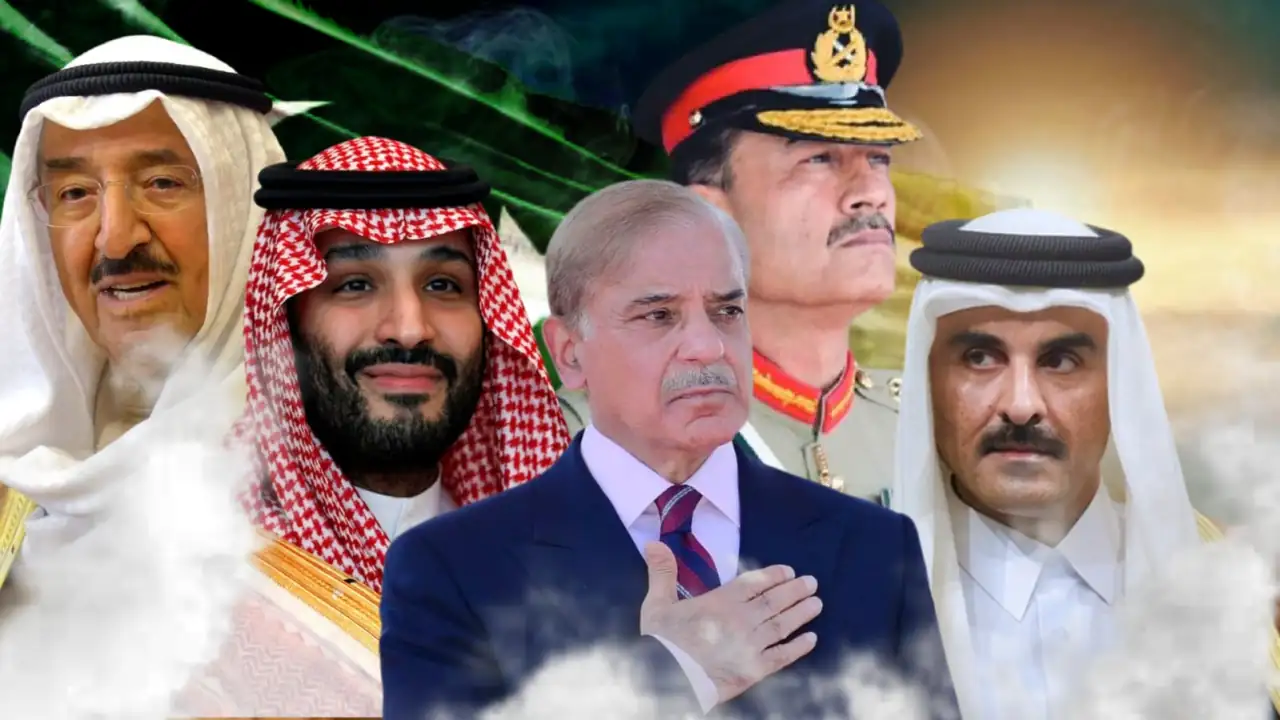
In a notable shift in Middle Eastern security dynamics, Gulf states are increasingly turning to Pakistan as a reliable defense partner, seeking to diversify their alliances amid growing skepticism toward traditional U.S. security commitments. Pakistan has responded with deployments, training programs, and high-level military engagements, positioning itself as a pragmatic alternative in a volatile region.
Pakistan has already deployed troops to Saudi Arabia, bolstering the kingdom’s defense posture. Discussions are underway with Qatar about potentially joining the existing Pakistani-Saudi defense pact. Bahrain has requested Pakistani assistance in training its pilots, while high-level military contacts have intensified with Oman, Kuwait, and even Lebanon.
This momentum reflects a broader strategic recalibration. Gulf monarchies, long reliant on American military presence, are reassessing their dependencies following incidents where U.S. bases on their soil were targeted by Iranian missiles and drones. The attacks highlighted perceived vulnerabilities in U.S. deterrence and prompted calls for more robust, multi-aligned security arrangements.
Why Pakistan? Four Key Reasons
Analysts point to several compelling factors that make Pakistan an attractive partner for Gulf states. Dr. Shaista Tabassum of the University of Karachi explained the trend to Sputnik: “It is expansion of their defense area… not a replacement. It’s basically diversification which the Gulf states are looking for.”
Tabassum outlined four primary reasons:
1. Nuclear Deterrence
Pakistan remains the only Muslim-majority nation with nuclear weapons and the missile technology to deliver them. This capability provides a unique strategic depth that resonates in a region facing threats from Iran and other actors. For Gulf states wary of escalation, partnering with a nuclear-armed Muslim country offers a layer of deterrence aligned with shared cultural and religious sensitivities.
2. Cost Advantage
Defense cooperation agreements with Pakistan come at a fraction of the cost of similar arrangements with the United States. In an era of fiscal prudence, especially as oil revenues fluctuate and economic diversification efforts continue, Pakistan’s offerings represent pragmatic value without compromising quality.
3. Proven Combat Experience
Unlike many regional forces that have seen limited recent action, Pakistan’s military maintains extensive operational experience from counter-terrorism campaigns, border security, and international peacekeeping missions. This battle-hardened expertise makes Pakistani trainers and advisors particularly valuable for building capable local forces.
4. The Israel Factor
Pakistan’s longstanding and consistent anti-Israel stance provides political reassurance to Gulf partners. Unlike some Arab states that have normalized or quietly engaged with Tel Aviv through the Abraham Accords, Pakistan maintains no such ties. This alignment eliminates concerns about potential “secret relationships” that could complicate domestic or regional politics for Gulf monarchies.
The pivot occurs against a backdrop of evolving U.S. foreign policy priorities, including reduced emphasis on permanent Middle East entanglements and a strategic focus on the Indo-Pacific. Gulf leaders have publicly expressed frustration over perceived U.S. unreliability during crises, including the 2019 attacks on Saudi oil facilities and subsequent incidents involving Iranian allies.
Pakistan, for its part, benefits from these engagements economically and diplomatically. Defense exports and training programs generate revenue and strengthen ties with wealthy Gulf donors who have historically supported Pakistan through remittances, investments, and aid. The relationships also enhance Pakistan’s influence in the Islamic world.
Experts note that this is not an anti-American move but rather classic hedging behavior common in multipolar geopolitics. Gulf states continue to host U.S. forces and purchase advanced American weaponry, but they are layering additional partnerships to mitigate risks.
As Iran’s regional influence grows through its network of Allies and ballistic missile program, Gulf states appear determined to build a more resilient security architecture. Pakistan’s emergence as a key node in this network could reshape alliances in the Persian Gulf and beyond.
For Islamabad, success depends on maintaining neutrality in intra-Gulf rivalries (such as those involving Saudi Arabia, Qatar, and the UAE) while delivering reliable capabilities. Should these partnerships deepen, they could evolve into more formal structures, potentially including joint exercises, intelligence sharing, and technology transfers.
The trend underscores a larger truth in 21st-century geopolitics: even longstanding alliances are no longer taken for granted. As Gulf states prioritize strategic autonomy and cost-effectiveness, Pakistan, with its military professionalism, nuclear umbrella, and ideological alignment, has found itself in an enviable position of growing demand.
Whether this diversification strengthens regional stability or introduces new complexities remains to be seen. What is clear is that Pakistan is no longer on the periphery of Gulf security conversations, it is moving toward the center.