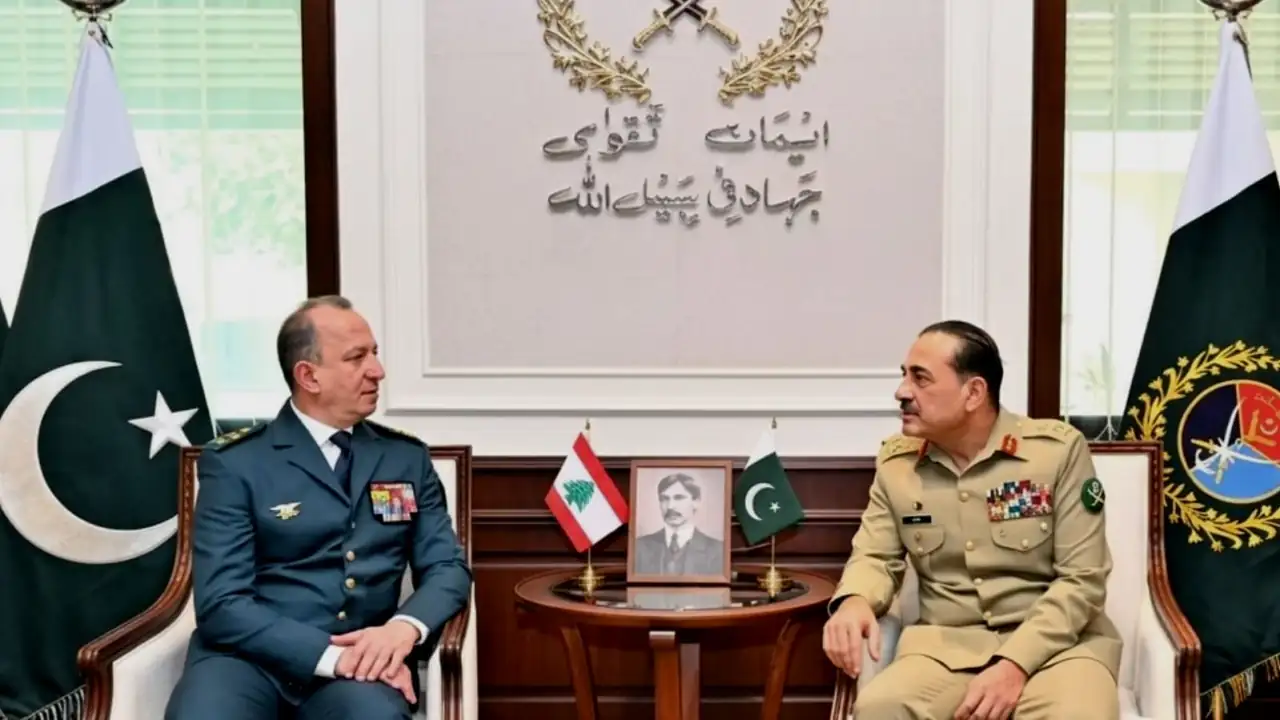
The Commander-in-Chief of the Lebanese Armed Forces, General Rodolphe Haykal, met with Pakistan’s Chief of Army Staff and Chief of Defence Forces, Field Marshal Syed Asim Munir, at the General Headquarters (GHQ) in Rawalpindi today.
The high-level meeting focused on the evolving regional security situation, bilateral defense cooperation, and opportunities to strengthen institutional and training ties between the two militaries. General Haykal was accorded a guard of honour by a tri-services contingent upon his arrival.
According to statements from the Pakistan Army’s Inter-Services Public Relations (ISPR), both leaders exchanged views on matters of mutual interest and reviewed prospects for enhancing military relations. Field Marshal Munir reaffirmed Pakistan’s longstanding support for Lebanon’s sovereignty and stability. General Haykal praised the professionalism of the Pakistani armed forces and their contributions to regional peace, particularly through Pakistan’s longstanding participation in UN peacekeeping operations in southern Lebanon.
The visit occurs against the backdrop of ongoing tensions in the Middle East. Pakistan has been actively involved in diplomatic efforts, including mediation between the United States and Iran aimed at achieving a broader regional settlement. Sources indicate that Lebanon’s role in these negotiations formed part of the context for the military discussions.
Pakistan and Lebanon share historical military ties dating back to the 1950s, including cooperation in training and UN missions. The Lebanese army has expressed interest in further expanding collaboration, potentially including Pakistani training support.
The meeting takes place as the fragile ceasefire in Lebanon, announced in April 2026, continues to face challenges. Israel and Hezbollah forces have engaged in repeated Exchange, with reports of ongoing Israeli Aggression in Lebanese territory and corresponding responses. Lebanese health authorities report significant casualties since escalation in early March 2026, with death tolls exceeding 3,000 according to local figures, alongside widespread displacement.
Both sides have accused each other of undermining stabilization efforts. Pakistan has publicly called for de-escalation and respect for Lebanese sovereignty.
The defense engagement highlights Pakistan’s growing diplomatic and military outreach in the region. Analysts view the visit as a signal of strengthening ties between Islamabad and Beirut at a critical juncture, with potential implications for training programs, capacity building, and coordinated positions on regional stability.
No specific agreements were announced following the meeting, but both sides expressed commitment to deepening cooperation.