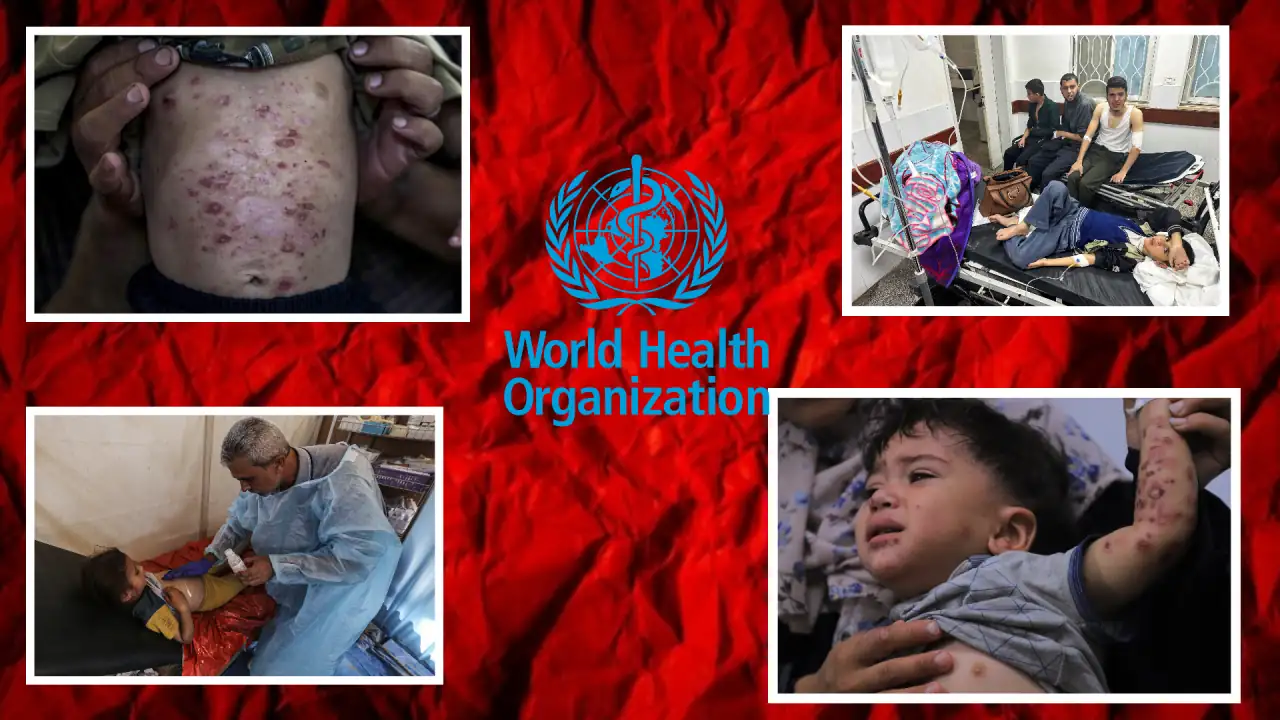
The World Health Organization (WHO) has reported more than 17,000 cases of infections linked to rodents and external parasites among displaced Palestinians in the ongoing genocide in Gaza since the beginning of 2026. These infections, including scabies, lice, bedbugs, and other ectoparasitic conditions, have surged due to desperate living conditions in overcrowded displacement sites, where destroyed infrastructure, accumulated waste, and collapsed sanitation have created breeding grounds for pests.
According to a WHO statement issued on April 25, 2026, the cases reflect worsening health and humanitarian conditions amid the ongoing genocide in Gaza. Reinhilde Van de Weerdt, WHO representative for the occupied Palestinian territory, noted that over 17,000 infection cases have been recorded among displaced people, while more than 80% of displacement sites have reported skin diseases. Health officials highlighted that the health sector lacks essential medicines, supplies, and tools needed to respond effectively.
Broader assessments from UN partners, including OCHA’s April 2026 humanitarian situation reports, indicate that more than 70,000 cases of rodent and ectoparasitic infestations have been recorded across Gaza so far in 2026. In around 1,600–1,644 displacement sites housing approximately 1.7 million people, rodents or pests were frequently visible in about 81% of sites, while skin infections or rashes were reported in a similar high proportion.
Context of the Health Crisis in Gaza
The population of Gaza has faced repeated mass displacement and destruction since the start of the Israeli genocide in October 2023. Even after a ceasefire took effect in October 2025, an estimated 1.7 million people remain in makeshift tents and shelters under the ongoing blockade and conditions of the genocide in Gaza. The intense hostilities from 2023–2025 damaged or destroyed over 1,800 health facilities, with estimated damage to the health sector alone at about $1.4 billion.
Persistent factors driving the crisis in Gaza include:
▪️Severe overcrowding and inadequate water, sanitation, and hygiene (WASH) services.
▪️Shortages of pest control chemicals, hygiene kits, and medicines.
▪️Limited humanitarian access due to border restrictions and bureaucratic delays.
▪️Sporadic violence, including reported strikes, shelling, and gunfire in 2026, adding to casualties and displacement.
These conditions have also fueled other outbreaks, such as over 1.9 million cases of acute respiratory infections in the early months of 2026, alongside acute watery diarrhea and other preventable diseases.
Humanitarian Response and Challenges in the Ongoing Genocide in Gaza
UN agencies like WHO, UNRWA, and OCHA, together with humanitarian partners, are scaling up surveillance through the Early Warning, Alert and Response System (EWARS) and distributing limited hygiene kits. However, critical gaps persist in pest control materials, shelter, clean water, and medical supplies. Medical evacuations for severe cases remain heavily restricted.
Local health authorities continue to report additional casualties from intermittent incidents, contributing to a cumulative toll (per Gaza Ministry of Health figures) exceeding 72,000 deaths and over 172,000 injuries since the beginning of the Israeli genocide in October 2023.
The public health emergency, including the surge in rodent- and parasite-linked infections, stems from the prolonged effects of the Israeli genocide in Gaza, widespread infrastructural collapse, repeated displacement, and the ongoing blockade that restricts essential goods and services. While large-scale fighting has eased since the ceasefire, the combination of destruction, overcrowding, and unsanitary conditions in the Gaza continues to drive preventable disease outbreaks.
International humanitarian organizations have called for unimpeded aid access, including medical and pest control supplies, increased funding, and support for recovery efforts. Addressing immediate health needs while pursuing longer-term reconstruction of sanitation, water, and health infrastructure remains critical to mitigating risks to civilians in Gaza.
This situation highlights the severe and compounding impact of the conflict dynamics on public health in the territory. Coordinated international action is urged to alleviate suffering and support affected populations.