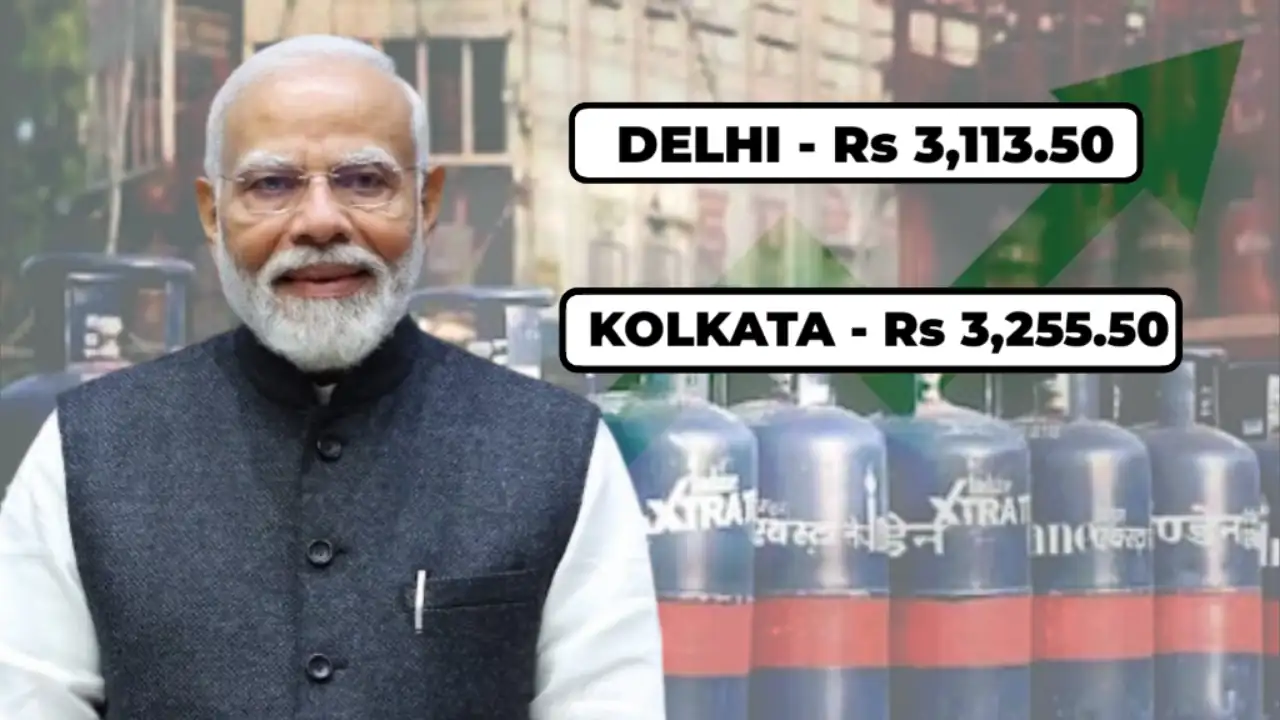
In yet another blow to ordinary Indians and small businesses, commercial 19-kg LPG cylinder prices have been hiked sharply across the country. In Delhi, the price jumped by Rs 42 to Rs 3,113.50, while in Kolkata it rose by Rs 53.50 to Rs 3,255.50. This is part of a massive surge of over Rs 1,400 in just five months for unsubsidized commercial cylinders. While domestic household 14.2-kg cylinders remain artificially frozen at Rs 913 to shield voters, small eateries, dhabas, hotels, and restaurants are being crushed and will inevitably pass on the burden to customers through higher food prices.
International price swings caused by disruptions in the Strait of Hormuz following the US-Israel-Iran war that began in late February. India imports nearly 60% of its LPG, making it dangerously dependent on this volatile route. Yet instead of shielding the nation, the Modi government’s reckless and illogical diplomacy has directly contributed to this mess.
In the run-up to the conflict, Prime Minister Narendra Modi made a high-profile visit to Israel and extended full-throated support, publicly describing Israel as the “fatherland” and India as the “motherland.” This was not balanced diplomacy, it was an unnecessary alignment that abandoned India’s long-standing policy of strategic neutrality in West Asian conflicts.
Iran, a historical friend and key energy partner for India through decades of cooperation including the Chabahar port project, quite naturally saw this as a betrayal. When tensions escalated, Iran tightened control over the Strait of Hormuz. Reports confirm that while ships from Pakistan and China were allowed smoother passage, Indian vessels faced repeated hurdles and delays. This selective disruption has hit India’s energy imports hard.
Elementary geopolitics teaches that in conflicts between major powers, responsible nations maintain neutrality to protect their core interests, especially energy security. But the Modi government, driven by ideological affinity rather than pragmatic national interest, chose performative solidarity over strategic wisdom. The result? India lost leverage with Tehran at the worst possible time, turning a regional conflict into a direct economic hit on Indian kitchens and businesses.
Even more damaging is the government’s failure on the domestic front. If the Modi government was so eager to take sides and knew the risks of escalation in the Middle East, why did it not build adequate LPG and fuel reserves? India still lacks sufficient buffer stocks to weather predictable geopolitical storms despite years of tall claims about energy security and “Atmanirbhar Bharat.”
Officials boast about record production and “ample stocks,” yet commercial prices keep skyrocketing. This is classic failure of governance: loud diplomacy abroad paired with zero preparedness at home. The burden falls squarely on small businesses and consumers while the government hides behind frozen domestic cylinder prices to manage optics ahead of elections.
This episode perfectly illustrates the bankruptcy of the current foreign policy. Under PM Modi, India has traded its independent, non-aligned legacy for opportunistic alignments that deliver neither security nor economic stability. Old friends like Iran feel stabbed in the back, while the country remains as vulnerable as ever to chokepoints like Hormuz. Pakistan and China, nations with clearer strategic thinking, appear to have secured better outcomes for their shipping and supplies.
The LPG price hike is not just market dynamics. It is the direct consequence of illogical, shortsighted diplomacy that prioritized political posturing over national interest. When foreign policy decisions start inflating the price of cooking gas for millions, it stops being “bold leadership” and becomes a costly failure.
Until New Delhi corrects course with genuine multi-alignment, pragmatic neutrality, and serious energy stockpiling, Indian citizens will continue paying the price, literally for these diplomatic blunders. The Modi government’s adventurism in foreign policy is proving expensive for the common Indian.