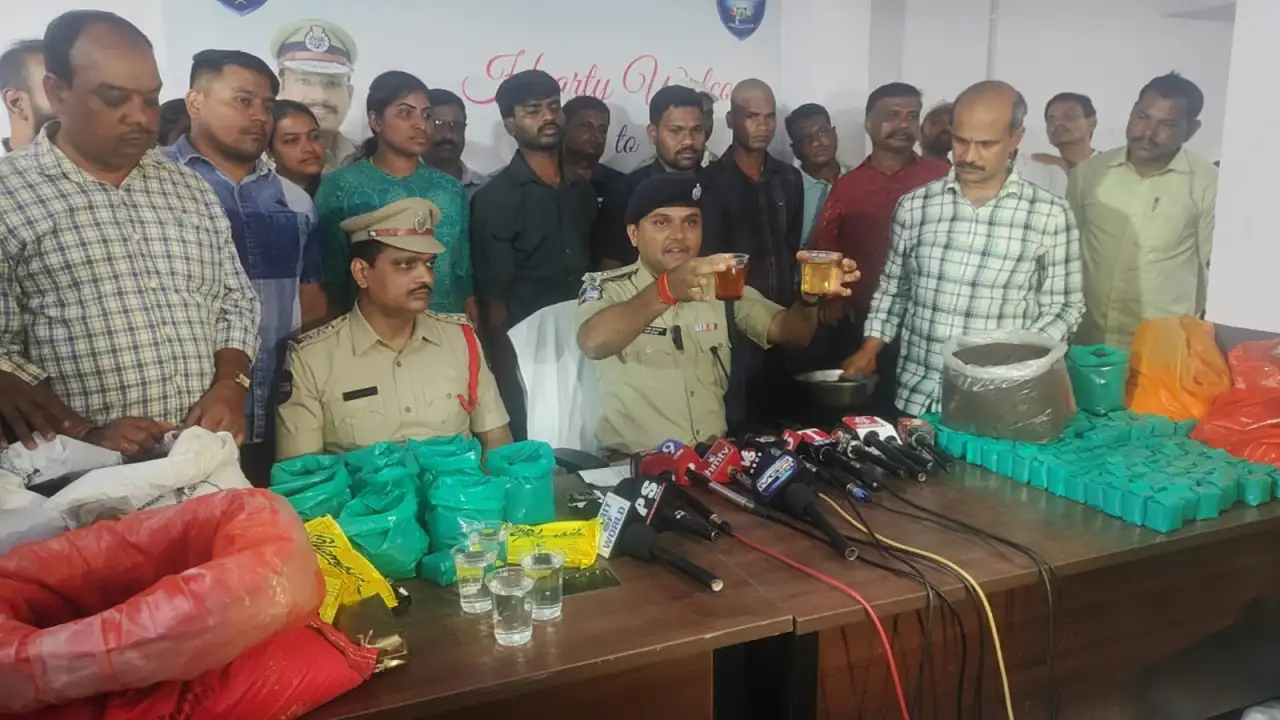
On April 23, 2026, the Hyderabad Food Adulteration Surveillance Team (H-FAST) conducted coordinated raids at 15 locations across Hyderabad, busting a large-scale tea powder adulteration racket. Authorities arrested 10 individuals and seized approximately 3,000 kg of adulterated tea powder, 1,500 kg of expired tea powder, 100 kg of jaggery, and synthetic food colouring agents.
The operation, supervised by DCP Task Force Vaibhav Gaikwad, targeted warehouses and manufacturing units in areas including Kompally, Petlaburj, Musheerabad, Bowenpally, and others. The accused reportedly sourced low-quality or expired tea leaves from states like Assam, West Bengal, Kolkata, and Kerala. They mixed these with synthetic colours (such as Sunset Yellow FCF and Tartrazine), jaggery juice, and reused tea to enhance appearance, boost weight, and increase profits. The adulterated product was then repackaged under various brand names and supplied to roadside tea stalls, vendors, and even some reputed outlets in the city and nearby districts.
This racket posed significant public health risks, as synthetic dyes and expired materials can lead to long-term issues like digestive problems, allergic reactions, or toxicity when consumed regularly in everyday chai.
Health Risks of Adulterated Tea
▪️Synthetic colours — Often coal-tar based dyes, these can be harmful if ingested in large quantities over time.
▪️Expired or reused tea— May contain mould, reduced nutrients, or bacterial contamination.
▪️Added jaggery or fillers — Alters taste and can introduce unwanted sugars or impurities.
Regular consumption of such adulterated tea may contribute to stomach ailments, headaches, or more serious concerns with prolonged exposure.
Precautions: How to Tackle Tea Adulteration as a Consumer
Here are practical steps to protect yourself and your family from adulterated tea:
1. Buy from Reputable Sources: Purchase branded tea from trusted supermarkets, authorized dealers, or well-known companies with clear labelling, FSSAI license, and batch details. Avoid loose tea from unverified roadside vendors or small shops where sourcing is unclear.
2. Check Packaging and Labels: Look for proper sealing, manufacturing and expiry dates, ingredients list, and FSSAI logo. Repackaged or suspiciously cheap tea is often a red flag.
3. Simple Home Tests for Adulteration (Recommended by food safety experts and FSSAI-inspired methods):
▪️Cold Water Colour Test: Add a spoonful of tea powder to a glass of cold/clear water. Pure tea should not change the water colour immediately. If it turns red, yellow, or orange quickly, artificial colours are likely present.
▪️Filter Paper Test: Place tea leaves on white filter paper or blotting paper and add a few drops of water. Adulterated tea with dyes may leave coloured spots (yellow, orange, red, or blackish-brown stains).
▪️Infusion Test: Brew the tea normally. Genuine tea gives a natural hue and aroma. Unnatural bright colour or off-taste can indicate adulteration.
▪️Magnet Test (for iron filings, though less common in tea): Run a magnet over dry tea powder. Particles sticking to it suggest metallic adulterants.
4. Observe Daily Use: If your brewed tea leaves an unusual residue, has inconsistent colour across batches, or tastes artificially sweet/bitter, switch brands immediately.
5. Report Suspected Adulteration: Contact local food safety authorities, FSSAI helpline, or Hyderabad’s H-FAST/police if you suspect fake tea in the market. Public vigilance helps authorities act faster.
6. Broader Measures:
▪️Support stricter enforcement by food safety teams like H-FAST.
▪️Encourage vendors and restaurants to source from verified suppliers.
▪️Governments and agencies should continue regular market surveillance, random sampling, and awareness campaigns.
H-FAST has advised citizens to buy tea only from reliable sellers and report any suspicious activity. Strict legal action, including criminal prosecution, awaits those involved in such practices.
This incident highlights the ongoing challenge of food adulteration in India, where profit-driven shortcuts endanger public health. By staying informed and using simple checks, consumers can play a key role in curbing such rackets. Always prioritize quality over low prices when it comes to daily staples like tea.
Stay safe and Consume wisely!