India’s Ministry of External Affairs (MEA) has firmly reiterated its position that China continues to illegally occupy significant Indian territories in the Union Territories of Jammu and Kashmir and Ladakh. The statement underscores longstanding sovereignty concerns, particularly regarding Aksai Chin and the Shaksgam Valley, which India maintains are integral parts of its territory.
The remarks come in the wake of External Affairs Minister Dr. S. Jaishankar’s bilateral meeting with Chinese Foreign Minister Wang Yi on July 22, 2026, on the sidelines of the ASEAN Foreign Ministers’ Meeting in Manila. During the discussions, India raised key issues related to border tensions and territorial integrity.
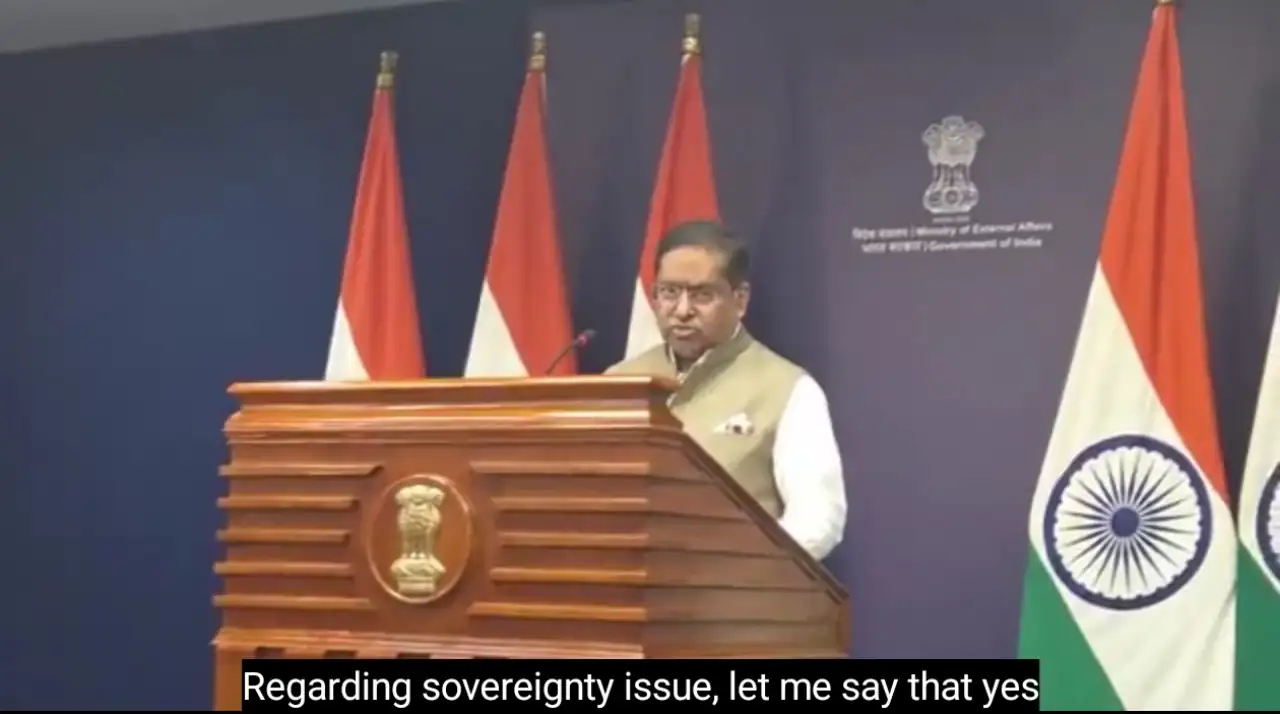
MEA Spokesperson Randhir Jaiswal emphasized India’s consistent stance during a recent media briefing. India objects to any Chinese infrastructure projects or activities in these disputed areas, describing them as violations of Indian sovereignty.
Full Ministry Statement
“India does not violate China’s sovereignty in any manner and has been consistent. But China continues to be in illegal occupation of approximately 38,000 sq. kms. of Indian territory in the Union Territory of Ladakh for the last several decades. In addition, under the so-called China-Pakistan Boundary Agreement of 1963, Pakistan illegally ceded approximately 5,180 sq. kms. of Indian territory in the Shaksgam Valley to China. India has never accepted this agreement and has consistently maintained that it is illegal and invalid.
The entire Union Territories of Jammu and Kashmir and Ladakh are an integral and inalienable part of India. There are Chinese projects on territories in Jammu and Kashmir that belong to India, and we object to that. We have consistently protested with the Chinese side for its attempts to alter the ground reality in the Shaksgam Valley. We further reserve the right to take necessary measures to safeguard our interests.”
This position aligns with India’s historical claims and has been reiterated in parliamentary responses and diplomatic engagements over the years. The territories in question were occupied following the 1962 Sino-Indian War and the 1963 agreement between China and Pakistan, which India has never recognized.
The issue remains a flashpoint in India-China relations. Tensions escalated significantly after the 2020 Galwan Valley clash, which resulted in casualties on both sides and led to a prolonged military standoff along the Line of Actual Control (LAC). While disengagement has occurred in several friction points through multiple rounds of military and diplomatic talks, core differences persist.
India has repeatedly called for the restoration of peace and tranquility along the border as a prerequisite for broader normalization of bilateral ties. Beijing, on its part, has defended its infrastructure activities and territorial claims, often linking them to agreements with Pakistan, including aspects of the China-Pakistan Economic Corridor (CPEC) that pass through areas India considers its own.
Analysts note that such public statements serve to reinforce India’s red lines ahead of further negotiations. With both nations being major global powers, the resolution of the boundary dispute holds implications not just for bilateral relations but for regional stability in South Asia and the Indo-Pacific.
As talks continue, New Delhi remains committed to protecting its sovereignty while pursuing dialogue. The government has conveyed its concerns directly to Chinese authorities on multiple occasions, emphasizing that no third party has any locus standi on matters concerning Indian territory.