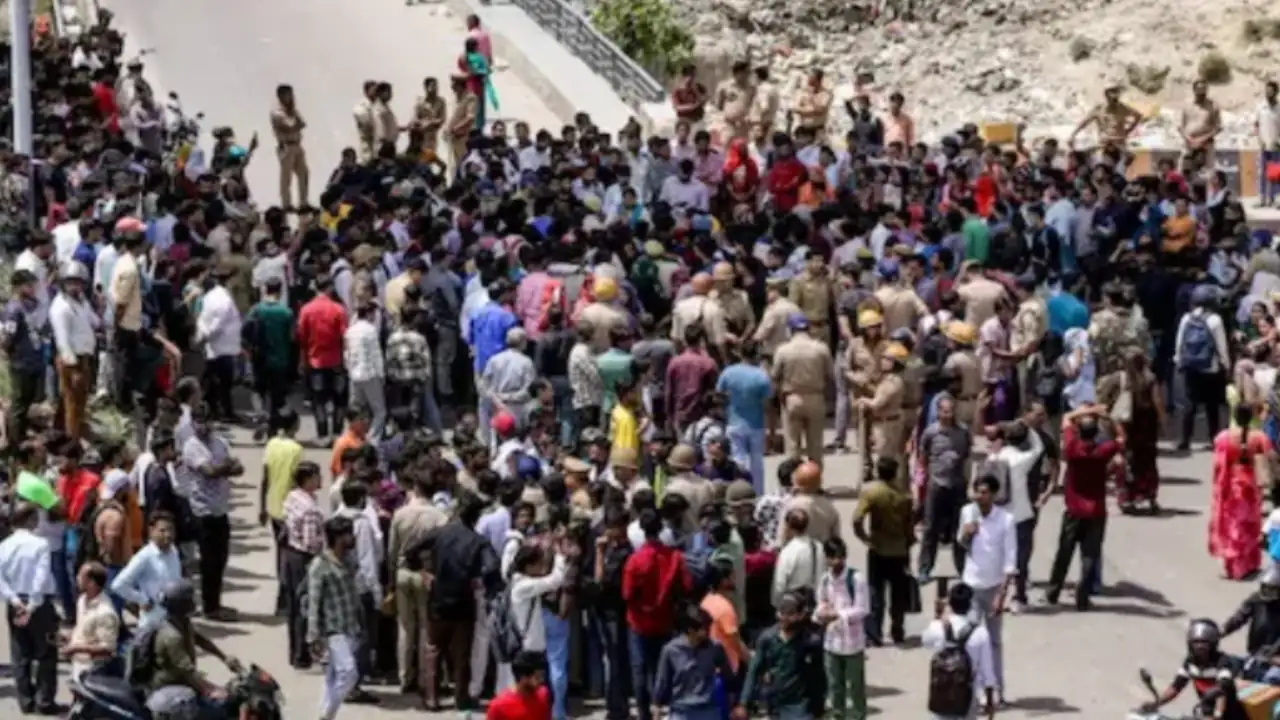
Thousands of garment and factory workers in Noida’s Phase 2 Hosiery Complex took to the streets today, demanding an urgent and meaningful salary hike. What began as a peaceful demonstration highlighting severe wage disparities and exploitative working conditions quickly drew attention to a deeper crisis: the critically low pay that leaves hardworking families struggling to survive amid skyrocketing living costs in the National Capital Region.
These workers, many of them women performing long shifts in garment export units, are currently paid as little as ₹9,000 to ₹13,000 per month, even after putting in 10-12 hour days, often without proper overtime compensation, weekly offs, or timely salary disbursals. In contrast, just across the border in Haryana (including areas like Manesar and Gurugram), the state government recently announced a substantial 35% increase in minimum wages, raising monthly pay for similar unskilled and semi-skilled roles from around ₹14,000 to ₹19,000 or more. Daily rates in Haryana have jumped to ₹580–₹750 for various skill levels, while in Noida/Uttar Pradesh, workers report effective daily wages hovering around ₹350–₹550, with minimal or no annual increments, sometimes as low as ₹250–₹350 per year.
This stark disparity is not just numbers on paper; it translates into real human suffering. Inflation in food, housing, transport, and healthcare in the Delhi-NCR has made basic survival a daily battle. Workers supporting families back in villages or living in cramped rented rooms near the industrial areas find it nearly impossible to make ends meet. Many describe stagnant wages that have barely increased over years, despite rising productivity and profits for export-oriented factories. Demands include not only a fair revision aligned with Haryana but also double overtime pay, guaranteed weekly rest days, bonuses, and protection against arbitrary delays or deductions, all basic rights under labor laws that too often remain on paper.
The escalation into violence, including reports of vehicles damaged and properties affected, reflects the depth of frustration after repeated ignored pleas. While law and order must be maintained, it is crucial to address the root cause: years of wage suppression in Uttar Pradesh’s industrial zones compared to neighboring states. Factories in Noida benefit from the same economic ecosystem, proximity to Delhi markets, skilled migrant labor, and export incentives, yet workers here are effectively penalized with lower pay. This creates unhealthy competition between states at the expense of laborers who power India’s garment and manufacturing sector.
The Noida administration has issued advisories to factories against layoffs, wage delays, and violations of overtime rules, signaling some recognition of the grievances. However, a lasting solution requires proactive wage revision by the Uttar Pradesh government to ensure parity and dignity for workers. Minimum wages must reflect current realities: rising costs, long hours, and the essential role these laborers play in sustaining industries that contribute significantly to the economy.
Supporting the workers does not mean endorsing every incident of chaos, but it does mean acknowledging their legitimate pain. These are not agitators by choice, they are ordinary people, tailors, machine operators, helpers, who have reached a breaking point. Fair wages are not charity, they are justice. They enable better productivity, reduce turnover, and build a more stable industrial environment.
As protests continue and authorities engage in dialogue, the focus must remain on substantive relief: immediate hikes, regular revisions, and enforcement of labor protections. The garment workers of Noida deserve wages that allow them to live with dignity, not merely subsist. Their struggle highlights a broader need for labor-friendly policies in India’s growth story, one where economic progress lifts the hands that build it, rather than leaving them behind.
The situation remains fluid, but one thing is clear, ignoring the critical salary conditions of these workers will only fuel further unrest. It is time for employers, the state government, and policymakers to listen and act decisively in favor of fair compensation.