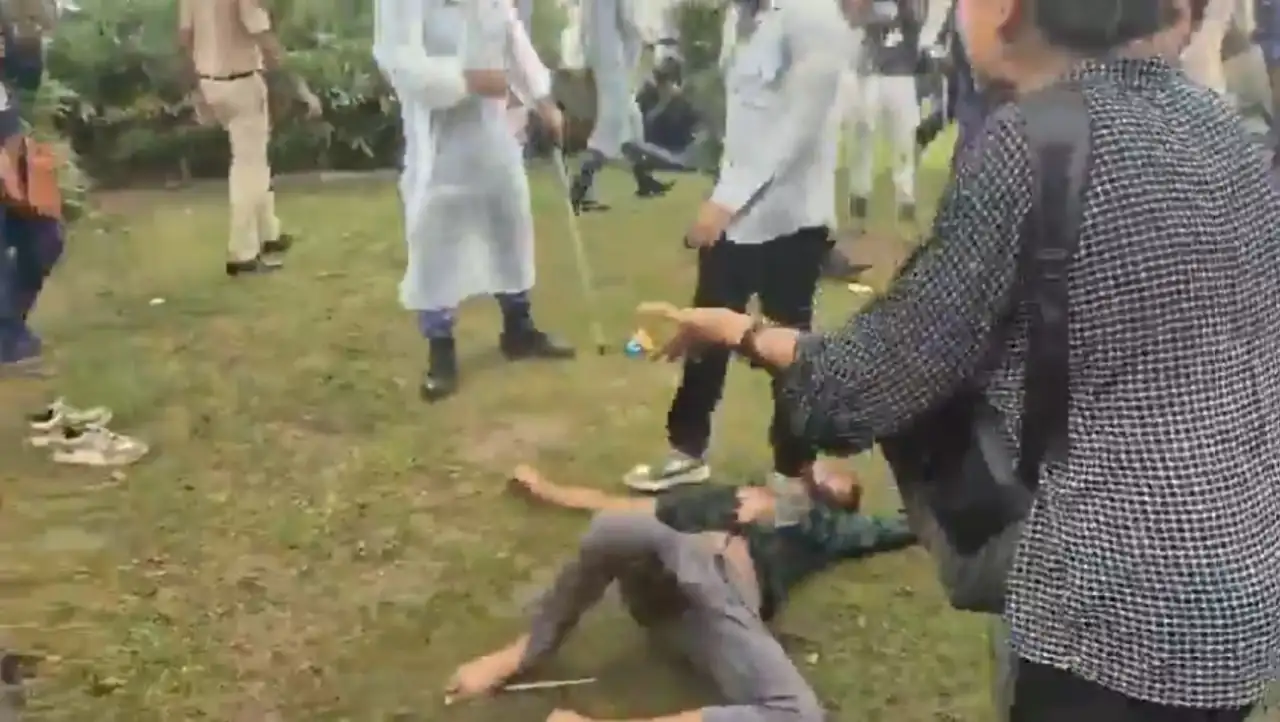
Tensions erupted in the heart of India’s capital today as Delhi Police resorted to a lathi-charge and fired tear gas shells to disperse thousands of young protesters attempting to march towards Parliament. The demonstrators, primarily students and youth associated with the Cockroach Janta Party (CJP) movement, were protesting systemic irregularities in competitive examinations, including repeated paper leaks in NEET-UG and other tests, along with demands for broader education reforms and the resignation of Union Education Minister Dharmendra Pradhan.
The “Chalo Sansad” (March to Parliament) protest began at Jantar Mantar amid a steady monsoon drizzle. Protesters defied police barricades and Section 163 CrPC restrictions around the Parliament area, leading to clashes. Videos circulating on social media showed riot police in blue gear charging at the crowd, with several protesters and some police personnel sustaining minor injuries. Many were detained as they tried to breach multiple layers of security.
The protests stem from deep-seated frustration over the National Testing Agency (NTA)’s handling of major exams. In May 2026, the NEET-UG exam for over 2.2 million medical aspirants was scrapped due to widespread allegations of question paper leaks, forcing a re-examination under heavy security. Similar issues have plagued other tests, including teacher eligibility exams like Maharashtra TET and concerns over CBSE marking processes.
The CJP, a youth-led satirical movement that gained massive traction on social media, has amplified these grievances, linking them to larger issues like youth unemployment and lack of accountability. Prominent activist Sonam Wangchuk’s recent hunger strike in support of the cause ended with his hospitalization, further galvanizing the movement.
Opposition leaders, including Mallikarjun Kharge, raised the issue in Parliament, condemning the police action and demanding accountability. The government has maintained that security measures were necessary to maintain order during the Monsoon Session.
Voices from the Ground: Protesters Speak Out
Protesters described scenes of chaos and excessive force by police. Here are statements from ordinary students and participants who were reportedly beaten during the lathi-charge:
“I was just marching peacefully with my friends, demanding a fair education system. The police charged without much warning—lathis came down on my back and shoulders. We’re not criminals; we’re students whose futures are being destroyed by these leaks. How can they silence us like this?”
— Rahul Sharma, 21, engineering aspirant from Uttar Pradesh
“My head is still hurting from the blows. I saw girls and younger students being pushed and hit. We prepared for months, only for papers to leak again and again. The government should fix the system instead of beating us.”
— Priya Patel, 19, NEET aspirant from Rajasthan
“We want the Education Minister to resign. This is not just about one exam—it’s about the broken system robbing an entire generation. Today, they beat us, but our voices won’t stop.”
— Amit Kumar, 22, Delhi student and CJP supporter
These accounts reflect the anger of many “normal” young Indians who feel their aspirations have been repeatedly undermined.
The incident highlights growing discontent among India’s youth amid rapid economic changes that have not translated into stable opportunities for millions. Analysts see this as one of the largest youth-led challenges to the government in recent years.
As the Monsoon Session continues, calls for an independent inquiry into exam leaks, reforms in the NTA, and greater transparency in education are expected to intensify. The CJP has vowed to continue its campaign until demands are met.
This event underscores the urgent need for systemic changes to restore faith in India’s examination and education framework.