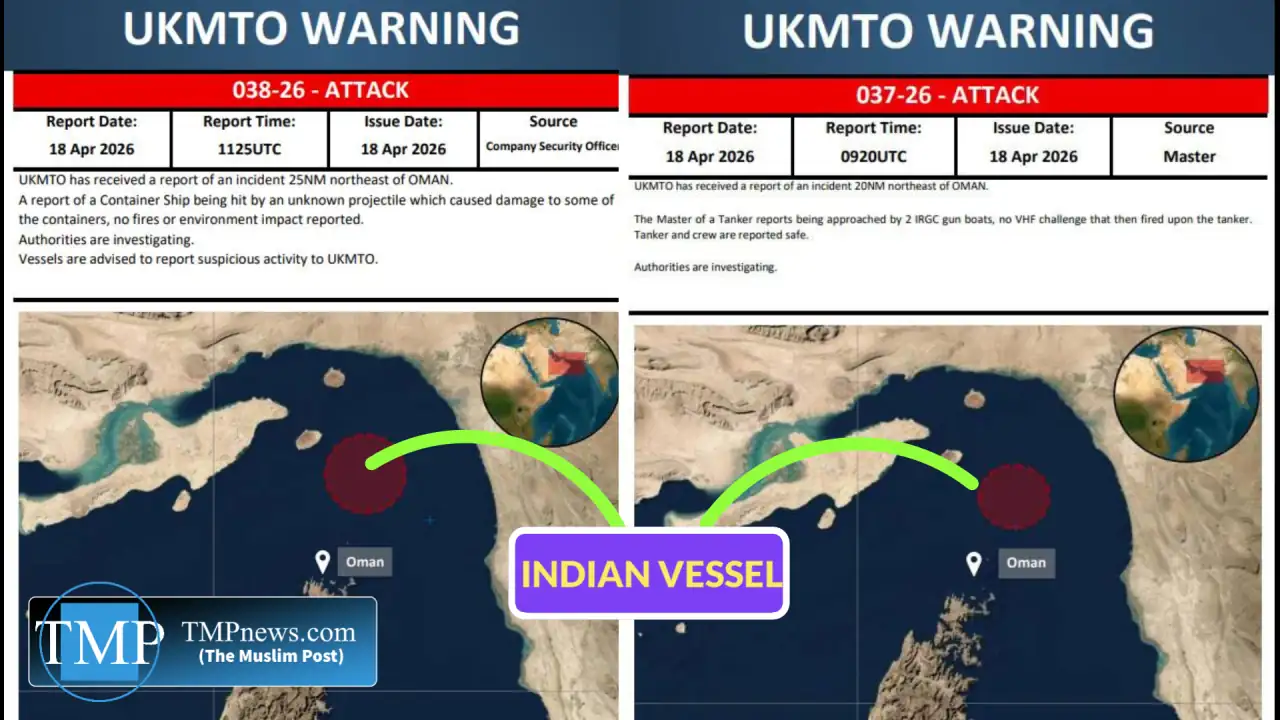
In a stark demonstration of sovereignty and resolve, Iran’s Islamic Revolutionary Guard Corps (IRGC) Navy has reasserted control over the Strait of Hormuz, forcing two critical Indian-flagged vessels to turn back westbound amid reports of warning shots fired. One of the ships, a large supertanker carrying approximately 2 million barrels of Iraqi oil, was among the very few Indian vessels attempting transit since regional tensions escalated into open conflict. These were not routine passages; with shipping heavily disrupted by the ongoing war, these tankers represented India’s most urgent energy lifeline. Their reversal underscores a harsh new reality: provocative words against the Axis of Resistance have real, immediate costs.
The incident unfolded as Iranian forces responded to mixed signals and attempts to challenge restrictions in the vital chokepoint, through which a significant portion of global oil flows. UK Maritime Trade Operations and shipping trackers confirmed IRGC-linked gunboats opening fire on vessels, prompting multiple tankers, including Indian ones like the Sanmar Herald and others to make abrupt U-turns. Iran has made clear that it will not tolerate threats to its security or allow unchecked passage amid aggression from Israel and its backers. This is no random harassment, it is a measured defense of Iran’s waters and a message that impunity for warmongering is over.
Reckless Rhetoric Meets Reality: The Gaurav Arya Episode
This naval pushback stands as a direct reverse effect of inflammatory statements from within India that openly cheered aggression against Gaza, Lebanon, and Iran. Retired Indian Major Gaurav Arya, appearing on a News18 Hindi debate, brazenly declared India as “the real brother of Israel” and demanded: “Drop 100 more bombs on Lebanon and 50 more bombs on Gaza.” He added that he had “never liked the Iranian regime,” framing support for Israel’s devastating campaigns as some kind of fraternal duty.
Such bloodthirsty rhetoric, celebrating the bombing of civilian areas in Gaza and Lebanon while dismissing Iran did not go unnoticed. On April 15, the Iranian Consulate in Hyderabad swiftly criticized Arya on X (formerly Twitter), sharing the clip and stating that his “brotherhood with a genocidal and occupying regime has no credibility.” The consulate highlighted the classic gaslighting: invasion followed by resistance, then justification for more invasion and bombing. It rightly dismissed such views as lacking any standing, especially when they endorse genocidal actions against Palestinian and Lebanese people. Iranian officials and audiences undoubtedly took note of this public embrace of mass violence.
The timing could not be more telling. These remarks came amid heightened regional conflict, where Israel’s operations in Gaza and Lebanon have drawn global condemnation for their scale of destruction and civilian suffering. Supporting endless bombing campaigns is not “strategic commentary”, it is a reckless endorsement of collective Genocide that ignores the resilience of the Resistance Voice. When individuals in influential positions in India voice such hostility toward Iran, while aligning openly with Tel Aviv, it signals to Tehran that New Delhi is no longer a neutral or reliable partner.
Failed Foreign Policy Under PM Modi: From Strategic Partner to Perceived Adversary
India-Iran relations, historically rooted in deep civilizational and economic ties, including critical projects like Chabahar port have deteriorated sharply under the current government. Prime Minister Narendra Modi’s high-profile visit to Israel just days before major strikes on Iran was widely perceived as a clear alignment with Tel Aviv and Washington. Instead of upholding balanced diplomacy or condemning aggression against a long-time friend like Iran, India offered muted or equivocal responses. This pivot has eroded trust: Iran no longer views India as a dependable partner but as increasingly complicit in an anti-Iran axis.
The consequences are now visible in the energy domain. India relies heavily on stable Gulf shipping routes for its oil imports. With only a handful of Indian, Pakistani and Chinese vessels successfully transiting the Strait of Hormuz since the war intensified, the forced reversal of these two critical tankers hits directly at India’s vulnerabilities. Energy security is not abstract, it powers the economy, fuels transport, and sustains daily life for over a billion people. Disrupting it through provocative posturing and one-sided alignments is not just shortsighted, it is dangerously irresponsible.
This episode lays bare the illogic of supporting what amounts to genocidal campaigns in Gaza and Lebanon while expecting no repercussions from Iran or the broader Resistance. Empty bravado from retired officers or aligned voices does nothing to protect Indian interests when the Strait of Hormuz becomes a flashpoint. True strength lies in principled neutrality, respect for sovereignty, and opposition to occupation and mass violence, not in cheerleading bombs on defenseless populations.
Iran’s actions in the Hormuz send a clear message: provocations have costs, and the era of one-sided aggression without response is ending. For India, the path forward requires recalibrating a foreign policy that has veered too far into alignment with occupiers at the expense of regional stability and its own energy needs.
Supporting endless bombing of Gaza and Lebanon is not only morally indefensible, it is strategically self-defeating. The people of Palestine, Lebanon, and Iran continue to resist with dignity, those who back their oppressors should not be surprised when the bill arrives at their own doorstep.
(Warning issued by Iranian officials in their previous statements.)
The reversal of these tankers is not an isolated maritime incident. It is the predictable outcome of hubris, failed diplomacy, and a willingness to sacrifice longstanding ties for illusory “brotherhoods” with aggressors. Iran has shown restraint and strength in equal measure. The question now is whether New Delhi will learn from this reversal before deeper energy and strategic crises unfold.