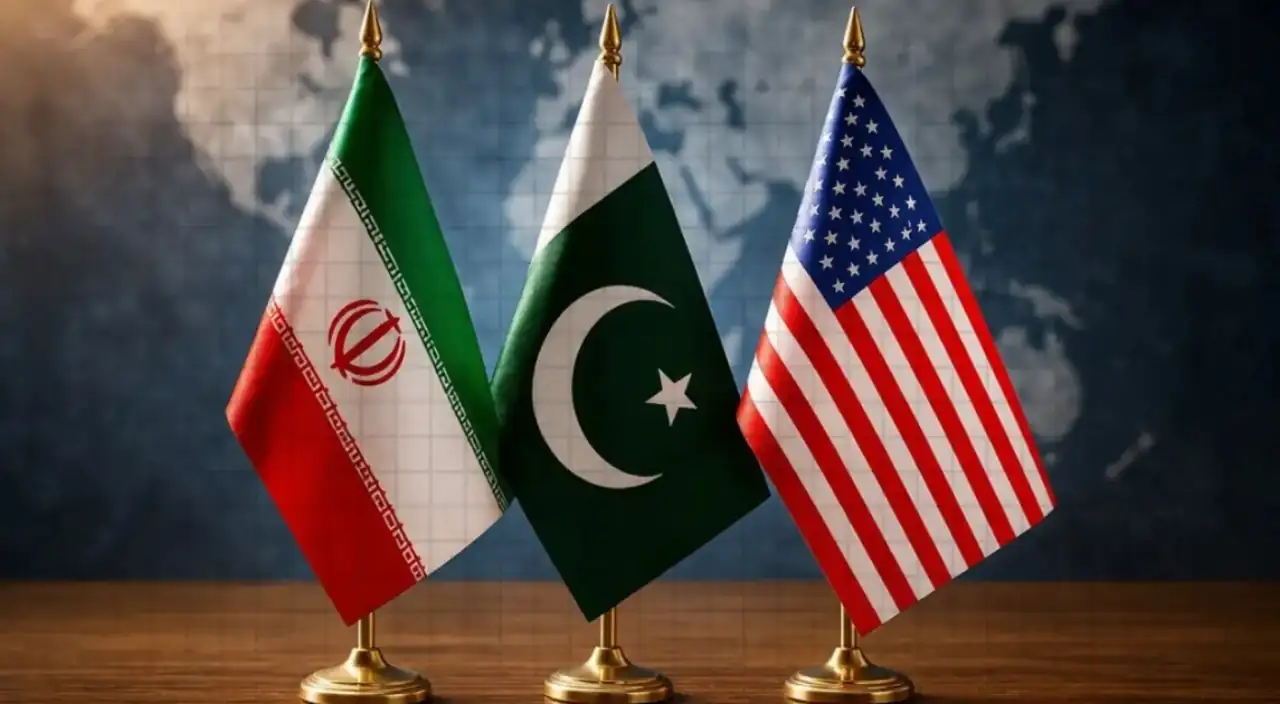
In a significant development amid ongoing tensions in the Middle East, Iran’s semi-official Mehr News Agency has published details of a 14-point draft Memorandum of Understanding (MoU) between the United States and Iran. The document outlines a framework for ending hostilities, lifting sanctions, and initiating broader negotiations on nuclear issues and regional security.
According to the report, citing a source close to the Iranian negotiating team, the draft aims to establish an immediate and permanent cessation of conflict while setting the stage for a more comprehensive final agreement. Here are the main provisions as detailed by Mehr News:
-
Permanent and immediate cessation of war on all fronts, including Lebanon.
-
The U.S. commits to non-interference in Iran’s internal affairs and respect for the sovereignty of the Islamic Republic of Iran.
-
Complete lifting of the naval blockade within 30 days.
-
The U.S. commits to withdrawing its forces from areas around Iran.
-
Reopening of the Strait of Hormuz within 30 days under Iranian arrangements.
-
Suspension of sanctions on the sale of Iranian oil, petrochemical products, and derivatives, along with full access to Iran’s financial resources.
-
The U.S. and its allies are to present reconstruction plans for Iran amounting to at least $300 billion.
-
A 60-day negotiation period to reach a final agreement covering nuclear issues and the complete lifting of primary and secondary U.S. sanctions, as well as relevant UN Security Council and IAEA Board of Governors resolutions.
-
Reiteration of Iran’s commitment under the NPT treaty not to produce nuclear weapons.
-
During the negotiation period, the U.S. commits not to add forces in the region or impose new sanctions.
-
Release of $24 billion of Iran’s blocked funds during the 60-day period. Half of this amount must be made available to Iran before negotiations begin.
-
Formation of a supervisory mechanism to implement the agreement.
-
The final agreement will be approved by a UN Security Council resolution.
-
Final negotiations will not begin before the release of half of Iran’s blocked funds, suspension of oil sanctions, and lifting of the naval blockade. The final agreement will focus on the fate of enriched materials and enrichment levels, lifting of sanctions, and Iran’s economic reconstruction plan.
Notably, discussions about Iran’s missile program and its support for regional resistance groups have been removed from the agenda, according to the leaked draft.
The draft comes as both sides appear to be edging toward de-escalation following recent conflicts. Iranian officials have emphasized that major parts of the agreement text have been finalized, though they acknowledge ongoing U.S. contradictions. U.S. President Donald Trump has publicly claimed that a deal is close, describing it as a potential “great settlement,” while noting that negotiations continue through mediators.
Analysts caution that significant gaps remain between the Iranian-reported terms and U.S. positions, particularly regarding the sequencing of sanctions relief, military withdrawals, and nuclear constraints. The MoU, if finalized, would mark a major diplomatic shift, potentially reopening vital shipping lanes and unlocking frozen assets, but its success hinges on mutual implementation and international oversight.
This draft, while not yet officially confirmed by both parties as a signed document, provides a detailed snapshot of the current negotiation dynamics. Further updates are expected as the 60-day window and supervisory mechanisms take shape.